Digital Product Passport Operator: The profession that is changing the industry

With the introduction of the new European Sustainability Requirements (ESPR), businesses are facing a serious challenge: how to collect, structure and manage the huge amount of data for each of their products. In this context, a new, key role is born -Operator of digital product passports (DPP Operator).
This is not just an administrative position. This is the person who connects manufacturing, supply chain and end-to-end transparency to the consumer.
What exactly does a Digital Passport Operator do?
The role of the DPP operator is complex and requires a combination of technical skills, knowledge of legislation and an understanding of the product life cycle. Here are his main responsibilities:
1. Managing the "Digital DNA" of the product
The operator is responsible for entering and updating the information on a platform such asDigiProductPass. This includes data on the composition of the materials, the origin of the raw materials and quality certificates.
2. Classification of access levels
One of the most critical tasks is the correct distribution of data according to the three-level access model:
- What should he see?the customer(instructions, history)?
- What does therepair shops and recycling companies(disassembly diagrams)?
- What documents are required bycustoms and inspection authorities?
3. Life cycle monitoring
The DPP operator doesn't just create the passport, it keeps it alive. When a product is repaired, inspected or re-commerced, the operator updates the passport in the system. Every change is logged with who and when, and each publish creates a new version, so the product's history stays complete and reliable.
4. Compliance control
This specialist monitors whether the information complies with the latest EU regulations. He works closely with the engineering and logistics teams to ensure that the change history is always available and in order.
5. Technical optimization for AI and search engines
The operator ensures that the information is not just "text on a page", but is properly formatted (via JSON-LD) so that AI and automated EU systems can easily index it.
Why is this profession important for business?
Without a qualified DPP operator, companies risk not only heavy fines but also a loss of credibility. This specialist turns the "passport" obligation into a marketing advantage by showing customers that the product is quality, legal and long-lasting.
Partnership for a greener future
The implementation of Digital Product Passports is a large-scale process that requires the right know-how and reliable technological tools. We fromWIARAwe believe success lies in collaboration.
We are therefore happy to share that WIARA is open to new partnerships. Whether you are a manufacturer, a software company or a sustainability consultant, we are ready to work together to make European business more transparent, competitive and ready for the future.
Contact us today to build resilience together!
WIARA and DPP
Our solutions
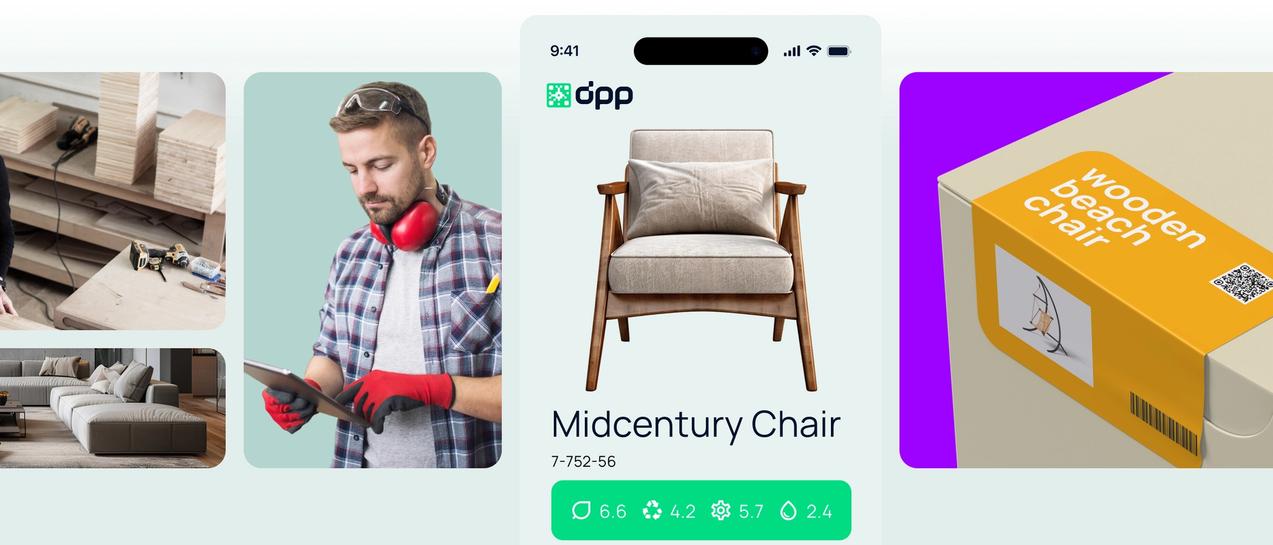
DPP for the Furniture Industry
DPP ensures transparency for the materials used, facilitates reuse and recycling. It proves the sustainability of production.

DPP for Textiles
DPP provides traceability from fibre to recycling, proves brands' sustainability, and inspires consumer confidence.

DPP for Construction Products
DPP ensures transparency for the composition and sustainability of construction materials, facilitating proof of origin and compliance with standards.
DPP
Frequently asked questions

With the Digital Product Passport, information is automatically generated in all 24 official EU languages. This means that if you sell a product in Bulgaria, Greece or Germany, the customer and local authorities will see the data in their native language without the need for additional translations.
Each field and file is classified to an access level, and the public passport shows only public fields. Authenticated access for professionals such as repair shops and recycling companies, and for authorities (eIDAS), is in development; it also depends on the European Commission completing its implementing rules.
A passport is a "guarantee of authenticity". When reselling, the buyer can scan the QR code and make sure that the product is original, see its repair history and trust the merchant. This increases the residual value of your goods.
Every change is recorded in an audit log (who changed what, and when), and each publish creates a new version. That history is available if a regulatory authority asks for it.
Yes, our passports are AI-Ready. In addition to the standard web page, every published passport carries its data as structured JSON-LD that allows AI search engines and automated EU systems to easily discover and process your product information.
The platform is flexible: you can create one passport for an entire series of products (Model Level), for a specific production batch (Batch Level) or a unique passport for each individual unit with its own serial number (Item Level).
Latest DPP Articles
 Anita Kisimova-Dzakova••3 min read
The DPP and the right to repair: How the passport obliges manufacturers to design for durability
 Anita Kisimova-Dzakova••8 min read
DPP in cosmetics: The end of greenwashing and the beginning of conscious beauty
 Anita Kisimova-Dzakova••9 min read
The EU Battery Passport: How the DPP Is Transforming the Energy Transition From the Mines to Recycling
 Anita Kisimova-Dzakova••8 min read
End of "Greenwashing": The Digital Passport Revolution
 Anita Kisimova-Dzakova••8 min read
DPP in construction: The new rules
 Anita Kisimova-Dzakova••5 min read
DPP in Education: The Path to Sustainable Development
 Stefan Dyankov••6 min read
End of "Buy and Throw Away": The Digital Product Passport Revolution

 Kiril Shivachev••4 min read
How does the DPP change the rules for non-EU providers?
 Kiril Shivachev••3 min read
Which products will not have a Digital Product Passport (DPP)?

One solution for all 27 EU markets
Automate your DPP compliance. Turn regulations into a competitive advantage with passports that “speak” all 24 official languages and are ready for the AI future.