CPR and DPP for construction products
CPR-ready — DoPC, GWP declarations and Digital Product Passport

CPR and the Digital Product Passport for construction products
Construction products are governed by the revised Construction Products Regulation — CPR (EU) 2024/3110 — not by ESPR. The CPR introduces the Declaration of Performance and Conformity (DoPC), a mandatory carbon-footprint declaration (GWP) and — phased in by product family — a Digital Product Passport. The goal is traceable, safe and low-carbon materials and access to green public procurement. WIARA collects the data once and covers all three requirements — DoPC, GWP and DPP.
Read more about the CPR for construction products →
Regulatory Framework and Requirements
Digital Product Passport for Construction Materials
Steps for DPP Implementation
Product Creation at the Factory
Data is entered for raw materials used – steel, concrete, insulation materials, coatings – along with information about their origin and quality during production.
Generating the Digital Passport
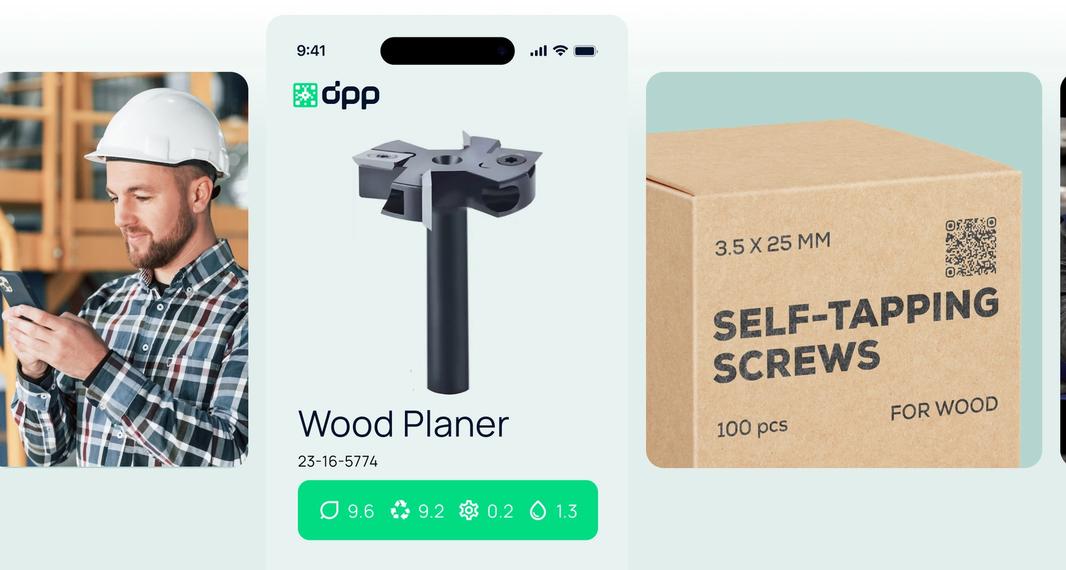
Each construction element (profiled sheet metal, insulation panels, tiles) receives a unique DPP with QR code/link containing information about composition, technical specifications, and safety standards.
Supply Chain Integration
Manufacturers, distributors, and construction supply stores add data on transportation, storage, installation instructions, and certifications such as CE or ISO.
Access for Retailers and Construction Companies
Retailers receive complete product information – dimensions, durability, installation instructions – while construction companies can verify compatibility and maintenance requirements.
Access for End Consumers
Investors and end customers can scan the QR code to see what materials were used, their environmental assessment, energy efficiency, and operating recommendations.
Post-Use Tracking
After demolition or renovation, the passport is updated with information about reuse or recycling of materials (e.g., steel, aluminum, glass), closing the circular cycle in construction.

How to Integrate DPP into Your Production?
WIARA offers a ready and easy solution
SCAN TO OPEN ON YOUR PHONE
INTERACTIVE DEMO
See a real passport for a construction product
A perforated clay block to EN 771-1 — the passport shows what the CPR (EU) 2024/3110 requires: DoPC and CE, declared characteristics (strength, λ, reaction to fire), EPD and GWP to EN 15804, substances, installation and end-of-life instructions, batch look-up. Scan the QR with your phone or open the link.Construction
Frequently Asked Questions

Basic construction materials such as concrete, cement, bricks, insulation, timber, metal profiles, as well as complex products with significant environmental impact.
Material composition and origin, energy efficiency, carbon footprint, recycling possibilities, safe use instructions, and end-of-life information.
Manufacturers, importers, and distributors of construction materials, as well as retailers of products used in construction.
Increased transparency, competitive advantage, easier access to markets and customers, as well as compliance with EU environmental standards.
The passport facilitates material reuse, reduces waste, and allows better resource management throughout the entire product lifecycle.
Start collecting product data, build internal processes for transparency, and plan integration with management and traceability systems.
Because CPR (EU) 2024/3110 is the sector-specific regulation for construction products (lex specialis), and ESPR explicitly excludes products covered by the CPR. That is why construction materials follow the CPR — with a DoPC, a GWP declaration and a phased Digital Product Passport — rather than an ESPR delegated act.
The DoPC (Declaration of Performance and Conformity) merges the DoP and the CE declaration and adds environmental data (GWP per EN 15804). It is the data foundation that then feeds the construction DPP — so the data collected for the DoPC is reused for the passport as well.
In phases. A delegated act for DPP service providers is expected around Q2 2027, followed by an act for the construction DPP system itself (data carrier, registry, access levels). For now there are no officially authorised construction DPP service providers — early preparation gives an advantage.
The carbon data (GWP/EPD) that the CPR requires under EN 15804 overlaps with the embedded-emissions reporting under CBAM for imports of cement, steel and aluminium. Collected once, the same data feeds both the DoPC/DPP and CBAM — with no duplication.
Build with Trust
Related Solutions in the Sector
DPP for Manufacturers
Manufacturers create and maintain DPP, prove compliance and sustainability, earn trust and improve their processes.

DPP for Importers
Importers ensure a valid DPP for every product and provide EU market access without risk of sanctions and delays.

DPP for Retailers and Service Centres
DPP simplifies warranties, repairs and product tracking. Retailers and service centres receive accurate information for higher quality service.