DPP for aluminium
The most recyclable metal, ready for a passport
Why aluminium is among the first with a passport
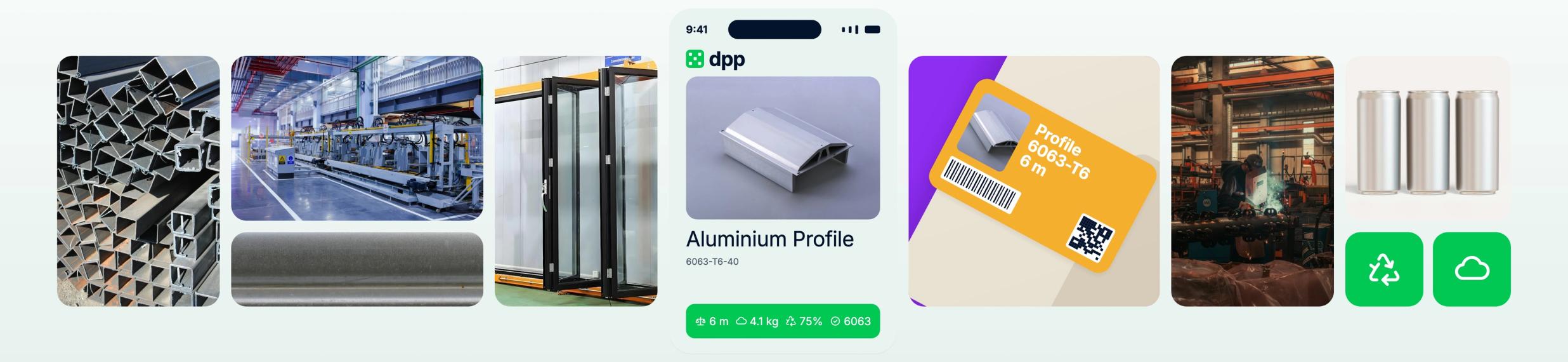
Aluminium is one of the most carbon-intensive materials to produce from primary ore, yet also the most recyclable — it can be reprocessed indefinitely with about 5% of the energy. Exactly this combination puts it at the centre of the EU's sustainability policies and among the first product groups for which a Digital Product Passport is coming.
Its requirements intertwine with CBAM and with the framework of ESPR →
What the passport contains
DPP for aluminium
Key points
Infinitely recyclable
Aluminium recycles with no loss of quality, at ~5% of primary energy — the passport makes that value visible.
High carbon stakes
Primary aluminium is among the most carbon-intensive materials; the footprint becomes a key competitive advantage.
CBAM covers aluminium
Importing aluminium into the EU falls under the carbon border mechanism — embedded-emissions data is needed.
ESPR and a delegated act
Aluminium is on the EU's ecodesign work plan; a delegated act will set out the passport requirements.
Multi-sector
Construction, automotive, packaging, aerospace — one material, many chains, each needing data.
Data is slow to collect
Footprint, recycled content and origin are not gathered in a week — preparation starts early.
Is your aluminium data ready?
We help producers, foundries and processors structure their carbon-footprint, recycled-content and origin data — and turn it into a ready passport.
Scan to open
Live example
See a real passport
Open a demo Digital Product Passport and see what product data looks like in practice.DPP for aluminium
Frequently asked questions

Aluminium is on the EU's ESPR work plan; the specific requirements and date will come with a delegated act. Preparation starts before the date, because the data is slow to collect.
Importing aluminium into the EU falls under CBAM — the carbon border adjustment mechanism. The embedded-emissions data needed for CBAM overlaps with the passport.
Mainly: carbon footprint, share of recycled content, alloy and composition, origin and supply-chain traceability.
Yes. Recycled aluminium has a drastically lower footprint; documenting it in the passport is a real market advantage.
For producers, foundries, processors and importers of aluminium and aluminium products who sell on the EU market.
We structure your footprint, recycled-content and origin data and turn it into a registered passport, ready for the day the obligation starts.
Related solutions
Solutions by your role in the chain

DPP for Manufacturers
Manufacturers create and maintain DPP, prove compliance and sustainability, earn trust and improve their processes.

DPP for Importers
Importers ensure a valid DPP for every product and provide EU market access without risk of sanctions and delays.

DPP for Retailers and Service Centres
DPP simplifies warranties, repairs and product tracking. Retailers and service centres receive accurate information for higher quality service.