DPP for Steel and Iron
First under ESPR — and a construction product under CPR
The Digital Product Passport for steel and iron
Steel and iron are the first product group for which the EU is adopting a delegated act under ESPR — ahead of textiles and furniture. The sector is among the most carbon-intensive in industry, and traceability of composition, origin and carbon footprint is becoming the basis both for market access and for low-carbon public procurement. On top of this, structural and reinforcing steel are a construction product under CPR (EU) 2024/3110 — so GWP declarations and a DoPC already apply to them, phased in with the revised harmonised standards. In practice, steel lives under two regimes — ESPR and CPR — and WIARA covers them with a single set of data.
Regulatory framework and requirements
Digital Product Passport for steel and iron
Steps to implement the DPP
Product creation at the mill
Right at production, data is entered on the melting process (BOF/EAF), chemical composition, steel grade and the origin of raw materials.
Generating the digital product passport
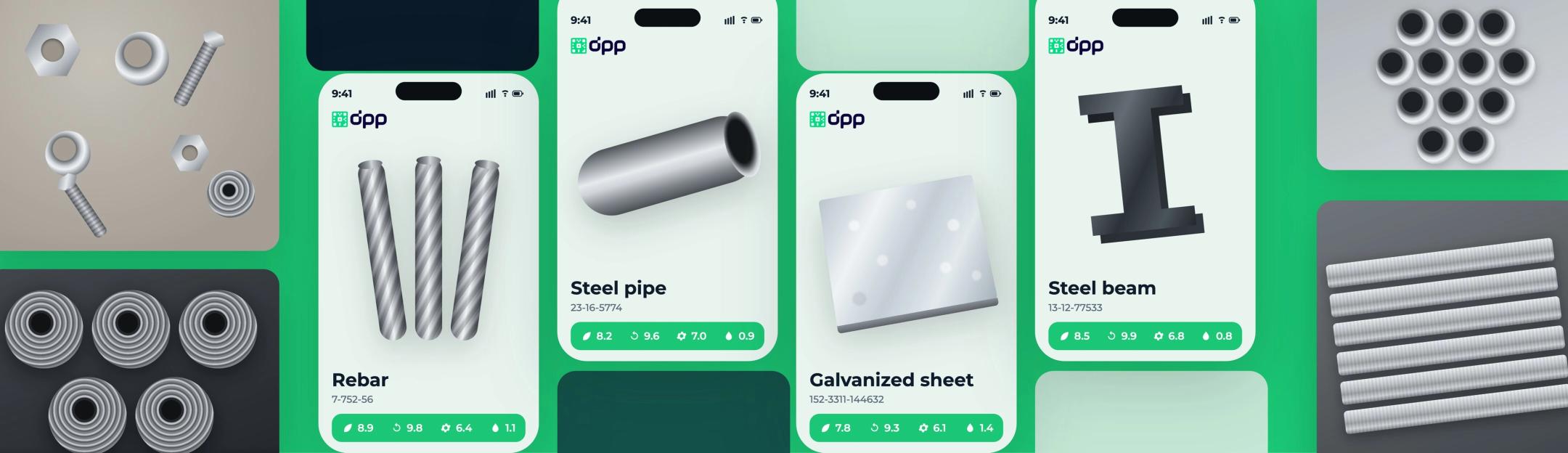
For each batch or item — rebar, pipes, sheet, sections — a unique DPP is created with a QR code or link carrying the technical characteristics and sustainability indicators.
Integration into the supply chain
Mills, warehouses and distributors add data on transport, traceability and certificates such as CE and EN 10204.
Access for traders and construction firms
Traders get technical characteristics and standards conformity, while designers and construction firms check compatibility and requirements.
Access for end clients and investors
By scanning a QR code, investors see the carbon footprint, recycled-content share and the environmental assessment of the material.
Tracking after use
On dismantling or scrapping, the passport reflects the reuse and recycling of the steel, closing the circular loop.
How to integrate the DPP into your production?
WIARA has a ready solution for steel manufacturers and importers across the EU
SCAN TO OPEN ON YOUR PHONE
INTERACTIVE DEMO
See a real Digital Product Passport
B500B reinforcing steel (rebar) from an electric arc furnace — the passport shows the fields expected for iron and steel: grade, chemical composition and mechanical properties of the heat, scrap content, production route, carbon footprint and the link to the 3.1 inspection certificate. Scan the QR with your phone or open the link to see how a published passport looks to a customer.DPP for steel and iron
Frequently asked questions

Iron and steel products — structural steel, rebar, beams, sheet, wire, pipes and castings — manufactured in or imported into the EU.
Chemical composition and steel grade, mechanical properties, carbon footprint, recycled-content share, origin, applicable standards and certificates.
The definitive CBAM regime for steel imports starts on 1 January 2026, but the purchase and surrender of CBAM certificates begins in 2027 (first surrender by 30 September 2027); there is also a de minimis threshold of 50 tonnes. The carbon footprint data in the DPP overlaps with this reporting, making things easier for EU importers.
Yes. Structural and reinforcing steel are at once an ESPR product and a construction product under CPR (EU) 2024/3110. As a construction product, steel is subject to a DoPC and a GWP declaration under the CPR (per EN 15804), phased in with the revised harmonised standards (from 8 January 2026). Under Article 12, where the two overlap the CPR takes precedence, and a single platform covers both obligations with no data duplication.
The threshold comes from the proposed Industrial Accelerator Act (COM(2026) 100, March 2026) — draft legislation, not from ESPR. Under it, from 1 January 2029 at least 25% of the steel in public buildings, infrastructure and vehicles must be low-carbon (with no requirement as to the steel's origin). The definition of "low-carbon" itself will be set out in a delegated act under ESPR/CPR.
Start collecting data on composition, production process and carbon footprint, and plan integration with their systems — an essential first step for steel manufacturers, importers and exporters.
The DoPC (Declaration of Performance and Conformity) is the CPR document that merges the DoP and the CE declaration and adds environmental indicators (GWP per EN 15804). For structural steel it takes effect in phases with the revised harmonised standards (from 8 January 2026) and forms the data foundation for the future construction DPP.
Built to last
Related industries and solutions

DPP for Construction Products
DPP ensures transparency for the composition and sustainability of construction materials, facilitating proof of origin and compliance with standards.
DPP for Manufacturers
Manufacturers create and maintain DPP, prove compliance and sustainability, earn trust and improve their processes.

DPP for Importers
Importers ensure a valid DPP for every product and provide EU market access without risk of sanctions and delays.