European Product Act (EPA)
Market surveillance reform — proposal expected in the third quarter of 2026

What the European Product Act is
The European Product Act is a legislative package expected in the third quarter of 2026 that will replace two pillars of EU product law: the New Legislative Framework (Decision 768/2008/EC and Regulation (EC) No 765/2008) and the Market Surveillance Regulation (EU) 2019/1020.
The Commission Work Programme 2026 confirms it as a single dossier comprising three legislative revisions — market surveillance, the New Legislative Framework and the Standardisation Regulation. The creation of an EU-level market surveillance authority is also under discussion.
What does the European Product Act mean for your digital product passport?
Nothing changes in law yet: the Act is a proposal. It does show where the digital product passport is heading. CE marking stays physical and is complemented by the passport, and because thirty acts share the New Legislative Framework template, CE-marked products could come into scope by a route other than the ESPR. The dated obligations today are still ESPR ones: iron and steel first, then textiles and furniture.
DigitalProductPassport by WIARA already has templates for reinforcing steel, textiles and furniture, and updates them when the rules change. Open a demo passport to see what that record looks like, or check whether your product needs one.
The problem the Commission describes, and the tooling already running
What sits behind the reform
Why this matters beyond surveillance
CE marking stays physical — but is complemented
The consultation outcome is explicit: CE marking remains physical, complemented — not replaced — by inclusion in the Digital Product Passport.
Thirty acts share one template
Thirty legal acts are built on the New Legislative Framework template. If a DPP obligation is wired into its revision, the addressable scope expands well beyond the ESPR working plan — potentially to the entire CE-marked universe: toys, machinery, low-voltage equipment, radio equipment, medical devices, PPE, pressure equipment, lifts.
The Commission’s stated intent
To make Digital Product Passports "the main tool for sharing product information in the European Union".
Publish this passport with DigitalProductPassport by WIARA
The European Product Act is a proposal, not yet law. The direction it sets, one digital record per product readable by market surveillance, is the one a passport already implements.
DigitalProductPassport by WIARA is a cloud platform built by WIARA, a software company. You enter the product data once; the platform publishes a passport page with a permanent QR code and a GS1 Digital Link URL, in all 24 official EU languages, keeping public, professional and authority fields apart. ESPR and CPR templates come ready made.
The free plan covers 3 passports in total. What the platform does is set out on the product page, and the plans and their limits are on pricing.
The European Product Act and the Digital Product Passport
Frequently asked questions

No. The consultation points the other way: the marking stays physical and is complemented by inclusion in the digital passport. This adds a digital layer rather than replacing the physical one.
Because the New Legislative Framework covers thirty acts — far more products than the ESPR working plan. If the DPP is wired into its revision, products outside the ESPR could enter scope by another route.
That the direction is structured, machine-readable product data rather than documents. A company already building DPP data under the ESPR is also building for a possible wider regime. That is an argument for investing now — but not a basis for claiming an obligation already exists, because it does not.
Related solutions
Solutions
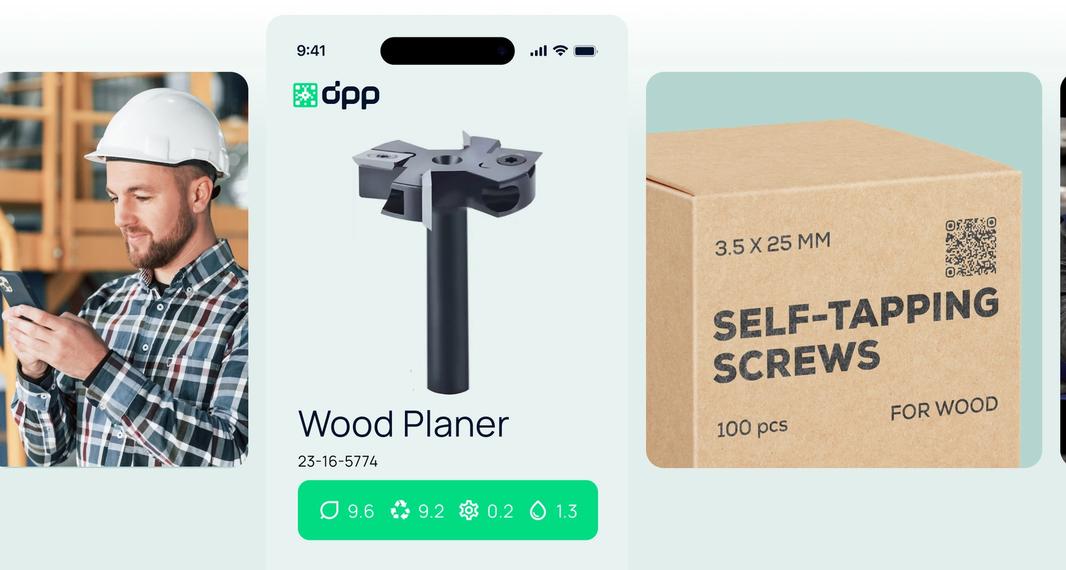
DPP for Manufacturers
Manufacturers create and maintain DPP, prove compliance and sustainability, earn trust and improve their processes.

DPP for Importers
Importers ensure a valid DPP for every product and provide EU market access without risk of sanctions and delays.

DPP for Retailers and Service Centres
DPP simplifies warranties, repairs and product tracking. Retailers and service centres receive accurate information for higher quality service.