DPP for Manufacturers
Responsibility and trust in every product
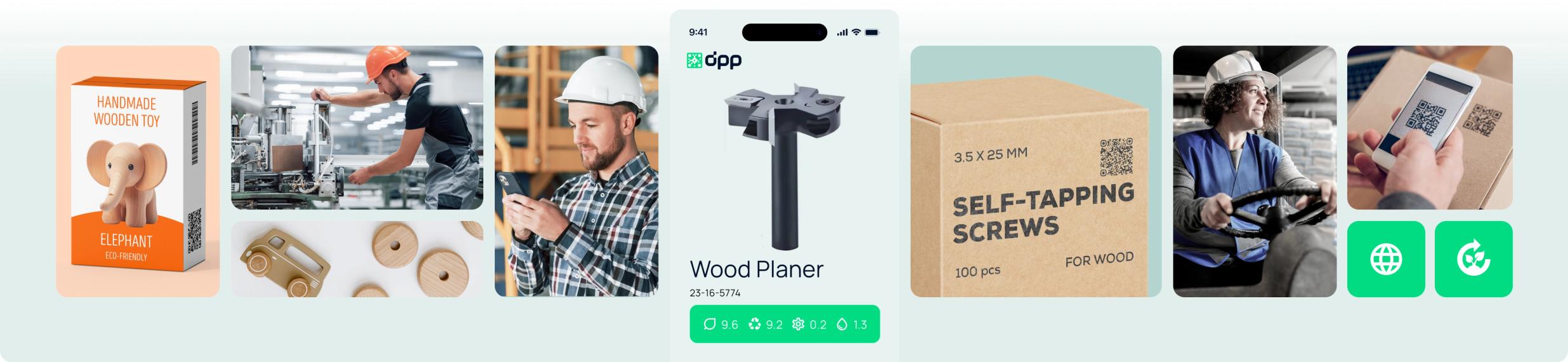
Digital Product Passport (DPP) for Manufacturers
Manufacturers are at the core of introducing the Digital Product Passport (DPP). They bear responsibility for creating and maintaining the passport for every product they place on the EU market. This is not only a regulatory obligation, but also an opportunity to demonstrate sustainability, transparency and innovation.
Regulatory Framework and Requirements
DPP for Manufacturers
Steps for DPP Implementation
Product creation at the factory
Data on raw materials, materials and components used in production is entered, along with their origin and compliance with applicable standards.
Generating a Digital Product Passport
Each product receives a unique DPP with a QR code/link containing structured information – composition, characteristics, certifications, and usage instructions.
Supply chain integration
Suppliers, distributors and partners add data on logistics, storage, transport and compliance documentation.
Access for retailers and service centres
Retailers receive up-to-date product information (descriptions, specifications, availability), while service centres get maintenance, repair and warranty management instructions.
Access for end consumers
By scanning the QR code, customers can view transparent information about composition, origin, sustainability and safe use recommendations.
Post-use tracking
When returned, recycled or reused, the passport is updated with information on condition and recycling methods, supporting the circular economy.

How to integrate DPP into your production?
WIARA offers a ready-made and easy DPP solution
SCAN TO OPEN ON YOUR PHONE
INTERACTIVE DEMO
See a real Digital Product Passport
B500B reinforcing steel (rebar) from an electric arc furnace — the passport shows the fields expected for iron and steel: grade, chemical composition and mechanical properties of the heat, scrap content, production route, carbon footprint and the link to the 3.1 inspection certificate. Scan the QR with your phone or open the link to see how a published passport looks to a customer.Manufacturers
Frequently Asked Questions

Sanctions, market access bans and loss of customer trust – risks that apply to all companies in the EU.
It ensures transparency, improves resource management and strengthens the business's sustainable positioning in the EU.
Regulators, partners, customers and consumers – each according to the level of access defined by the EU.
Every time there is a change in the product's composition, processes or characteristics.
Data management platforms, automation and integrations with ERP/CRM systems – solutions that will help businesses comply efficiently.
An advantage when entering new markets, higher customer trust and the opportunity to position themselves as leaders in sustainable production in the EU.
From Raw Materials to Customers
Chain of Connected Solutions

DPP for Importers
Importers ensure a valid DPP for every product and provide EU market access without risk of sanctions and delays.

DPP for Retailers and Service Centres
DPP simplifies warranties, repairs and product tracking. Retailers and service centres receive accurate information for higher quality service.

DPP for End Consumers
DPP provides transparency – composition, origin and recycling of products, so consumers can choose responsibly and make informed decisions.