DPP for tyres
From a label to a full passport
Why tyres are among the next with a passport
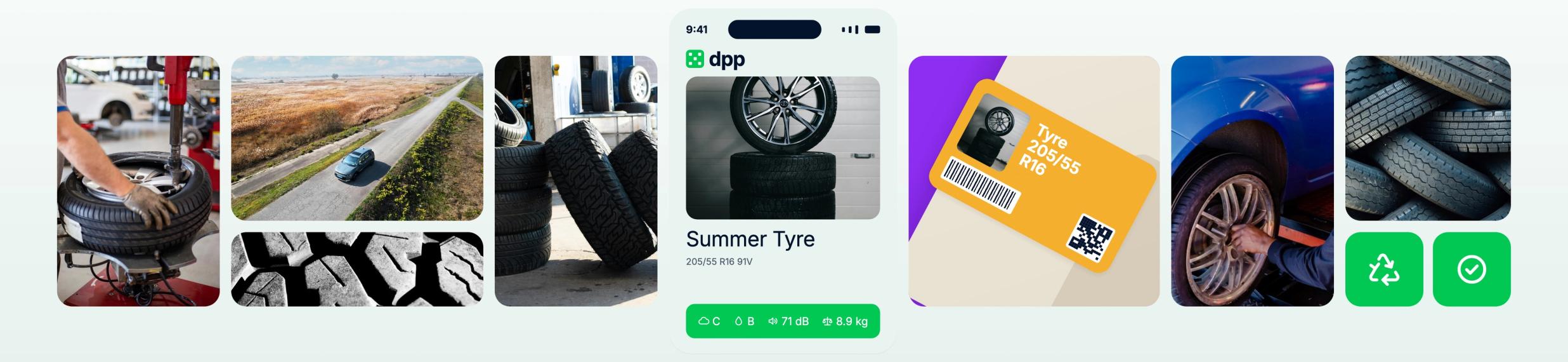
Tyres already carry a European label for rolling resistance, wet grip and noise. The Digital Product Passport builds on this — adding composition, recycled and renewable content, abrasion performance and end-of-life guidance. Tyres are a priority group on the EU's ecodesign work plan.
Its requirements intertwine with the 2025 – 2030 work plan and with the framework of ESPR →
What the passport contains
DPP for tyres
Key points
It already has a label
Tyres have carried a European label for years — the passport expands the data and makes it machine-readable.
A priority group
Tyres are on the EU's ESPR work plan; a delegated act will set out the passport requirements.
Microplastics from abrasion
Tyre abrasion is a major source of microplastics; composition and abrasion data become critical.
End-of-life tyres
The ELT stream is huge; traceability and end-of-life guidance have real impact.
Retreading
Retreadable tyres extend their life — the passport documents that value.
Data is slow to collect
Composition, content and metrics across the whole chain are not gathered in a week — preparation starts early.

Is your tyre data ready?
We help tyre manufacturers and importers structure their composition, performance, recycled-content and end-of-life data — and turn it into a ready passport.
Scan to open
Live example
See a real passport
Open a demo Digital Product Passport and see what product data looks like in practice.DPP for tyres
Frequently asked questions

Tyres are on the EU's ESPR work plan; the specific requirements and date will come with a delegated act. Preparation starts early, because the data is slow to collect.
The European label already covers rolling resistance, wet grip and noise. The passport records these as structured data and adds composition and end of life.
Composition and materials, label metrics, recycled and renewable content, retreadability and end-of-life guidance.
Yes. Tyre abrasion is a major source of microplastics; composition and abrasion data are becoming ever more important in regulations.
For manufacturers, importers and distributors of tyres and rubber products who sell on the EU market.
We structure your composition, performance, recycled-content and end-of-life data and turn it into a registered passport, ready for the day the obligation starts.
Related solutions
Solutions by your role in the chain

DPP for Manufacturers
Manufacturers create and maintain DPP, prove compliance and sustainability, earn trust and improve their processes.

DPP for Importers
Importers ensure a valid DPP for every product and provide EU market access without risk of sanctions and delays.

DPP for Retailers and Service Centres
DPP simplifies warranties, repairs and product tracking. Retailers and service centres receive accurate information for higher quality service.