The Digital Product Passport in the Textile Industry and the Future of RFID Threads

Introduction
The textile industry is one of the most challenging sectors due to its enormous resource consumption, complex supply chains and high waste volumes. The European Union has responded to these problems by introducing the Digital Product Passport (DPP) – a new tool that will soon be mandatory for textile products.
Unlike other industries where DPP focuses on energy efficiency and technical specifications, in textiles it is linked to three key themes: sustainable production, consumer transparency and tracking innovation. The passport will be integrated directly into the garment and will follow it throughout its entire lifecycle – from the factory to recycling.
European manufacturers are in a special position: as traditional subcontractors for European brands, they will need to quickly adopt the new standards to remain competitive.
What is DPP in textiles?
The Digital Product Passport is a digital profile that contains data about:
- fibre origin – organic, recycled or synthetic;
- production processes – factories, certifications, labour standards;
- carbon footprint – emissions from production and transport;
- care instructions – washing, drying, extending the garment's life;
- recycling options – how the product can be returned to the economy.
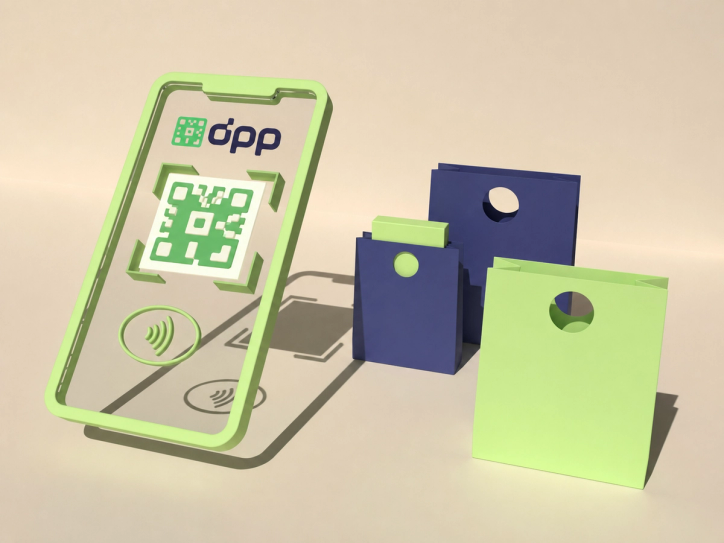
Consumers will no longer see just a "Made in..." label, but the complete product story, accessible via QR code, NFC or RFID.
Impact on the supply chain
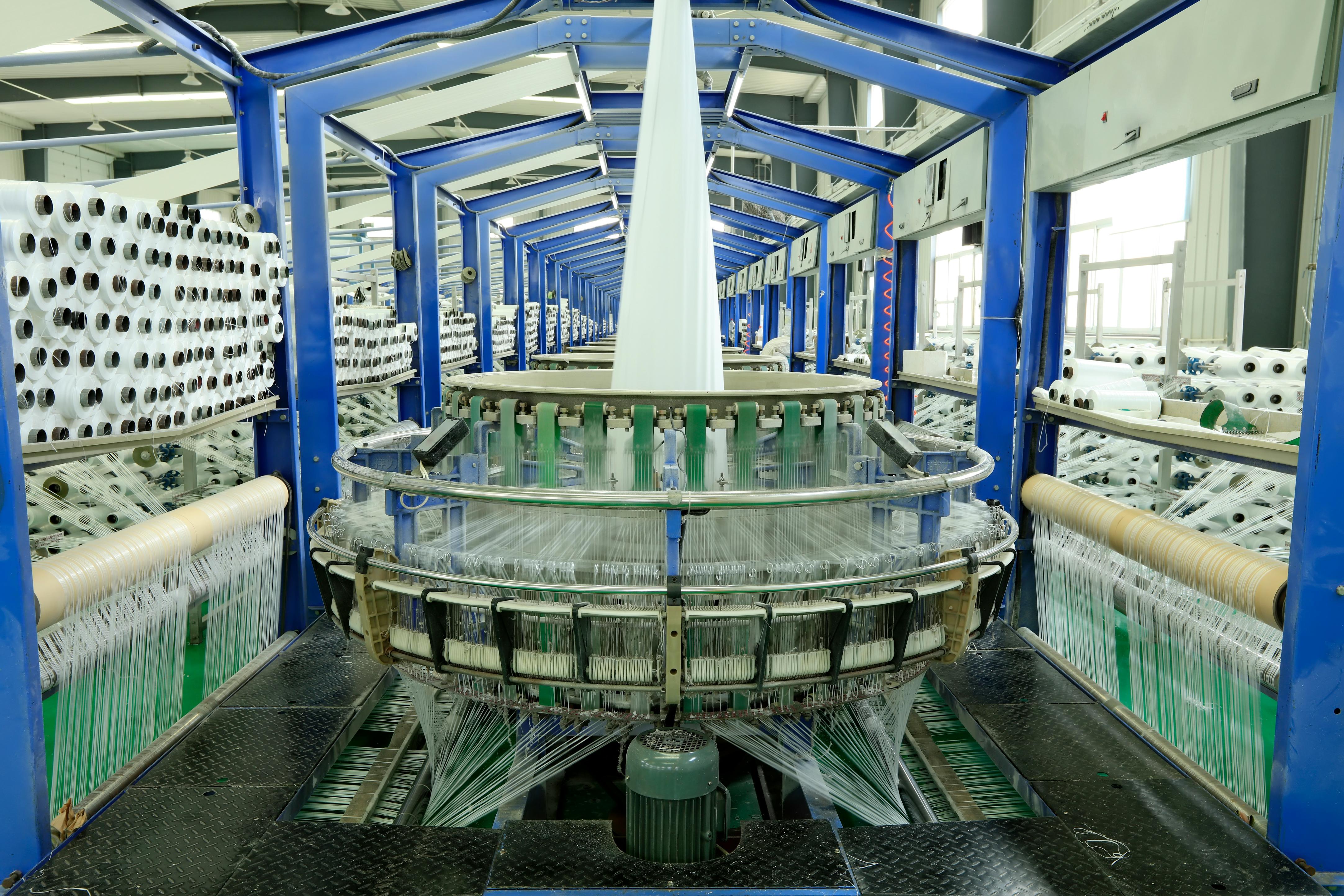
Textiles have one of the most complex supply chains – fibres often come from one country, weaving is in another, and sewing in a third. DPP will bring transparency to every step.
- Less fraud – it will be difficult to present unsustainable materials as "eco".
- Faster logistics – customs and partners will verify data with a single scan.
- Unified standards – information will be structured and easy to exchange.
For manufacturers, this is a dual perspective: early implementation means trust and new orders; delay can lead to loss of customers.
Technologies for implementing DPP in clothing
To connect a garment with its passport, a physical data carrier is needed. In textiles, it must withstand washing, ironing and prolonged use.
- QR codes – cheap and accessible, but can wear off and require visual access.
- NFC chips – more durable and convenient, but more expensive with limited range.
- RFID – an industrial standard enabling mass and fast scanning without direct access. Suitable for warehouses, logistics and recycling.
While QR and NFC are useful for end customers, RFID is the key to large-scale DPP implementation in production and distribution.
Why RFID threads are the key to the future
When we talk about implementing the Digital Product Passport in textiles, the first association is often QR codes or NFC chips. But these technologies have their limitations – QR codes wear off during washing, and NFC chips are more expensive and used mainly in the premium segment. The real change comes with RFID threads.
RFID threads are ultra-thin conductive fibres with an integrated antenna and chip that can be woven directly into the fabric. This makes them almost invisible to the consumer, but extremely valuable for manufacturers and distributors. Unlike standard labels, threads cannot be removed without damaging the garment itself – thus they provide security against counterfeiting and guarantee that the passport will remain "attached" to the product until the end of its life.
Furthermore, threads withstand the harshest conditions – repeated washing, ironing, friction – and thus solve one of the biggest problems in the textile industry: how to maintain traceability even after years of use.
Technological development
In recent years, electronic component manufacturers have invested heavily in developing washable RFID solutions. Threads are now so thin that they can be woven into almost any type of textile – from cotton and linen to synthetic sportswear fabrics. This opens new possibilities for:
- luxury fashion, where authenticity is critical;
- workwear, which is washed and used intensively;
- uniforms and technical textiles requiring long-term traceability.
Why they matter for the industry
Manufacturers with strong positions in uniform production, sportswear and technical textiles are perfectly placed to be among the first to adopt RFID threads. This move will not only meet European DPP requirements, but also create a competitive advantage over manufacturers in Asia, where implementation will be slower.
RFID in the textile industry: variants
1. Textile RFID threads
Conductive fibres with embedded chip and antenna, woven directly into the fabric.
- Advantages: invisible, durable, difficult to counterfeit.
- Applications: luxury brands, sportswear, uniforms.
- Opportunity: workwear and technical textile manufacturers.
2. RFID labels in textile format
Washable labels with embedded chip, sewn in like regular tags.
- Advantages: easy to implement, affordable, universal.
- Applications: fast fashion, hospitality, restaurant industry.
- Opportunity: subcontractors for mass European brands.
3. Embroidered RFID
Chip and antenna embedded through embroidery with conductive thread.
- Advantages: combines functionality and design, withstands washing.
- Applications: high fashion, sports teams, collectible clothing.
- Opportunity: boutique workshops with embroidery traditions.
4. Conductive yarn + sewable chip
Modular approach: separate RFID chip, sewn and connected with conductive thread.
- Advantages: can be added to finished garments, more flexible than threads.
- Applications: workwear, bed linen, circular fashion.
- Opportunity: small manufacturers with short production runs.
Benefits for stakeholders
- Manufacturers: prove sustainability, control quality, earn trust.
- Distributors: simplify customs, reduce counterfeiting risk, become preferred partners.
- Retailers: automate inventory, reduce theft losses, serve faster.
- Consumers: make informed choices, guarantee authenticity, extend the garment's life.
- Regulators and society: more transparency, less waste, better data for sustainable policies.
Risks
Implementing DPP and RFID will not be easy, especially for small and medium enterprises.
- Investments: readers, software and training are needed.
- Cybersecurity: data must be protected.
- Durability: chips and threads must withstand washing and wear.
- Variety of standards: different frequencies and formats for RFID.
- Human factor: resistance to change and lack of experts.
Opportunity and risk for the textile sector
Europe is an important manufacturing centre and this is both an advantage and a challenge.
Opportunities: proximity to the EU market and fast logistics; ability to position as sustainable partners; new niches – uniforms, technical textiles, boutique products.
Risks: dependency on the subcontracting model; lack of capital for SMEs; competition from neighbouring countries already investing in RFID.
WIARA as a partner in textile digitalisation
At WIARA, we understand that implementing a Digital Product Passport and RFID technologies is not just a technical step, but a strategic transformation. We help manufacturers go through the entire process – from analysing production lines and selecting suitable solutions (RFID threads, labels or modular chips) to integration with existing ERP/WMS systems.
Our SaaS platform automates data management, so companies can meet European regulations without taking on excessive administrative burden. We work as a technology and strategic partner – providing not only software, but also consulting, training and support. For manufacturers, this means faster implementation, lower risk and a real competitive advantage in the European market.
Looking ahead
The textile delegated act is expected around 2027, with obligations applying roughly 18 months after it, and by 2030 nearly every garment will have a digital passport. This will lead to:
- new business models such as "fashion as a service" and circular platforms;
- greater brand trust through transparency;
- pressure on manufacturers to create higher quality, longer-lasting clothing.
Companies can turn this into an opportunity – if they are among the first to implement RFID and SaaS solutions for DPP, they will move beyond the image of "cheap subcontractor" and become a valued partner in sustainable fashion.
Conclusion
The Digital Product Passport is not just a regulation, but a new culture in textiles – a culture of trust and responsibility. It brings transparency for customers, security for retailers and a chance for manufacturers to stand out.
For companies, the choice is clear: either wait and risk losing positions, or act early, implement RFID solutions and become leaders in the new era of transparent fashion.
DPP is not a burden. It is an opportunity – an opportunity for the textile sector to prove that sustainability and competitiveness go hand in hand.
DPP for textiles, manufacturers and importers
Solutions for Textiles

DPP for Textiles
DPP provides traceability from fibre to recycling, proves brands' sustainability, and inspires consumer confidence.

DPP for Manufacturers
Manufacturers create and maintain DPP, prove compliance and sustainability, earn trust and improve their processes.

DPP for Importers
Importers ensure a valid DPP for every product and provide EU market access without risk of sanctions and delays.
DPP
Frequently Asked Questions

RFID (Radio-Frequency Identification) is a wireless identification technology using electromagnetic fields to automatically detect and track tags attached to objects.
An RFID thread is a conductive fibre with an integrated chip and antenna that can be woven directly into the fabric, making it durable and virtually invisible.
A QR code is a two-dimensional barcode that can be scanned with a smartphone. In the DPP context, it connects the physical product with its digital passport, providing access to all recorded information.
NFC (Near Field Communication) is a short-range technology that allows data exchange between devices within a few centimetres. Unlike RFID, which can operate at greater distances, NFC requires proximity but offers a simpler user experience.
Easy proof of sustainability and compliance with EU standards; faster and more transparent logistics; protection against counterfeiting; building customer trust and a competitive advantage.
Modern RFID solutions are designed to withstand dozens of wash, dry and iron cycles. Textile RFID threads are particularly durable as they are woven into the fabric itself.
Latest DPP Articles
 Kiril Shivachev••9 min read
Does the system that told you about Article 13 also perform Article 13?
 Kiril Shivachev••4 min read
Digital Product Passport for Clothing: The Roadmap for Fashion Brands (2026–2030)
 Anita Kisimova-Dzakova••3 min read
The DPP and the right to repair: How the passport obliges manufacturers to design for durability
 Anita Kisimova-Dzakova••5 min read
Model, Batch or Item: Which DPP passport level do you actually need?
 Kiril Shivachev••5 min read
WIARA launches the DPP Partner Program — a new business model for consultants and agencies
 Anita Kisimova-Dzakova••3 min read
DPP for importers: Why responsibility for the passport is yours, even if you didn't make the product
 Anita Kisimova-Dzakova••5 min read
DPP and EPR: How Extended Producer Responsibility Is Changing for Manufacturers
 Anita Kisimova-Dzakova••9 min read
Cybersecurity and the DPP: How to protect Digital Product Passports from hackers and counterfeits
 Anita Kisimova-Dzakova••7 min read
DPP and ERP: How to Automate the Digital Product Passport Without Operational Chaos
 Anita Kisimova-Dzakova••6 min read
"Made in Europe" + DPP: A Premium Image on International Markets
 Anita Kisimova-Dzakova••6 min read
EU funding for Digital Product Passport projects
 Anita Kisimova-Dzakova••6 min read
"The Ostrich Strategy": How the Lack of DPP Can Bankrupt Your Business
 Anita Kisimova-Dzakova••8 min read
End of "Greenwashing": The Digital Passport Revolution
 Anita Kisimova-Dzakova••8 min read
Trade Secret vs. Transparency: Security in the DPP Era
 Anita Kisimova-Dzakova••5 min read
DPP and Ethics: The Future of Transparent Manufacturing
 Anita Kisimova-Dzakova••5 min read
The Future of DPP: What Innovations to Expect in the Next 5 Years?
 Anita Kisimova-Dzakova••5 min read
A Comparison of Regional Approaches to DPP in Europe and the USA
 Anita Kisimova-Dzakova••5 min read
DPP in Education: The Path to Sustainable Development
 Anita Kisimova-Dzakova••5 min read
Digitalization of Supply Chains with DPP
 Stefan Dyankov••6 min read
A Wardrobe Revolution: The Digital Passport as an Engine of Textile Innovation
 Stefan Dyankov••6 min read
End of "Buy and Throw Away": The Digital Product Passport Revolution
 Kiril Shivachev••2 min read
WIARA Is Now ISO 27001 Certified
 Stefan Dyankov••5 min read
DPP and Re-commerce: How the Passport Will Change Europe's Second-Hand Market
 Kiril Shivachev••6 min read
How can SMEs implement digital passports on a budget?
 Kiril Shivachev••3 min read
The EU has banned the destruction of unsold clothes: what it means for textile and apparel companies
 Stefan Dyankov••6 min read
From compliance to competitive advantage: How to use DPP for green marketing
 Kiril Shivachev••4 min read
DPP as a Tool for Competitive Advantage
 Kiril Shivachev••8 min read
The Digital Product Passport (DPP) – the new digital identity card of products

Ready for the Digital Product Passport in textiles?
WIARA helps manufacturers implement DPP technologies quickly and efficiently. Contact us today.