How the Digital Passport Will Give New Life to Construction Products

TL;DR:
The construction sector is among the most resource-intensive in Europe and generates nearly 40% of all waste in the EU. The Digital Product Passport (DPP) will introduce transparency for the origin, composition and sustainability of every construction product – from concrete and insulation to windows and steel elements.
Introduction
Construction is the backbone of the European economy. It encompasses millions of enterprises – from large manufacturers of construction materials to small companies producing local products. But behind this growth lie serious environmental and social challenges: excessive consumption of raw materials, carbon footprint, lack of transparency in the supply chain and difficulties in recycling construction waste.
To address these problems, the European Union is introducing the Digital Product Passport (DPP) – an instrument that will be phased in for construction products as the delegated acts under the Construction Products Regulation (CPR) apply. The passport will accompany every material or element throughout its entire lifecycle – from the extraction of raw materials and production, through construction and operation, to reuse, recycling or disposal.
For manufacturers and importers, this is not only a regulatory requirement but also an opportunity to become part of the new standard for sustainable construction in Europe.
What is DPP for construction products?
The Digital Product Passport is a digital identity of every construction product, which collects and provides key information to all participants – manufacturers, builders, designers, distributors, investors, regulatory bodies and consumers.
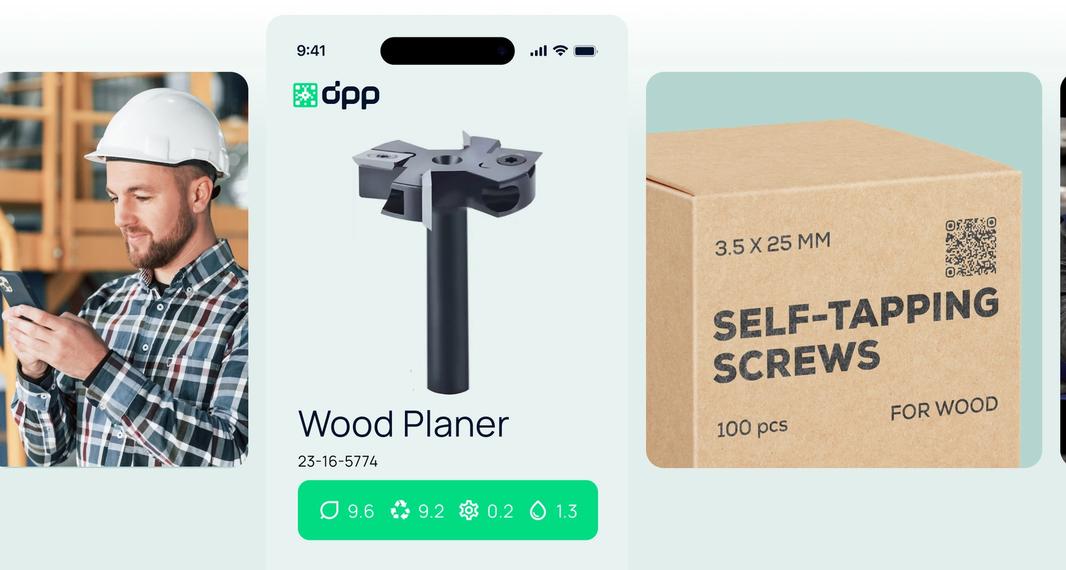
The passport will be accessible via a QR code or NFC chip and will be visualised in an online interface.
What information will DPP for construction products contain?
The Digital Product Passport will include structured data divided into main categories.
Important note: The European Commission has not yet published the final delegated acts under the new Construction Products Regulation (EU) 2024/3110, which will define the exact formats and data requirements for DPP.
Therefore, the list presented below reflects the current expectations and draft requirements, which may undergo changes during the finalisation process.
1. Product identification
- Unique identification number (UID)
- Product name, trade name, model and version
- Manufacturer and country of origin
- Code according to European standards (EN, ISO)
2. Origin and composition
- Type and origin of raw materials (e.g. sand, cement, steel, insulation material)
- Percentage of recycled materials
- Chemicals, additives and coatings used
- Declaration of absence of hazardous substances
3. Technical characteristics
- Mechanical, physical and chemical parameters
- Fire resistance, thermal conductivity, water resistance
- Expected operational lifespan
- Compatibility with other construction systems
4. Environmental indicators
- Carbon footprint (emissions during production and transport)
- Life cycle (LCA) – energy consumption, waste, emissions
- Possibility for reuse or recycling
- Environmental declarations (EPD, CE marking)
5. Sustainability and compliance
- Certificates and standards (ISO, BREEAM, LEED, etc.)
- Declaration of Performance (DoP) and CPR compliance
- Factory control and laboratory test data
6. Installation, use and maintenance instructions
- Guidelines for proper installation and operation
- Storage and transport conditions
- Maintenance and repairability
- Instructions for disassembly and safe handling
7. End of lifecycle
- Instructions for separation and sorting during disassembly
- Recycling or reuse options
- Waste categorisation according to European codes (EWC)
8. Economic operators
- Data on the manufacturer, distributor and importer
- Persons responsible for quality and safety
- Contact information and link to documentation

Impact on the construction chain
Greater transparency
DPP will allow designers and investors to see the exact environmental and technical profile of every material at the design stage. This will facilitate sustainability assessment and supplier selection.
Material traceability
During renovations and reconstructions, it will be clear what materials were used and how they can be reused – a key factor for the circular economy in construction.
Control and compliance
Regulators will be able to verify certification and compliance with European standards with a single QR code scan – without the need for paper documents.
Technologies for implementing DPP in construction
QR codes
The most accessible option for manufacturers – easy to implement, suitable for labels, packaging and product stickers. Can also be printed on the element itself (e.g. brick, panel, window).
NFC and RFID
Suitable for durable construction products and components exposed to external conditions. They allow contactless access and integration into BIM systems and digital building models.
Integration with BIM
DPP will be linked with BIM (Building Information Modeling), which will enable full traceability of materials within the construction project.
Benefits for participants
Manufacturers
- Increased competitiveness through transparency and proven sustainability
- Easier access to European markets
- Ability to automate reporting and certification
Construction companies and designers
- Better control over the quality and origin of materials
- Easy integration of DPP data into BIM and LCA analyses
Retailers and distributors
- Tracking goods along the chain
- Reducing the risk of counterfeits and mislabelled products
Investors and consumers
- Access to transparent and verifiable information about environmental impact
- Ability to choose sustainable solutions for construction and renovation
Regulators and society
- Easier control and fight against illegal materials
- Increased recycling and reuse rates
- Real data for sustainable construction policies
Challenges and risks
- Investments: Implementation requires digital systems, training and infrastructure
- Cybersecurity: Protection from unauthorised access and data tampering is required
- Technical durability: Labels and chips must withstand decades
- Lack of standardisation: European formats and protocols are still being finalised
- Human factor: Training and change in habits of manufacturers and builders is required
The Construction Industry: Opportunity and Challenge
Europe has a well-developed construction materials industry – from concrete and reinforcement to insulation and window frames. Implementing DPP can become a key competitive advantage.
Opportunities
- Exports to the EU will be facilitated through compliance with new regulations
- Companies that introduce DPP first will be preferred partners
- Opportunity for digitalisation and automation of production
Risks
- Small manufacturers may fall behind due to lack of resources
- Competitors from Central Europe are already beginning to pilot DPP implementation
Our Role – WIARA as a Partner in Construction Digitalisation
At WIARA, we view the Digital Product Passport not just as a regulatory requirement, but as an opportunity for deep transformation of the construction industry.
Our mission is to make digitalisation accessible, secure and sustainable – so that every company, regardless of its size, can meet the new European standards.
WIARA is a technology company specialising in solutions for Digital Product Passport, data management and sustainability. Our team combines experience in the fields of information security, cloud technologies, process automation and regulatory compliance.
We are actively working on implementing ISO/IEC 27001 and other security standards, which guarantees that our partners' data is processed according to the highest EU requirements.
Our SaaS platform enables:
- Automatic collection of product data from various sources – ERP systems, production lines and suppliers;
- Creation, management and maintenance of DPP according to European standards and the requirements of the Construction Products Regulation (EU 2024/3110);
- Integration with ERP, CRM and BIM systems, so that passports are linked directly with construction models and processes;
- Training, audits and consultations for manufacturers, designers and construction companies transitioning to digital and sustainable operations.
WIARA is not just a software provider – we are a long-term technology partner that helps companies build competitive advantage through transparency, automation and trust.
Our approach is pragmatic and phased – we start with an analysis of current processes, identify the potential for digitalisation and develop a strategy tailored to the specific needs of the business.
The goal is simple: less administrative burden, more transparency and sustainable growth.
Looking to the Future
The passport will reach construction products in phases, family by family, as the CPR delegated acts apply, and over time most materials on the European market will have a digital passport.
New business models
- Products with a proven "carbon footprint"
- Secondary market for certified construction elements
- Material and waste management services through DPP
Higher trust and sustainability
Manufacturers who invest in transparency and innovation will be preferred partners in the construction of the future.
Conclusion
The Digital Product Passport is the future of sustainable construction.
It will make materials more traceable, buildings more efficient and the entire sector – greener and more competitive.
For companies, the choice is the same as in other sectors:
either wait and catch up, or act now – implement DPP and position themselves as leaders in the new era of digital and sustainable construction.
Sources
- Construction Products Regulation (EU) 2024/3110 — eur-lex.europa.eu
DPP for Manufacturers, Importers and Retailers
Solutions for the Construction Industry

DPP for Construction Products
DPP ensures transparency for the composition and sustainability of construction materials, facilitating proof of origin and compliance with standards.
DPP for Manufacturers
Manufacturers create and maintain DPP, prove compliance and sustainability, earn trust and improve their processes.

DPP for Importers
Importers ensure a valid DPP for every product and provide EU market access without risk of sanctions and delays.
DPP
Frequently Asked Questions

A phased introduction is expected in the EU between 2026 and 2030. Manufacturers should start preparing early to meet the new requirements.
Identification, origin and composition, technical and environmental characteristics, certificates, instructions for use and recycling. The final requirements are still being specified by the European Commission.
It will increase competitiveness and customer trust. Companies that implement DPP on time will have an advantage in the European market.
Through a QR code, NFC or RFID tag linked to an online database. It can also be integrated into BIM building models.
It provides material traceability, facilitates recycling and reduces waste – an important contribution to the circular economy.
WIARA offers a platform for creating and managing DPP, integration with ERP and BIM systems, as well as training for manufacturers and construction companies.
Latest DPP Articles

 Kiril Shivachev••7 min read
A tender that asks for your product passport
 Kiril Shivachev••4 min read
DPP for Steel: Why Metallurgy Is the First Sector the EU Requires to Carry a Digital Passport

 Anita Kisimova-Dzakova••3 min read
DPP in construction: How the material passport turns a building into a bank of resources.
 Kiril Shivachev••5 min read
WIARA launches the DPP Partner Program — a new business model for consultants and agencies
 Anita Kisimova-Dzakova••6 min read
DPP in FMCG: How the digital passport ends silent packaging
 Anita Kisimova-Dzakova••9 min read
Blockchain, QR or RFID: The Technologies Behind the Digital Product Passport
 Anita Kisimova-Dzakova••8 min read
Trade Secret vs. Transparency: Security in the DPP Era
 Anita Kisimova-Dzakova••8 min read
DPP in construction: The new rules
 Anita Kisimova-Dzakova••6 min read
DPP: The new entry ticket for the European B2B market

 Stefan Dyankov••6 min read
End of "Buy and Throw Away": The Digital Product Passport Revolution
 Kiril Shivachev••2 min read
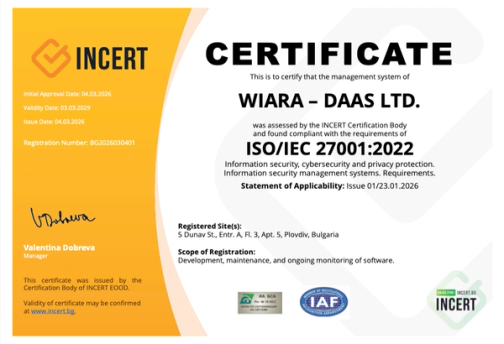
WIARA Is Now ISO 27001 Certified
 Stefan Dyankov••5 min read
DPP and Re-commerce: How the Passport Will Change Europe's Second-Hand Market
 Kiril Shivachev••6 min read
How can SMEs implement digital passports on a budget?
 Stefan Dyankov••6 min read
From compliance to competitive advantage: How to use DPP for green marketing
 Kiril Shivachev••4 min read
DPP as a Tool for Competitive Advantage
 Kiril Shivachev••8 min read
The Digital Product Passport (DPP) – the new digital identity card of products

Are You Ready for the New Era of Digital Construction?
Contact the WIARA team and learn how your company can easily implement Digital Product Passports (DPP) and meet European requirements.