What Happens If We Don't Implement DPP? Risks, Sanctions, and Loss of EU Market Access


In the business world, there exists a dangerous psychological trap known as the "ostrich strategy." When a new, complex, and resource-demanding regulation appears, many managers instinctively decide to wait. They tell themselves: "Let's see how others will do it," "Brussels always postpones deadlines," or "This will probably only affect the largest corporations."
However, when we talk about the Digital Product Passport, this strategy is not just risky — it is potentially fatal for business. DPP is not another wishful recommendation for "green thinking." It is the "entry ticket" to the richest single market in the world. In this article, we will examine the brutal reality of what lies ahead for companies that decide to ignore or delay the implementation of product passports. From legal fines to complete market isolation — the cost of inaction will be far higher than the cost of innovation.
The Direct Legal Threat: The EU's Regulatory Hammer
Let's start with the most obvious: the law. The Digital Product Passport is a central pillar of the Ecodesign for Sustainable Products Regulation (ESPR), which has the force of law in every EU Member State.
Sales Ban and Market Withdrawal
The heaviest sanction is not the fine, but the ban on placing the product on the market. Once a DPP becomes mandatory for a category (for batteries from 18 February 2027; for iron and steel or textiles once their delegated acts apply), a product without a valid, scannable and verified passport may not be placed on the EU market, and customs may hold the shipment or refuse its release.
If the product is already in the retail network, supervisory authorities have the power to demand its immediate withdrawal. Imagine the financial loss from tens of thousands of produced, transported, and stored units of goods that suddenly become "illegal" just because they lack a digital dossier.
Enormous Financial Fines
European regulators are no longer satisfied with symbolic fines. Penalties for breaching the ESPR are set by each Member State and must be "effective, proportionate and dissuasive" (ESPR Article 74). For misleading environmental claims, Directive 2005/29/EC, as amended by Directive (EU) 2024/825, requires the maximum fine for widespread infringements to be at least 4% of the trader's annual turnover in the Member States concerned. For a medium-sized company, this can mean the difference between profit and bankruptcy.
The "Great Filter" Effect: Being Thrown Out of the Supply Chain
Even if companies do not sell directly to end consumers in Germany or France, they are no longer safe. Most companies are part of complex supply chains (B2B). Companies that produce parts, process materials, or supply raw materials for larger European brands.
When the Client Becomes the "Controller"
Major European companies like BMW, IKEA, or Philips will be under intense pressure to guarantee the sustainability of their end products. To create their own DPP, they will require data from each and every one of their suppliers.
If a supplier of metal components or plastic parts cannot provide the necessary data on carbon footprint and material composition in digital format, it becomes the "weak link." Instead of wasting time training suppliers, these giants will simply replace the contract with one from a competitor who is already prepared with DPP. The inaction of companies that have not implemented DPP is an invitation for the competition to displace them tomorrow.
Financial Risk: When Banks and Investors Turn Their Backs on You
We live in an era where money is going "green." The banking sector and investment funds no longer look only at balance sheets. They look at ESG ratings (Environmental, Social, and Governance).
Higher Interest Rates and Lending Difficulties
If a company does not have a data tracking system like DPP, it is automatically classified as a "high-risk profile." Banks in the EU are required to report the environmental risk of their portfolios. The lack of transparency means that the given business is vulnerable to future regulations. The result? More difficult loan approvals and significantly higher interest rates. Companies will literally pay a "negligence tax" to their bank.
Investor Drain
If a company plans to attract external capital or go public, the lack of DPP preparation will be a red flag. Modern investors fear so-called "stranded assets" — businesses that become worthless due to changes in laws. A company without DPP is exactly such an asset.
Reputational Bankruptcy: The Price of Lost Trust
In the era of social media and radical transparency, reputation takes years to build but seconds to lose.
The Consumer "Blacklist"
The millennial generation and Generation Z will soon constitute the main part of purchasing power. For them, the ecological footprint is a question of morality. The lack of DPP will be interpreted by consumers not as a technical difficulty, but as an attempt to hide the truth.
If a competitor offers a product whose origin can be verified with one click and your product is a "black box," the consumer will choose trust. Moreover, NGOs and eco-activists will use the public DPP registries to identify and "point fingers" at companies that do not comply with the rules. Getting on such a list is a marketing catastrophe from which there is no escape.
The Operational Nightmare of the "Last Second"
Many companies think they can implement DPP "in two weeks" when push comes to shove, but this is the biggest misconception.
Technology and Information Debt
Building a Digital Product Passport requires:
- Audit of the entire supply chain
- Implementation of new software systems (ERP, PLM)
- Staff training
- Collection of historical data
If you start this process under the pressure of deadlines, you will face a shortage of consultants, overloaded software companies, and data chaos. The result will be an expensive, low-quality, and stressful implementation that can paralyze your production for months.
Conclusion: The Choice Is Between Evolution and Extinction
The Digital Product Passport is not a bureaucratic obstacle that must be jumped over or circumvented. It is a fundamental change in the way the global economy operates. The risks of NOT implementing DPP are:
- Legal: Penalties set by EU Member States, and sales bans.
- Economic: Loss of key B2B clients and market share.
- Financial: More expensive loans and lack of investor interest.
- Reputational: Complete loss of consumer trust.
The world in which we could produce without being responsible for the lifecycle of the product is gone. Companies that embrace DPP as a strategic priority today will be the leaders of tomorrow. Those who wait are simply preparing their own market obituary. The question is no longer "Should we implement DPP?" but "How quickly can we do it before the market closes its doors on us?"
Our Solutions
DPP for Different Industries

DPP for Importers
Importers ensure a valid DPP for every product and provide EU market access without risk of sanctions and delays.

DPP for Construction Products
DPP ensures transparency for the composition and sustainability of construction materials, facilitating proof of origin and compliance with standards.
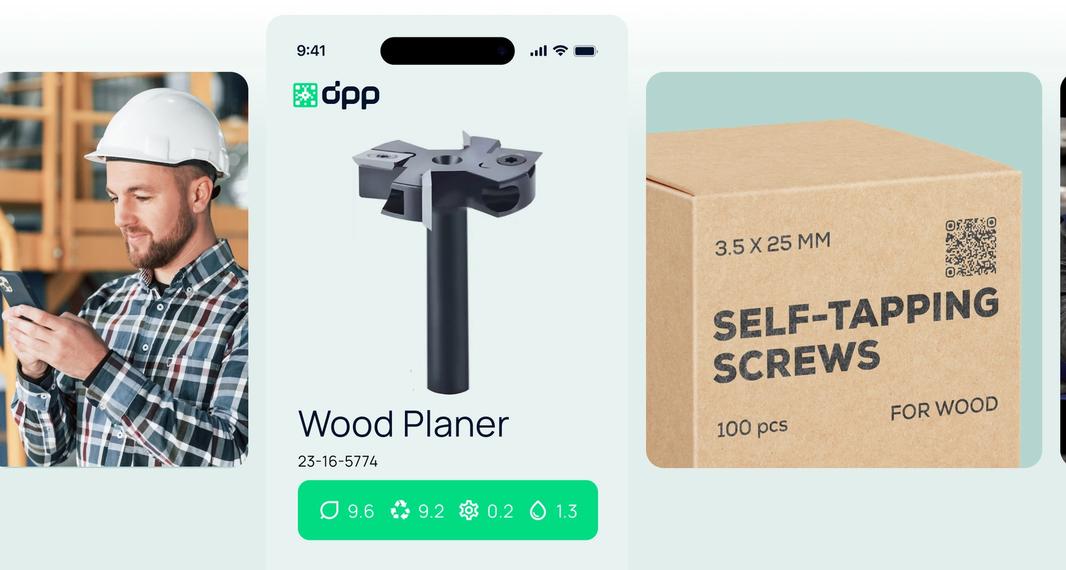
DPP for Manufacturers
Manufacturers create and maintain DPP, prove compliance and sustainability, earn trust and improve their processes.
You Ask Us:
Frequently Asked Questions

Theoretically — yes. Practically — it becomes increasingly difficult. Many markets outside the EU are beginning to adopt European standards as a reference point. Furthermore, if your business is connected in any way to European partners, the lack of DPP may limit your access to international supply chains. In other words, even outside the EU, DPP will gradually become a competitive requirement, not just a regulatory one.
There are several clear indicators that your company is already feeling the pressure: clients are beginning to request additional data on origin and sustainability you receive questionnaires related to ESG or carbon footprint partners are setting new transparency conditions you lose tenders without a clear pricing reason These are early signals that the market is changing and that the lack of structured data could soon become a serious problem.
DPP implementation is not a short-term project. Depending on the complexity of the business, the process can take from several months to over a year. The reason is that it is not just about technology, but about a comprehensive transformation, including: data collection and structuring coordination with suppliers implementation of software solutions team training Companies that start earlier will avoid the pressure and costs of the "last minute."
Absolutely. In fact, this is the most important strategic aspect. Companies that implement DPP on time and actively use it can: position their products as sustainable and transparent work with larger international partners enter premium segments build stronger trust among customers In this sense, DPP is not just a regulation, but a tool for market differentiation.
WIARA with a Complete DPP Solution
Our Solutions
DPP for Importers
Importers ensure a valid DPP for every product and provide EU market access without risk of sanctions and delays.
DPP for Manufacturers
Manufacturers create and maintain DPP, prove compliance and sustainability, earn trust and improve their processes.

DPP for Textiles
DPP provides traceability from fibre to recycling, proves brands' sustainability, and inspires consumer confidence.

WIARA Helping Your Business
Implement DPP in your production process quickly, easily, and efficiently