B2B sales and DPP: Why will your European partners soon require a digital passport from you?


Imagine you own or run sales at a successful manufacturing company that makes metal components, textiles or furniture. Your biggest customer is a German industrial group or a Scandinavian furniture chain. The relationship is excellent: you have worked together for a decade, your quality is consistent and your prices are competitive.
Suddenly you get an official letter from their procurement department. It does not negotiate the price of the next batch. Instead, they give you an ultimatum of up to 12 months each delivered unit must be accompanied by a Digital Product Passport detailing carbon footprint, chemical composition and recyclability. If you don't provide it, their vendor management software system will automatically remove you from their list of approved partners.
This is not a dystopian scenario. This is the reality that is currently being prepared in the headquarters of major European companies. In the B2B sector, the Digital Product Passport is rapidly changing from a "trendy innovation" to a mandatory entry ticket to the European market.
Why is the B2B world changing so radically?
Until recently, B2B sales rested on three pillars: price, quality and logistical reliability. If you were good at these three things, you were an indispensable partner. Today, a fourth, often more important pillar is emerging as sustainability data transparency.
The reason for this is not simply "green fashion" or the goodwill of European managers. The reason is the law. The European Union has introduced two huge regulations that act as pincers for business:
- ESPR (Ecodesign for Sustainable Products Regulation):It says products should have DPP.
- CSRD (Corporate Sustainability Reporting Directive):It obliges large companies to report the environmental footprint of their entire supply chain.
Your European partners don't require DPP from you because they want to make it difficult for you. They require it because their own business will become illegal if they cannot prove the origin and fingerprint of the components you sell them.
The Scope 3 Problem
To see why the pressure on suppliers will be so strong, start with "Scope 3" emissions. Large companies account for emissions at three levels:
- Scope 1:Direct emissions from their factories.
- Scope 2:Emissions from the energy they buy.
- Scope 3:Emissions generated by their suppliers.
For most manufacturing companies, more than 80% of their total carbon footprint comes precisely from Scope 3. This means that if you produce "dirty" steel or use textiles with a high carbon footprint, you directly worsen the performance of your customer in Germany.
In the new world of B2B sales, you're not just selling a "product" anymore. You are selling a "product + its impact on the environment". If the influence is bad or, worse, unknown, you become a toxic asset to your partner.
DPP as a risk management tool
In the B2B sector, risk is the biggest enemy of the deal. European companies are currently terrified of being accused of using materials from conflict zones, illegal labor or environmental catastrophes.
End of "honest word trust"
Until now, signed declarations were relied upon. "I declare that this metal was not mined through child labor." In the DPP era, this is no longer enough. The digital passport requires provable traceability.
Your partner will want to see the digital "print" at every stage of production. If you cannot provide this data in a structured, digital format, you are a regulatory risk. It is safer for a procurement manager in Munich to pay a 5% higher price to a supplier with a perfect DPP than to risk a million euro fine for a supplier whose data it cannot see.
How to turn DPP into a negotiating advantage?
So far this has been about threats. The other side is that the passport is the best chance many suppliers have to escape the lowest-price trap.
Dropping the cheap but "dirty" competition
European manufacturers often compete with suppliers that win on price because they spend less on environmental compliance. When passports become mandatory, suppliers that cannot document the origin of their raw materials will struggle. If your passport data is ready, you have an advantage over anyone who cannot offer the same transparency.
"Premium" status of a reliable partner
The implementation of DPP shows technological maturity. When you go to a negotiation and say, "Our products are fully passported, here's API access to our sustainability data that integrates directly into your annual report," you stop being just a "shop floor" and become a strategic partner. You save your customer time, effort and administrative costs.
Long-term contracts
Changing a supplier that is already integrated into the customer's digital ecosystem through DPP is extremely difficult and expensive. Once your data is "locked" into its tracking chain, you become part of its software organism. This is the best insurance for long term orders.
What will the buying and selling process look like in 2 years?
The change in B2B sales will be felt most strongly in the way deals are closed.
- The query:In the inquiry documents, there will be a new mandatory section: "Technical compatibility of the Digital Product Passport". If you don't meet the technical standards for data exchange, you won't even be able to submit an offer.
- Supplier Audit:Instead of a physical visit to the plant once a year, the customer will carry out an ongoing "digital audit". It will monitor your passport data in real time to make sure you don't exceed your agreed carbon quotas.
- Payment:Models where invoice payment is tied to the automatic transfer of DPP data are already being discussed. No payment without data.
The challenge for sales teams
To sell successfully in the DPP era, your salespeople need to stop talking only about "microns, tons and deadlines." They will need to become sustainability consultants.
They will need to understand what LCA is, how carbon intensity is calculated and what the circularity requirements are in the relevant industry. Selling is no longer just an act of exchanging goods for money, but an act of sharing responsibility through data.
In the future, it will not be the buyer who convinces the seller about the price, but the seller will have to prove to the buyer that his product will not destroy the ecological balance of the corporation.
Conclusion: Time to prepare is running out
For manufacturers that export, the Digital Product Passport is a question of when, not if. Your European customers are already preparing their IT systems and training their procurement managers to filter suppliers by environmental credentials.
If you wait until you receive the official letter requesting theDPP, it will probably be too late. The process of data collection, software implementation and verification takes months, sometimes a year.
Strategy today must be proactive. Connect with your key European customers now. Ask them "What data will you require from us for your DPP and what data format do you prefer?". Just asking this question will position you in their eyes as a modern, responsible and valuable partner who is ready for the future. In the new economy, the most valuable commodity is not the product itself, but the truth about it, recorded in its digital passport.
Our solutions
DPP for different industries

DPP for Construction Products
DPP ensures transparency for the composition and sustainability of construction materials, facilitating proof of origin and compliance with standards.

DPP for Textiles
DPP provides traceability from fibre to recycling, proves brands' sustainability, and inspires consumer confidence.
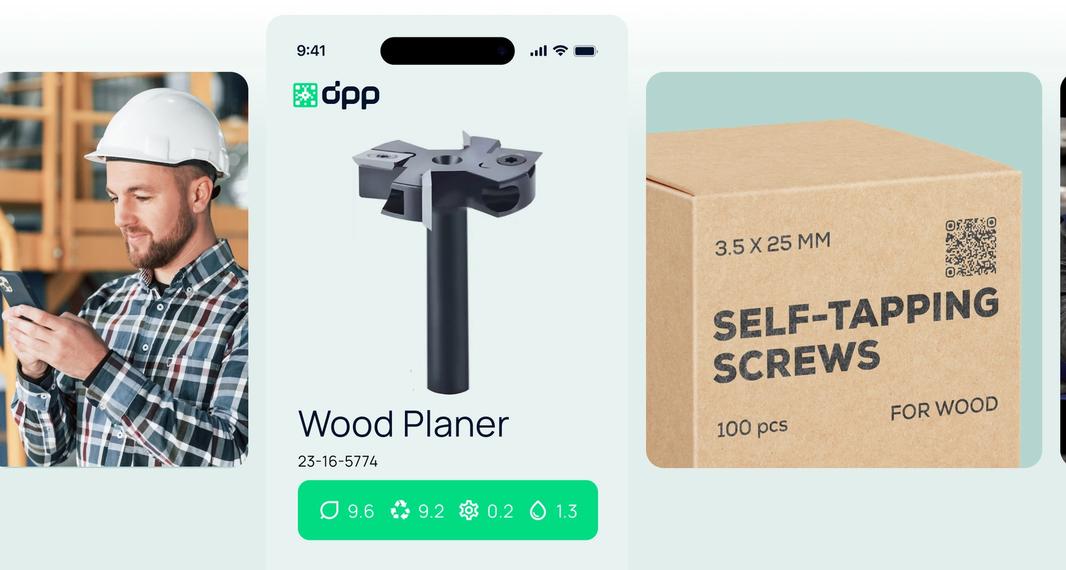
DPP for Manufacturers
Manufacturers create and maintain DPP, prove compliance and sustainability, earn trust and improve their processes.
You ask us:
Frequently asked questions

In the near future - no. The traditional "trust of good faith" and signed flysheets are being phased out. The new regulations (ESPR) require proven traceability and verified data. DPP replaces subjective declarations with an objective digital footprint. If your system cannot deliver data in the format required by the customer, their supplier management software will simply mark you as a "risky asset" and automatically stop orders.
This is one of the biggest benefits for European producers. Suppliers that have won orders mainly on price, by spending less on environmental standards, will have to document the origin of their raw materials. If they cannot provide transparent and reliable data, European buyers will stop considering them, which opens space for transparent, well-prepared producers.
Preparation usually takes between 6 and 12 months. It includes an audit of internal processes, collection of information from your own suppliers, implementation of data management software and possible verification. If you wait for the official ultimatum letter from your client, you probably won't have time to react. It's best to start proactively now by asking your partners about their technical data requirements.
WIARA with a complete DPP solution
Our solutions
DPP for Textiles
DPP provides traceability from fibre to recycling, proves brands' sustainability, and inspires consumer confidence.
DPP for Construction Products
DPP ensures transparency for the composition and sustainability of construction materials, facilitating proof of origin and compliance with standards.
DPP for Manufacturers
Manufacturers create and maintain DPP, prove compliance and sustainability, earn trust and improve their processes.

WIARA to help businesses
Implement DPP in your production process quickly, easily and efficiently