Digital Product Passport in the Furniture Industry: A Path to Transparency and Sustainability
TL;DR:
The sector is developing dynamically, but sustainability remains a serious challenge – from the sources of raw materials to the recycling of finished products.
The furniture industry is one of the most important sectors in the European economy. It includes both large manufacturing enterprises and small craft workshops that combine traditions and modern technologies. However, behind the wealth of designs and product diversity lie a number of challenges: excessive use of wood materials, lack of traceability of raw materials, presence of harmful chemicals and difficulties in recycling products at the end of their lifecycle.
In response to these problems, the European Union will introduce the Digital Product Passport (DPP) – an instrument that will become mandatory for furniture in the coming years. The passport will accompany every product throughout its entire life – from the extraction of raw materials and production, through trade and use, to reuse or recycling.
Manufacturers who are traditionally strongly export-oriented towards Europe are in a unique position. Early adoption of the new standards can turn them into preferred partners for leading retail chains and brands.
The Digital Product Passport is a digital identity of a piece of furniture that collects and provides key information to all participants in the chain – manufacturers, distributors, retailers, consumers and regulators.
Origin of materials
The passport will clearly indicate whether the wood is certified, where the metal and textile components come from, and what adhesives or coatings were used. This reduces the risk of illegal logging and prevents the use of harmful chemicals that endanger human health and the environment.
Sustainability and certificates
DPP will also include data on compliance with safety and sustainability standards. This is important both for supply chain partners who require guarantees and for end customers who increasingly seek furniture with a proven environmental profile.
Carbon footprint
Each passport will contain information about emissions generated during extraction, transportation and production. This way, consumers will be able to compare two products not only by price and design, but also by environmental impact.
Assembly and maintenance instructions
Instead of just a paper manual, DPP will provide digital access to assembly, proper use and maintenance guidelines. This will extend the life of furniture and reduce the need for premature replacement.
Repairability and recyclability
The passport will also contain information about which parts of the furniture can be replaced and how they can be separated for recycling. This way, old furniture will not end up as waste but will return to the economy as raw materials.
Furniture production often involves materials from different countries – wood from Scandinavia, metal from Central Europe, textiles from Turkey, assembly in Bulgaria. This complex chain makes traceability difficult and expensive. DPP will change this in several ways.
Less fraud
When information about raw materials is digital and verifiable, illegal logging or the use of prohibited substances will be easier to detect. This will create a fairer market and protect honest manufacturers.
Faster control
Customs authorities and inspectors will be able to verify furniture compliance with a single scan. This will shorten inspection times and speed up trade within the EU.
Standardised data
When information is unified at European level, all participants – from suppliers to retailers – will speak the same "language". This will reduce the administrative burden and the risk of errors.
To connect the product with its passport, a physical data carrier is needed. In the furniture industry, solutions must be durable and adapted to the way the product is used.
QR codes
The most accessible solution – they can be printed on labels, packaging or hidden in the furniture construction. They are cheap and easy to use, but can fade or be damaged during long-term use.
NFC chips
An increasingly popular choice for the premium segment. They allow access via smartphone without visual contact, which is convenient for consumers. Their price is higher, but they offer better durability than QR codes.
RFID solutions
Used mainly in warehouses and logistics, where it is important to process hundreds of items at once. They provide high efficiency but require an initial investment in readers and infrastructure. Suitable for manufacturers and distributors who manage large volumes.
The best practice is to combine several technologies according to needs – for example, QR for the consumer and RFID for logistics.
Manufacturers
For them, DPP is a tool that proves sustainability and quality control. This makes them more reliable partners for international clients and creates opportunities for new markets.
Distributors
With a single scan, they receive the full product history. This facilitates logistics, reduces the risk of counterfeits and speeds up customs processes.
Retailers
DPP enables better inventory management and faster customer service. It also builds trust – the customer knows they are buying an authentic and sustainable product.
Consumers
For the end customer, DPP is a guarantee of transparency. They can be sure they are buying furniture with proven origin, safe materials and clear maintenance instructions.
Regulators and society
Passports facilitate the fight against illegal logging and the grey sector, increase the recycling rate and provide more accurate data for policies in the field of sustainable development.
Investments
Purchasing equipment, software and training requires resources. For small enterprises, this can be a serious barrier.
Cybersecurity
When data is digital, there is a risk of misuse. Therefore, reliable protection and access control systems will need to be introduced.
Technical durability
Labels and chips must withstand years of use, sometimes under harsh conditions – in hotels, public buildings or outdoor spaces.
Lack of standardisation
Differences in RFID frequencies and formats can create problems in international trade. The EU is expected to work on unified requirements.
Human factor
Implementation requires a change in mindset and training. Some companies may resist due to lack of expertise or fear of new costs.
Europe has a strong tradition in furniture manufacturing – from solid wood to upholstered products and hotel furnishings.
Opportunities
Proximity to the EU market is a strategic advantage. If manufacturers implement DPP on time, they can position themselves as sustainable and innovative partners. In addition, new niches are opening up – "smart furniture" with sensors and integrated services, as well as modular systems that can be updated and partially replaced.
Risks
Small companies risk falling behind due to lack of capital and preparation. Competitors from Poland, Romania or Turkey are already investing in digitalisation and could outpace manufacturers in the race for European markets.
At WIARA, we view the Digital Product Passport not just as a regulation, but as an opportunity for strategic transformation. We support furniture manufacturers at every step of the process – from analysing production lines and selecting appropriate technologies to integrating them with existing ERP systems.
Our SaaS platform automates data management and ensures compliance with European requirements. We also provide team training and long-term support. This way, manufacturers get fast implementation, lower risk and a real competitive advantage in the European market.
By 2027, the first categories of furniture will be covered by DPP. By 2030, almost every product for the home and office will have a digital passport. This will lead to a number of changes.
New business models
"Furniture as a service" and a secondary market for products with proven origin will become part of the industry.
Greater trust in brands
Transparency will become a key factor in choice, and manufacturers who offer it first will be preferred.
Higher quality requirements
Customers will expect furniture with a longer lifespan, repairability and a clear guarantee of sustainability.
The Digital Product Passport is the future of the furniture industry. It provides transparency for customers, confidence for retailers and new opportunities for manufacturers.
For companies, the choice is clear: either wait and risk falling behind, or act now – implement DPP and position themselves as leaders in sustainable furniture production.
DPP is not a burden. It is an opportunity – an opportunity for the furniture industry to prove that sustainability and competitiveness go hand in hand.
DPP for Manufacturers, Importers and Retailers
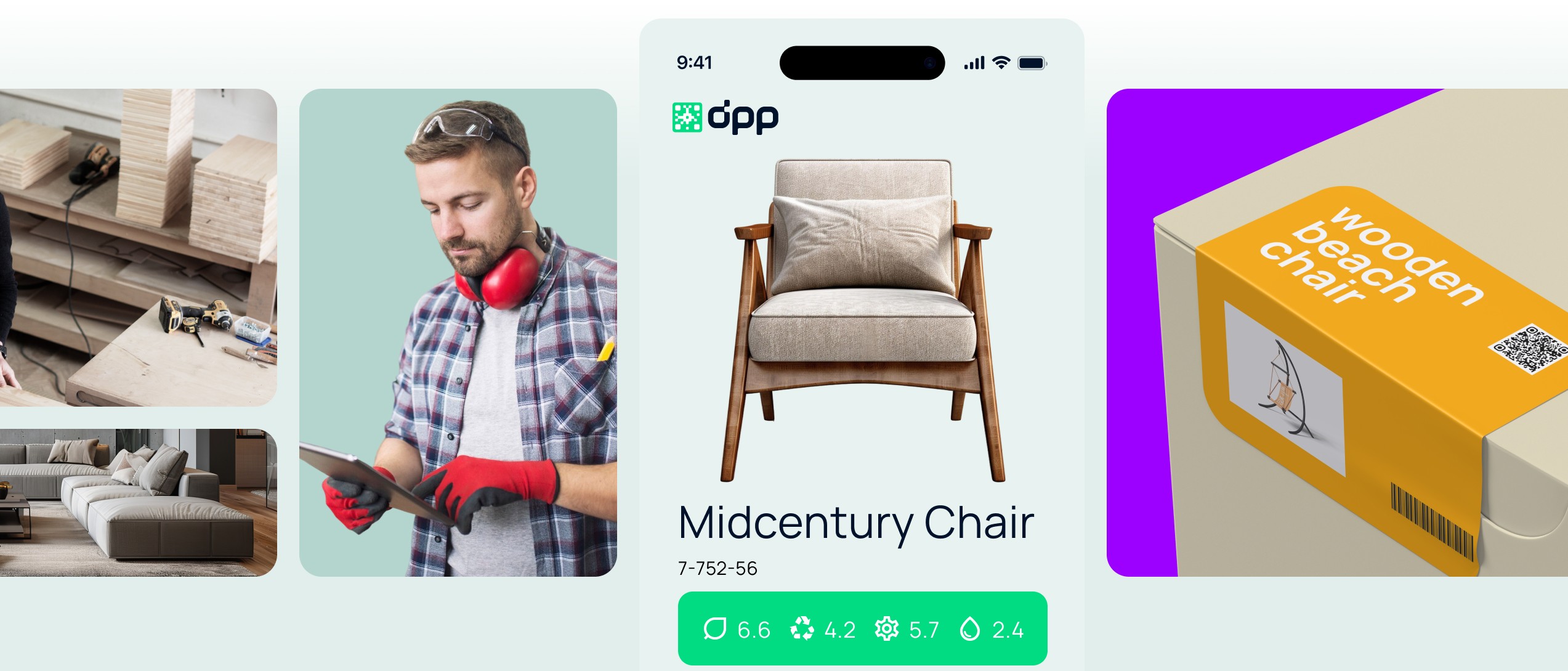
DPP for the Furniture Industry
DPP ensures transparency for the materials used, facilitates reuse and recycling. It proves the sustainability of production.
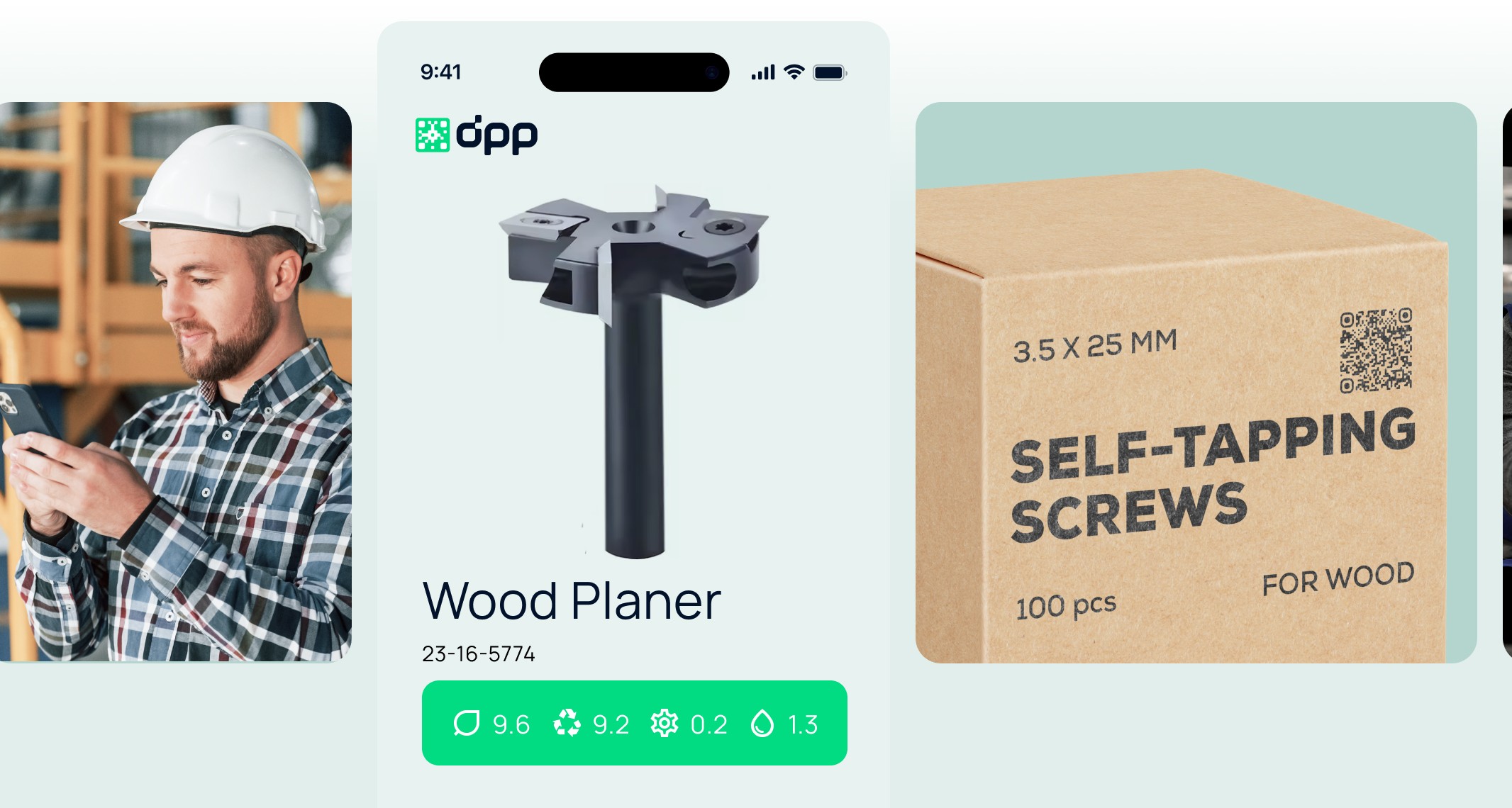
DPP for Manufacturers
Manufacturers create and maintain DPP, prove compliance and sustainability, earn trust and improve their processes.
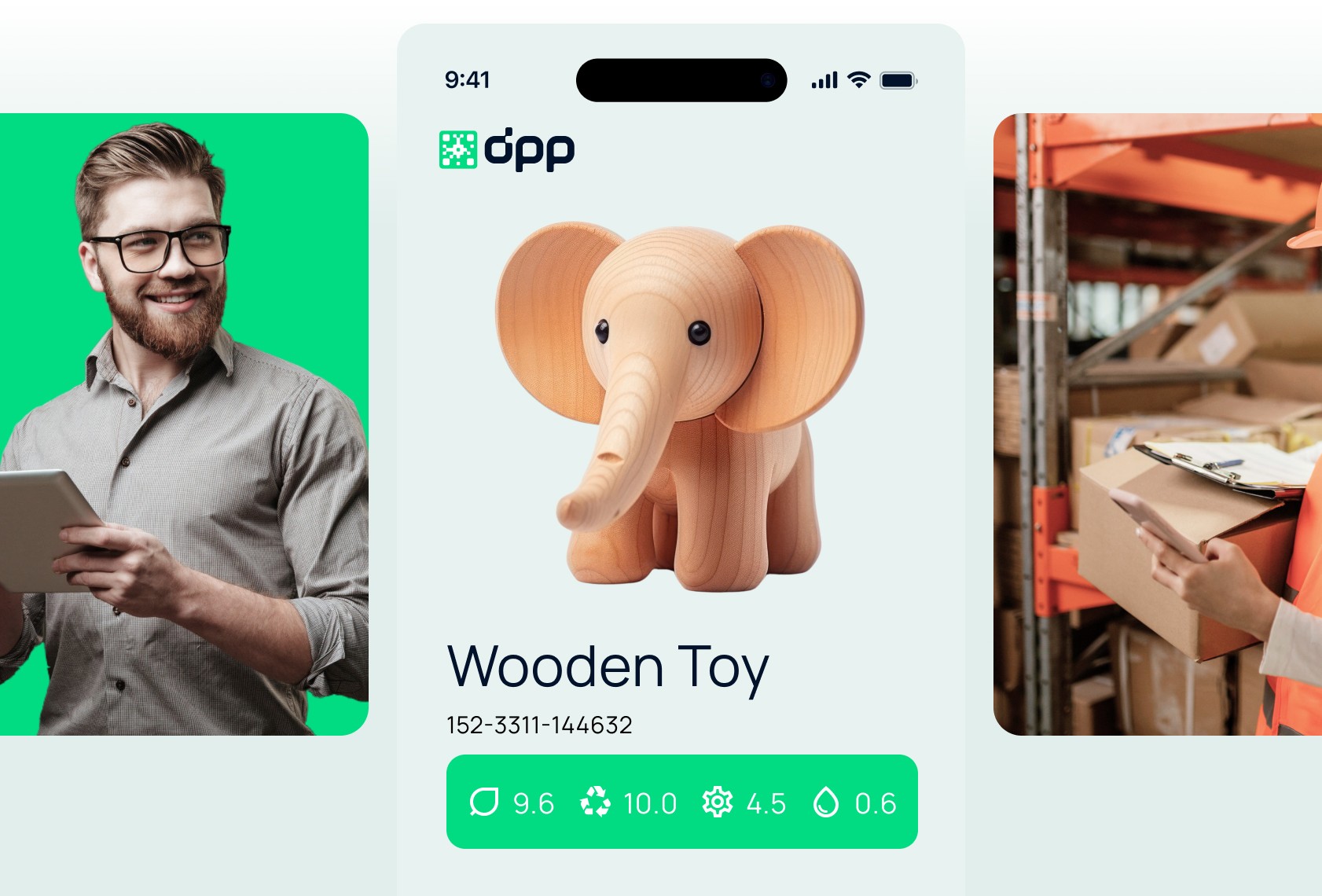
DPP for Importers
Importers ensure a valid DPP for every product and provide EU market access without risk of sanctions and delays.
DPP

The furniture industry uses complex supply chains and diverse materials. DPP helps trace every component – from the raw material to the final product, which increases trust and sustainability.
The European Commission plans to introduce it in stages from 2027, with all furniture on the EU market required to have a digital product passport by 2030.
Export-oriented manufacturers will be among the first to comply with the requirements. This is also an opportunity – early implementation will increase their competitiveness and open access to new markets.
Most commonly – QR codes, NFC chips and RFID tags that connect the physical product with its digital profile. A combination of solutions is expected depending on the product type and market segment.
The main difficulties are related to investments in equipment and software, lack of standardisation and the need for staff training. For small manufacturers, this may require state support or European programmes.
Customers will be able to easily verify the origin and sustainability of furniture, and institutions will be able to monitor for illegal logging and harmful materials. In the long term, DPP will encourage a cleaner, more transparent and responsible furniture industry.

 Kiril Shivachev•August 20, 2026•5 min read
What a Digital Product Passport actually looks like — field by field

 Anita Kisimova-Dzakova•June 26, 2026•5 min read
Model, Batch or Item: Which DPP passport level do you actually need?
 Kiril Shivachev•June 24, 2026•5 min read
WIARA launches the DPP Partner Program — a new business model for consultants and agencies
 Anita Kisimova-Dzakova•June 15, 2026•4 min read
DPP for furniture: How to prove the sustainable origin of every board to the European buyer
 Anita Kisimova-Dzakova•June 4, 2026•9 min read
DPP Audit: Who Verifies Whether the Data in Your Passport Is Correct and What Are the Penalties?
 Anita Kisimova-Dzakova•May 29, 2026•6 min read
DPP in FMCG: How the digital passport ends silent packaging
 Anita Kisimova-Dzakova•May 18, 2026•9 min read
Cybersecurity and the DPP: How to protect Digital Product Passports from hackers and counterfeits
 Anita Kisimova-Dzakova•May 14, 2026•7 min read
DPP and ERP: How to Automate the Digital Product Passport Without Operational Chaos
 Anita Kisimova-Dzakova•May 7, 2026•6 min read
"Made in Bulgaria" + DPP = Premium Image on the World Market
 Anita Kisimova-Dzakova•April 27, 2026•6 min read
Subsidies for Digital Product Passport in Bulgaria
 Anita Kisimova-Dzakova•April 24, 2026•6 min read
"The Ostrich Strategy": How the Lack of DPP Can Bankrupt Your Business
 Anita Kisimova-Dzakova•April 20, 2026•8 min read
Digital product passport: The future of Bulgarian furniture
 Anita Kisimova-Dzakova•April 7, 2026•5 min read
DPP and Ethics: The Future of Transparent Manufacturing
 Anita Kisimova-Dzakova•April 6, 2026•5 min read
The Future of DPP: What Innovations to Expect in the Next 5 Years?
 Anita Kisimova-Dzakova•March 31, 2026•5 min read
A Comparison of Regional Approaches to DPP in Europe and the USA
 Anita Kisimova-Dzakova•March 26, 2026•5 min read
DPP in Education: The Path to Sustainable Development
 Stefan Dyankov•March 6, 2026•6 min read
End of "Buy and Throw Away": The Digital Product Passport Revolution
 Kiril Shivachev•March 4, 2026•2 min read
WIARA Is Now ISO 27001 Certified
 Stefan Dyankov•February 25, 2026•6 min read
DPP and the second use (Re-commerce): How will the passport change the used goods market in Bulgaria?
 Kiril Shivachev•February 19, 2026•6 min read
How can SMEs implement digital passports on a budget?
 Stefan Dyankov•February 10, 2026•6 min read
From compliance to competitive advantage: How to use DPP for green marketing
 Kiril Shivachev•February 2, 2026•4 min read
DPP as a Tool for Competitive Advantage
 Kiril Shivachev•September 8, 2025•8 min read
The Digital Product Passport (DPP) – the new digital identity card of products
WIARA is a reliable partner in implementing digital passports.

Get Started
Schedule a meetingDPP for Textiles
DPP for Steel and Iron
DPP for Batteries
DPP for Construction Materials
DPP for Furniture
DPP for Manufacturers
ESPR - Core Framework
DPP - Digital Product Passport
Work Plan 2025-2030
DPP - First Affected Industries
Partner Program
Technical standards
FAQ
Deadlines
CPR - Construction Products
Regulations
Battery Regulation & battery passport
PPWR – Packaging Regulation
CRMA – Critical Raw Materials Act
CBAM – carbon border adjustment
Toy Safety Regulation (EU) 2025/2509
Detergents Regulation (EU) 2026/405
Right to Repair – Directive 2024/1799
Green claims & greenwashing – ECD 2024/825
Textile EPR – Waste Framework Directive
CEA – Circular Economy Act
EPA – European Product Act
© 2026 WIARA DAAS Ltd.
All rights reserved.