The European furniture industry and the DPP: preparing for the new ecodesign requirements

European furniture is sold far beyond the country where it is made. Manufacturers furnish hotels in Germany, offices in France and homes in Scandinavia. To keep and grow those positions, the sector has to prepare for its biggest regulatory change in decades: the Digital Product Passport under the Ecodesign for Sustainable Products Regulation.
For furniture this is more than a digital label. It changes the way every table, chair and sofa is designed, made and sold. This article looks at what the requirements mean for European furniture companies and how they can turn an administrative task into a market advantage.
Why is furniture "under the scrutiny" of the European Union?
The furniture sector has been identified by the EC as one of the priorities for the introduction of DPP due to the huge consumption of resources and the large volume of waste. Over 10 million tonnes of furniture are thrown away in the EU every year, with the majority ending up in landfills or incinerators instead of being recycled or refurbished. The DPP aims to change this by imposing three main pillars:
- Durability:Furniture should be sturdy and easy to repair.
- Traceability of materials:Accurate information on the origin of wood, textiles and chemicals.
- Roundness:Easy disassembly and reuse of components.
What will the passport of a sofa or cabinet contain?
Imagine a customer in Munich buying a dining table made in Portugal. By scanning the QR code on the underside of the tabletop, they can see:
- Origin of the wood: Evidence of FSC or PEFC certification, guaranteeing that the wood is not from illegal logging.
- Chemical profile:Information on the adhesives used (e.g. low formaldehyde emissions) and water-based varnishes.
- Repair instructions:Link to a video on how to replace the damask or how to order a replacement table leg.
- Carbon Footprint:Estimated value of emissions from the extraction of the raw material to the delivery to the store.
Challenges for European producers
Across Europe the furniture sector is highly fragmented, from large factories with automated lines to small family workshops. The new requirements put different obstacles in front of each of them.
The complexity of the supply chain
A modern sofa contains a wooden frame, metal mechanisms, foam, fabric, zips and fasteners. To build its passport, the manufacturer needs data from each of those suppliers. If a fabric supplier outside the EU cannot provide composition and sustainability data, the passport for the finished product is incomplete, and that can hold up its sale on the EU market.
A shift in engineering thinking
Furniture is often assembled with permanent glue joints or encapsulated parts, which makes repair impossible. Ecodesign favours furniture that comes apart easily, so designers will have to rethink adhesives and move towards screwed joints and modular components.
How the DPP changes market positions
It sounds like bureaucracy, but the passport is a real chance for European companies to stand apart from low-cost competition from outside the EU.
Excellence through transparency
If a kitchen furniture manufacturer can prove through its passport that its panels are fully recyclable and made with energy from its own solar installation, it becomes a premium choice for large European retail chains. A passport is evidence that advertising cannot replace.
Deployment of after-sales services
The sell-and-forget model is fading. With a passport, furniture companies can build new income streams, such as surface refresh kits or maintenance subscriptions based on the information in the passport, and both build long-term customer loyalty.
Practical steps to prepare
Furniture companies that do not want to be caught unprepared should start now:
- Materials Inventory:Make a list of all input materials and ask your suppliers for ecological footprint certificates.
- Investment in software:DPP requires a digital database. Excel spreadsheets won't do. Systems (ERP) are needed that can generate and store digital records for each product.
- Designer Training:Go to circular design principles. The question "How are we going to recycle this in 15 years?" it must be set already at the first sketch.
Small businesses do not have to go it alone. Industry associations and clusters can organise shared approaches to the passport, so that each workshop does not have to build its own expensive system.
The circular furniture economy
The passport will also encourage a new kind of service: furniture refurbishment centres. When an office in Vienna or Warsaw replaces its furniture, the old pieces need not go to landfill.
Thanks to their passport, the next owner will know exactly how to reupholster or restyle them. This turns furniture from a "consumable" into an "asset" that retains its value over time.
How will the DPP affect furniture exports?
Much of Europe's furniture industry depends on exports, so the new requirements will be a condition of market access rather than an option. Large markets such as Germany, the Netherlands and the Nordic countries already treat sustainability as a deciding criterion when choosing suppliers. The passport becomes a kind of entry ticket.
Companies that cannot provide full traceability of materials and carbon footprint risk such as loss of long-term contracts, exclusion from tenders and lower competitiveness against certified producers
On the other hand, companies that implement DPP on time will be able to position their products in a higher price segment and work with larger international partners.
Digitization as the hidden challenge
The focus usually falls on sustainability, but for many manufacturers the real challenge will be digitalisation. Many companies still run partly digital processes or rely on manual records.
However, DPP requires a centralized database for each product, automatic material tracking, integration between design, manufacturing and logistics. This means that the topic of DPP is actually also a topic of technological transformation.
The role of non-EU suppliers
One aspect is often underestimated: European manufacturers depend on suppliers outside the EU. Fabrics, mechanisms and fittings frequently come from Turkey or China. With the passport that becomes a risk, because those suppliers may not meet European transparency requirements, missing data can hold up the whole product, and checks will become stricter.
As a result, many companies will need to review their supply chains, move to European partners or demand more from their current suppliers.
What will be the new role of the customer
DPP doesn't just change business, it changes customer behavior.
When information becomes readily available through a single QR code, consumers will begin to make decisions based on:
- origin of materials
- production sustainability
- repair options
This means marketing will also transform. Instead of blanket claims like "high quality," companies will have to prove their value with real data.
What does this mean for pricing strategy?
One of the key questions for businesses is whether the DPP will make furniture more expensive. The short answer is yes, but not for everyone equally. Companies that invest in sustainable materials and digital systems are likely to have higher production costs in the beginning.
However, this will allow them to position themselves as high-end brands.
At the same time, producers who try to keep prices low without transparency will be pushed out of regulated markets.
Practical example: what does a finished DPP for a piece of furniture look like?
To make this concrete, take a simplified scenario. A manufacturer in Poland produces a sofa for sale in Germany. To be ready for a passport, the product must:
- uses certified wood
- has textiles of proven origin and composition
- be designed so that the damask can be replaced
- contains information about all components in digital format
This means that even at the design level the product must be thought of as "traceable" and "disassembleable", not just as aesthetic and functional.
Technologies for implementing DPP in furniture
To connect the product with its passport, a physical data carrier is needed. In the furniture industry, solutions must be durable and adapted to the way the product is used.
QR codes
The most accessible solution – they can be printed on labels, packaging or hidden in the furniture construction. They are cheap and easy to use, but can fade or be damaged during long-term use.
NFC chips
An increasingly popular choice for the premium segment. They allow access via smartphone without visual contact, which is convenient for consumers. Their price is higher, but they offer better durability than QR codes.
RFID solutions
Used mainly in warehouses and logistics, where it is important to process hundreds of items at once. They provide high efficiency but require an initial investment in readers and infrastructure. Suitable for manufacturers and distributors who manage large volumes.
The best practice is to combine several technologies according to needs – for example, QR for the consumer and RFID for logistics.
Conclusion
DPP will not just be a regulation the industry has to comply with. It will be a filter that separates the prepared from the unprepared. For Europe's furniture makers this is a moment of choice: react to the change, or use it to move up a level.
Companies that start thinking in the direction of transparency, circularity and digitization today will not simply meet the requirements. They will build a sustainable business model that will work not only in Europe, but also in the global market.
Our solutions
DPP for different industries
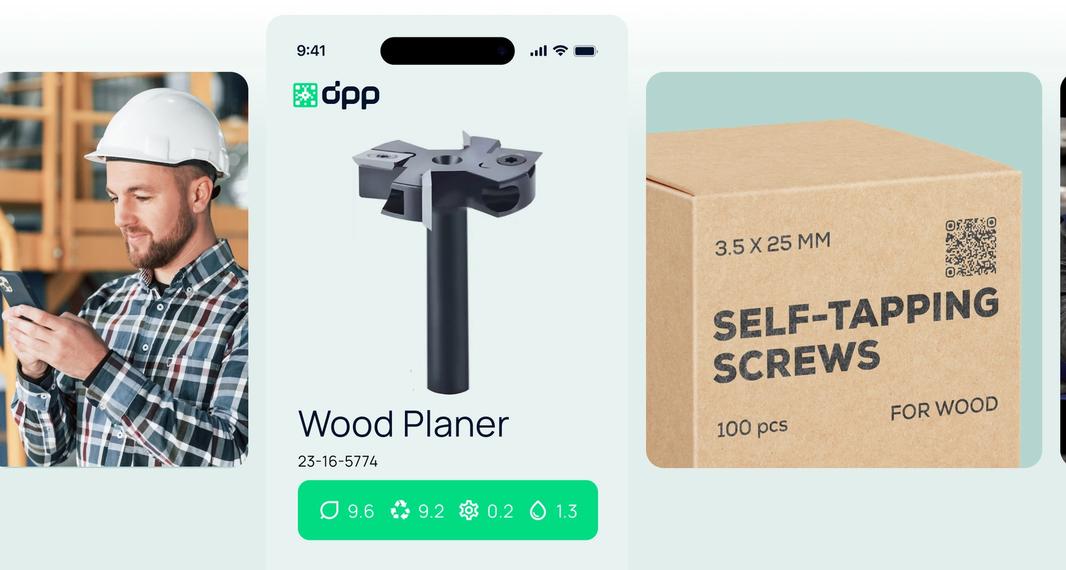
DPP for Manufacturers
Manufacturers create and maintain DPP, prove compliance and sustainability, earn trust and improve their processes.
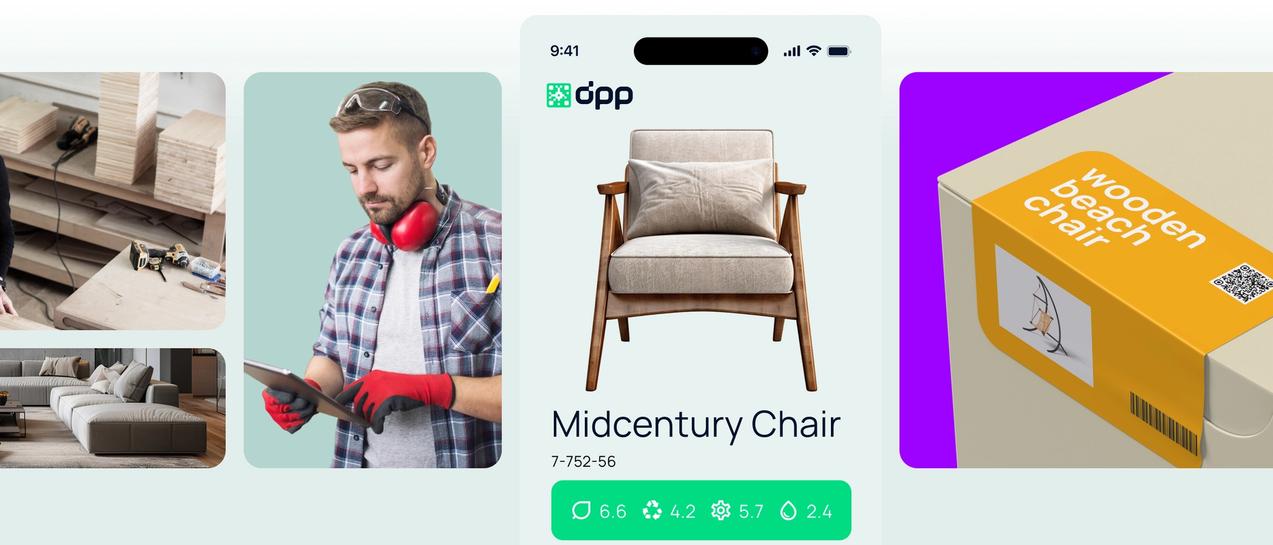
DPP for the Furniture Industry
DPP ensures transparency for the materials used, facilitates reuse and recycling. It proves the sustainability of production.
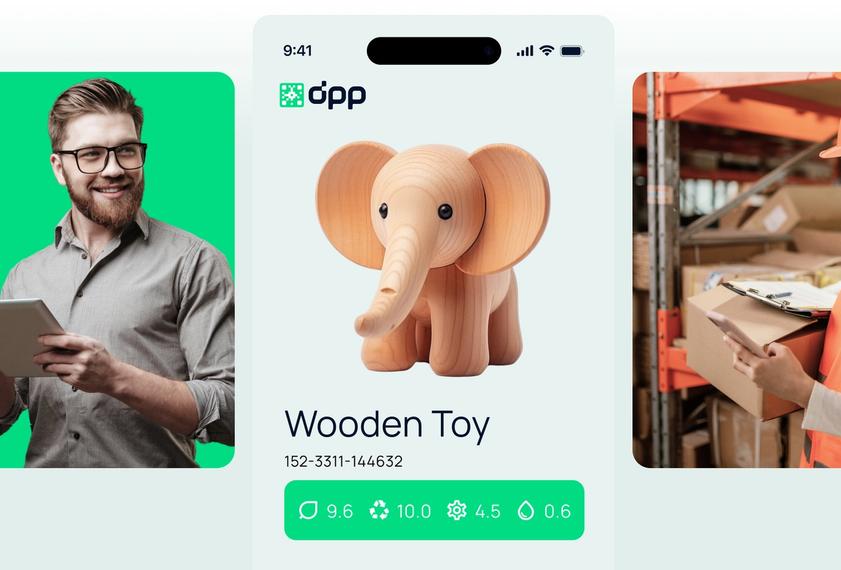
DPP for Importers
Importers ensure a valid DPP for every product and provide EU market access without risk of sanctions and delays.
You ask us:
Frequently asked questions

The three pillars are: Durability: Furniture should be strong and easy to repair to extend its life. Traceability: Complete information on the sources of raw materials (textiles, wood, metals). Circularity: Designing products so that they can be easily disassembled and their components reused or recycled.
The biggest challenge is the complexity of the supply chain and the need for digital transformation. As furniture consists of many components, manufacturers must obtain accurate data from each supplier (including those outside the EU). Lack of data from an importer of fabric or mechanisms can block the export of the entire finished product.
It lets companies stand apart from low-cost competition through transparency. By proving the responsible origin and low carbon footprint of their furniture, they become preferred partners for large European retail chains. The passport also opens the door to new services, such as maintenance subscriptions or spare-parts sales.
Designers and engineers must move to the principles of "circular design". This means abandoning the permanent gluing and encapsulation of elements and switching to screw connections and modular constructions. The question of how the product will be disassembled and recycled after 15 years becomes leading even when the first sketches are created.
WIARA with a complete DPP solution
Our solutions

DPP for Textiles
DPP provides traceability from fibre to recycling, proves brands' sustainability, and inspires consumer confidence.
DPP for Importers
Importers ensure a valid DPP for every product and provide EU market access without risk of sanctions and delays.
DPP for the Furniture Industry
DPP ensures transparency for the materials used, facilitates reuse and recycling. It proves the sustainability of production.

WIARA to help businesses
Implement DPP in your production process quickly, easily and efficiently