Blockchain, QR Codes or RFID: Which Technology Really Powers the Digital Product Passport?


In the world of modern commerce and European regulation, one particular phrase has begun to stir both excitement and a touch of panic among manufacturers: Digital Product Passport. As the deadlines set by the European Union for various industries draw nearer — from batteries and electronics to textiles and construction materials — the question is no longer whether we will need to implement these passports, but exactly how we are going to do it.
When a business starts looking into the topic, it inevitably runs into an avalanche of technical jargon. Consultants talk about blockchain, logistics teams insist on RFID, and marketing teams ask whether we couldn't just slap a QR code on the label. The truth is that the Digital Product Passport is not a single technology. It is an ecosystem.
To clear the fog around the technical side of the DPP, let's take this concept apart into its component pieces and see which technology plays which role, what its advantages are, and where the pitfalls lie.
What is the Digital Product Passport, really?
Before we dive into the hardware and software, it's important to be clear about what we're trying to achieve. The Digital Product Passport is essentially a "digital twin" of the physical product.
Its purpose is to collect and share key information about a product's life cycle — from the origin of the raw materials, through the manufacturing process and carbon footprint, all the way to instructions for recycling and repair. This information needs to be accessible to a range of actors along the chain:
- Customs authorities and regulators, who check for compliance.
- Retailers and distributors, who manage inventory.
- End consumers, who want to know what they are buying.
- Recycling companies, which need accurate data on the product's composition at the end of its life.
Because different people need different information, the technology behind the DPP has to be flexible, secure and easily accessible. This brings us to the big divide between data carriers (how we access the information) and data infrastructure (where the information is stored).
Data carriers: the physical link to the digital world
A data carrier is that little something on the product itself or its packaging that acts as a bridge between the physical object and the internet. The European Commission is unequivocal: this carrier must be machine-readable and linked to a unique identifier. This is where the three main players enter the ring.
QR codes: the consumer's universal language
If we had to bet on the most likely "winner" for the mass market, it is unquestionably QR codes (and more specifically their industrial cousins such as 2D Data Matrix).
Since the pandemic, scanning a QR code has become second nature for consumers. No special hardware is required — any modern smartphone can read one in a fraction of a second. For creating a Digital Product Passport in industries such as fashion and fast-moving consumer goods, QR codes offer unmatched advantages.
- Extremely low cost: Printing a QR code costs a fraction of a cent.
- Design flexibility: They can be integrated directly into existing care labels or packaging.
- Universality: They don't require specialised readers in warehouses.
Where's the catch? A QR code requires a direct line of sight. If you have a pallet of 10,000 T-shirts in a warehouse, you can't scan their QR codes all at once.
Someone has to physically point a camera at each one of them. On top of that, traditional QR codes can easily be copied, which makes them a weak tool against counterfeiting.
RFID and NFC: the industrial champions of the supply chain
Here we enter the territory of radio frequencies. Although they are often confused, RFID (Radio Frequency Identification) and NFC (Near Field Communication) play different but equally important roles in the DPP ecosystem.
RFID technology has been used extensively in logistics for decades. It works through small chips with antennas that can be read from a distance using special scanners (RFID gates or handheld terminals). RFID's main superpower is bulk scanning. You can drive a whole forklift loaded with boxes through an RFID portal, and the system will register hundreds of unique product passports in a second — without anyone having to open the boxes.
For the B2B sector and inventory management, this is invaluable. The downside is the cost of the tags themselves (around 5–15 cents apiece) and the need for expensive infrastructure to read them.
NFC technology, on the other hand, is what you use when you pay contactlessly with your phone. It works at very close range (a few centimetres). In the context of product passports, NFC is the premium, ultra-secure option. The chips can be embedded invisibly inside the product itself — for example in the lining of an expensive designer bag, in the casing of an appliance, or in the sole of a sneaker.
When the consumer brings their smartphone close, they immediately gain access to the DPP. NFC tags can generate a unique cryptographic code with every scan, which effectively makes counterfeiting the physical product impossible.
The infrastructure: where does the data actually live?
One of the biggest misconceptions about the Digital Product Passport is that all of the information is stored in the chip or QR code itself. This is completely wrong.
Even the most advanced NFC chips have limited memory (typically a few kilobytes). If you tried to write the entire list of ingredients, the carbon footprint, the repair history and the recycling manual in PDF format onto them, you simply wouldn't have enough room.
The QR code or RFID tag is just the key. It contains only a single web address (URL) or identification number. When you scan that key, your device connects to the internet and downloads the actual data from a remote server. And here we arrive at the next big technological question: what are these servers?
Cloud databases and standards
For 95% of the products on the market, the data behind a DPP will be stored in traditional — though heavily secured — cloud databases (such as AWS, Microsoft Azure or manufacturers' own on-premise servers).
The real magic here isn't the cloud itself, but the way the data is structured. For the passport to work across the entire European Union, it has to speak a universal language. This is where standards such as GS1 Digital Link come in. It is the evolution of the traditional barcode. GS1 Digital Link allows a single QR code to perform many functions at the same time.
If a supermarket cashier scans it, it works like an ordinary barcode to read the price (a B2B function). If the same code is scanned by a consumer with a mobile phone, it takes them to a website with the Digital Product Passport (a B2C function). This intelligent request router is the foundation on which the mass rollout of passports will be built.
Blockchain: the backbone of trust, or unnecessary hype?
There's no way to talk about digital passports and traceability without mentioning the elephant in the room — blockchain technology. In recent years it has become fashionable for every software solution to include the word "blockchain" so it sounds innovative. But is this technology actually necessary for the DPP? The short answer is: it depends on the product.
Blockchain isn't a database for storing large files. It is a decentralised, immutable digital ledger. Once recorded on the blockchain, information cannot be secretly altered or deleted by anyone. Here is when blockchain is absolutely critical for the Digital Product Passport:
- For products with a high risk of counterfeiting: Luxury watches, expensive wines, car parts. If the passport claims the watch is genuine, the blockchain record guarantees that the brand actually made it.
- For conflict minerals and sustainability: When it comes to batteries for electric vehicles, manufacturers have to prove that the cobalt wasn't mined using child labour in Congo. Blockchain can securely trace the raw material's journey from the mine to the factory.
- Circular economy and resale: When a product changes hands several times, blockchain serves as a secure "service record" that everyone can trust.
That said, for an ordinary cotton T-shirt or a plastic chair, deploying a complex blockchain architecture is often unjustifiably expensive and energy-hungry. In those cases, traditional cloud solutions backed by the company's own cryptographic signatures are entirely sufficient to meet regulators' requirements.
How do you choose the right combination?
There is no universal "right" technology for the Digital Product Passport. The best systems will be hybrid, combining different technologies to meet a business's specific needs. When planning your strategy, you should ask yourself a few key questions about the value and life cycle of your products:
- Textiles and clothing: Expect QR codes (GS1 Digital Link) to become widespread on care labels. For higher-end brands we'll see RFID tags hidden inside price tags to make in-store inventory easier.
- Consumer electronics: A combination of a QR code on the box and a software passport built into the device's own operating system.
- Industrial batteries: An exceptionally strict approach. Here we'll see a combination of engraved 2D barcodes, robust cloud infrastructure for storing terabytes of test data, and — almost certainly — a blockchain-based system for tracking the rare metals.
- Luxury goods: Embedded, invisible NFC chips tied to blockchain tokens (NFTs) that prove ownership and authenticity.
Conclusion: technology is just a means; the goal is transparency
In the debates over whether to choose QR codes, RFID or blockchain, we often lose sight of the big picture. The Digital Product Passport isn't being created for the sake of the technology itself. It is a tool for transforming the economy.
The European Union doesn't care which software stack you use. It cares that the end consumer knows how much water was used to produce their jeans, and that the recycling company can separate the safe materials from the toxic dyes.
The technology behind the DPP is already here — it is mature, tested and ready to be deployed. The real challenge facing companies won't be printing a QR code. The challenge will be collecting, cleaning and organising the data from every supplier along the chain, so that there is something meaningful to show when that code gets scanned. Those who realise this in time and start building their data architecture today will have a huge competitive advantage in tomorrow's transparent market.
Our solutions
DPP for different industries

DPP for Textiles
DPP provides traceability from fibre to recycling, proves brands' sustainability, and inspires consumer confidence.

DPP for the Furniture Industry
DPP ensures transparency for the materials used, facilitates reuse and recycling. It proves the sustainability of production.

DPP for Construction Products
DPP ensures transparency for the composition and sustainability of construction materials, facilitating proof of origin and compliance with standards.
You ask us:
Frequently asked questions

Blockchain is particularly well suited to products with a high risk of counterfeiting (luxury goods, car parts), to tracking conflict minerals (such as cobalt in electric-vehicle batteries), and to products that change hands repeatedly, since it provides an immutable and verifiable record of their history.
RFID works over a greater range and allows hundreds of products to be scanned in bulk at the same time, which makes it ideal for logistics and warehouses. NFC works at very close range (a few centimetres) and is better suited to direct interaction with the end consumer, offering higher security against counterfeiting.
The real challenge isn't the technical implementation of a QR code or chip, but collecting, cleaning and organising data from every supplier along the supply chain — so that when the passport is scanned, it shows meaningful and reliable information.
WIARA with an end-to-end DPP solution
Our solutions
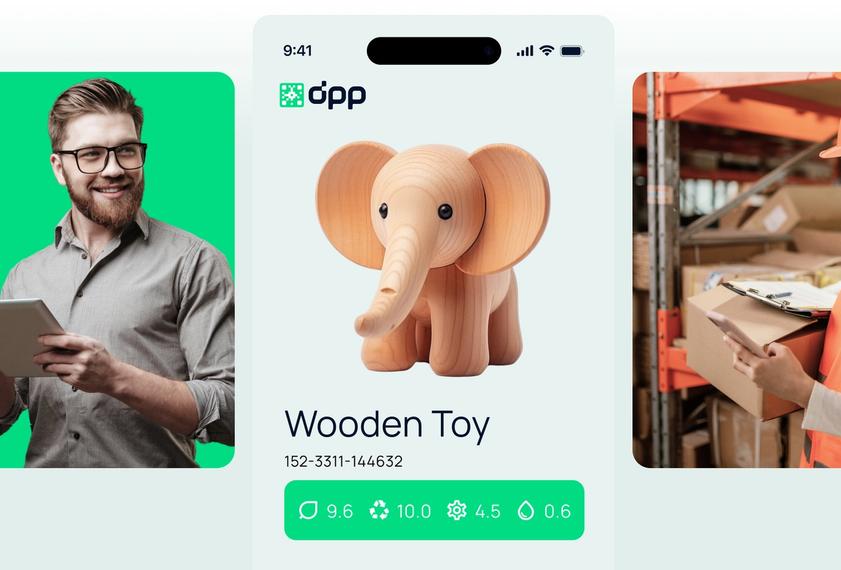
DPP for Importers
Importers ensure a valid DPP for every product and provide EU market access without risk of sanctions and delays.
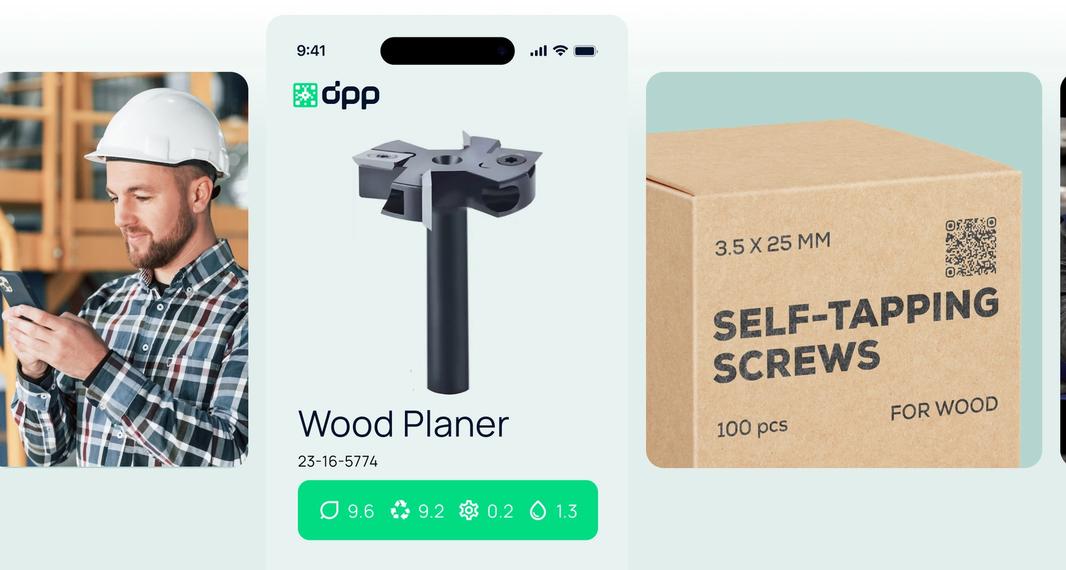
DPP for Manufacturers
Manufacturers create and maintain DPP, prove compliance and sustainability, earn trust and improve their processes.

DPP for Retailers and Service Centres
DPP simplifies warranties, repairs and product tracking. Retailers and service centres receive accurate information for higher quality service.

WIARA at your business's service
Implement DPP in your manufacturing process quickly, easily and efficiently