DPP in the cosmetics industry: The full transparency revolution


Let's be honest: the way we buy cosmetics today is fundamentally different from what it was a decade ago. While in the past we tended to blindly trust beautiful packaging, grand promises of "eternal youth" and celebrity endorsements, today we are far more critical. We read the labels, look for information about the origin of ingredients, ask whether the product has been tested on animals, and wonder what happens to the plastic bottle once the cream runs out.
Consumers are no longer simply looking for beauty; they are looking for conscious, ethical and sustainable beauty. This is precisely where a concept that is about to rewrite the rules of the game entirely takes the stage.
This initiative, a key part of the European Union's strategy for transitioning to a circular economy, aims to make the life cycle of every product fully transparent. But why is the cosmetics industry one of those that will most strongly feel the impact of implementing DPP, and what does this mean for all of us — both for businesses and for end consumers? Let's take a closer look.
Why does the cosmetics industry urgently need DPP?
The cosmetics sector is a multi-billion-dollar global machine with a staggeringly complex supply chain. A single moisturising face cream can contain more than thirty different ingredients sourced, processed and supplied from fifteen different countries across three continents. This complexity creates an enormous opening for a lack of transparency.
The end of "greenwashing"
One of the biggest problems in the modern beauty industry is what is known as greenwashing. This is a marketing practice in which a brand claims that its products are "100% natural", "eco-friendly" or "clean" without any real evidence to back it up. Since the terms "natural" and "clean" are not strictly regulated in law in all parts of the world, many companies abuse them.
The Digital Product Passport will put an end to these empty promises. When every claim has to be backed up by traceable data in the product passport, brands will no longer be able to hide behind clever marketing. They will have to prove their sustainability with facts.
Safety and allergen control
Our skin is the largest human organ and absorbs much of what we apply to it. For people with sensitive skin or specific allergies, choosing cosmetics often feels like walking through a minefield. Although ingredient lists are mandatory, they are frequently printed in microscopic type, use complex chemical terminology and provide no information about possible traces of allergens that made their way into the product during manufacturing. DPP will allow consumers to instantly filter and check products for ingredients they want to avoid.
What exactly is the DPP and how will it work in practice?
It sounds like a complex technological concept, but in fact the experience for the end consumer will be extremely intuitive and easy. Imagine you are in a shop, holding a new vitamin C serum in your hands. On its packaging there is a QR code, an NFC tag or some other kind of digital marker.
You take out your smartphone, scan the code and an interactive "passport" for the product instantly loads on your screen. It is not simply a copy of the label, but a dynamic database. Here is what such a passport might contain in cosmetics:
- Full ingredient traceability: The precise origin of key active substances.
- Environmental footprint: Data on the carbon emissions and water consumption generated during the production of this specific item.
- End-of-life instructions: Clear guidance on exactly how to disassemble and recycle the packaging.
- Certifications and authenticity: Digital and tamper-proof evidence of certifications such as Cruelty-Free, Vegan, Fair Trade or organic origin.
A focus on ingredients: Ethical sourcing and social responsibility
When we talk about cosmetics, the focus often falls on the end result — radiance, hydration, fragrance. But what is the human and environmental cost of that result? The Digital Product Passport will shine a light on the darkest corners of the industry.
The dark side of shimmer
Take mica, for example — the mineral that gives highlighters, eyeshadows and lipsticks that wonderful, illuminating shimmer. It is an open secret that a large share of the world's mica supply comes from illegal mines in India and Madagascar, where child labour is used in extremely dangerous conditions. Until now, it has been easy for cosmetics giants to turn a blind eye, buying the raw material through a long chain of intermediaries. With the introduction of DPP, the origin of every batch of mica will have to be traced and validated.
The case of palm oil and its derivatives, used in almost everything from soaps to lotions, is similar. Its extraction is linked to massive deforestation and the destruction of orangutan habitats. Through DPP, consumers will be able to check directly whether the palm oil in their shampoo comes from sustainable, certified plantations or is contributing to environmental disaster.
Packaging and the circular economy in the beauty sector
The cosmetics industry is one of the largest plastic polluters on a global scale. Billions of empty tubes, jars and pumps end up in landfill every year. The problem is that cosmetics packaging is often made of mixed materials — for example, a plastic tube with a metal spring inside the pump and a glass base. This makes it almost impossible to recycle in standard facilities.
The Digital Product Passport will play a key role in solving this problem. It will give sorting and recycling centres precise information about the exact chemical composition of the packaging. For consumers, it will mean an end to the confusion in front of the recycling bins, since the passport will tell them exactly what to do with the empty container.
Challenges to implementing DPP in cosmetics
Although the benefits sound utopian, the transition to a Digital Product Passport will not happen overnight, and it comes with its own serious challenges for businesses.
Protecting trade secrets
One of the biggest fears of cosmetics brands is the disclosure of their unique formulas. In an industry where millions are invested in R&D to create the perfect anti-ageing cream, the formula is the most closely guarded secret.
Lawmakers and technology developers must strike a delicate balance between providing enough transparency to consumers and regulators without forcing companies to publish their patented recipes and exact proportions in open source.
Technological and financial barriers
For large international corporations with huge budgets, deploying blockchain technologies and traceability systems is a matter of time and organisation. But for small, independent cosmetics brands, it can be an unbearable financial burden. Collecting data from every single supplier, auditing the farms that source botanicals, and maintaining a secure digital infrastructure require resources that small businesses often lack.
Even so, the technology is developing rapidly, and platforms are already emerging that offer standardised, affordably priced DPP solutions delivered as software-as-a-service, designed specifically to help smaller players remain competitive.
The fight against counterfeits
This is a challenge that DPP will actually help to solve. The market for fake cosmetics and perfumery is enormous. These products not only inflict financial damage on the original brands, but are also extremely dangerous to health, since they are often produced in unhygienic conditions and contain toxic chemicals.
Because every digital passport will be cryptographically protected and unique to a specific product, counterfeiters will in practice be unable to copy a product's digital identity. Scanning a fake item will simply show that no such record exists in the brand's official database.
What are the real benefits for business?
It may sound as though DPP is just another heavy regulatory framework imposed from above by institutions that will make life harder for business. The truth, however, is that visionary brands already recognise the enormous potential this technology holds for their growth.
- Building unshakeable trust: In an age of scepticism, a brand that is willing to lay all its cards on the table for the customer earns their long-term loyalty. Transparency becomes the most powerful marketing tool.
- Supply chain optimisation: Collecting all this data is not only useful for the outside world. It helps companies themselves identify weak links in their own processes, cut unnecessary costs and end relationships with inefficient or unethical suppliers.
- Direct communication with the customer: By scanning the passport, the brand opens a direct digital communication channel with the consumer. This makes personalised recommendations, product usage advice and even loyalty programmes possible.
A new era of conscious beauty through DPP
The Digital Product Passport is not merely a fleeting technology trend; it is the inevitable future of the cosmetics industry. It marks the transition from an economy based on blind consumption to an economy of informed choice, responsibility and respect for nature and human labour.
For consumers, this means power — the power to vote with their wallets for brands that share their values. For cosmetics companies, this is a moment of truth: those who are ready to embrace transparency will thrive, while those who rely on hidden practices and greenwashing will be left in the past. One thing is certain: true beauty is no longer only what we see in the mirror. It lies in every step of creating the product we have chosen to use.
Our solutions
DPP for different industries

DPP for Construction Products
DPP ensures transparency for the composition and sustainability of construction materials, facilitating proof of origin and compliance with standards.

DPP for the Furniture Industry
DPP ensures transparency for the materials used, facilitates reuse and recycling. It proves the sustainability of production.
DPP for Manufacturers
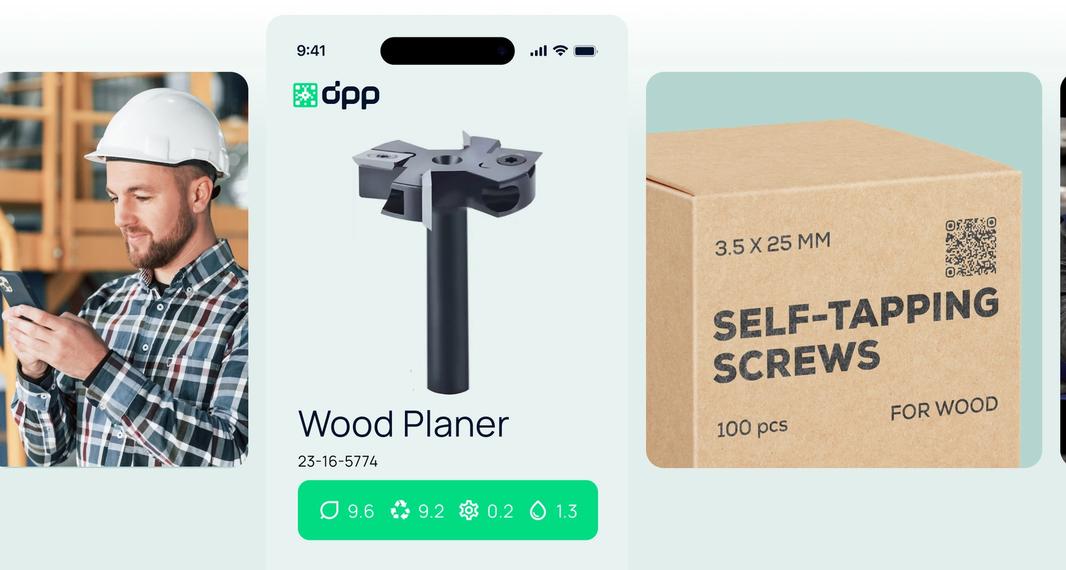
Manufacturers create and maintain DPP, prove compliance and sustainability, earn trust and improve their processes.
You ask us:
Frequently asked questions

When every marketing claim such as "100% natural" or "eco-friendly" has to be backed up by traceable data in the product passport, brands can no longer hide behind clever marketing. They will have to substantiate every claim with verified facts.
Every digital passport is cryptographically protected and unique to a specific product. When a counterfeit item is scanned, the system will simply show that no such record exists in the brand's official database, making it practically impossible to copy the digital identity.
For small businesses, collecting data from all suppliers, auditing manufacturing processes and maintaining a secure digital infrastructure can be an unbearable financial burden. Even so, affordable SaaS platforms designed specifically for smaller market players are already emerging.
DPP opens a direct digital communication channel with the consumer through scanning the passport, helps identify weak links in production processes, builds long-term customer loyalty through transparency and enables personalised loyalty programmes.
WIARA with a complete DPP solution
Our solutions
DPP for the Furniture Industry
DPP ensures transparency for the materials used, facilitates reuse and recycling. It proves the sustainability of production.

DPP for End Consumers
DPP provides transparency – composition, origin and recycling of products, so consumers can choose responsibly and make informed decisions.

DPP for Textiles
DPP provides traceability from fibre to recycling, proves brands' sustainability, and inspires consumer confidence.

WIARA supporting your business
Implement DPP in your manufacturing process quickly, easily and efficiently