DPP and Packaging: How will the new requirements change the FMCG sector?


If you look around your kitchen or walk the aisles of your nearest supermarket, you'll see thousands of products, each dressed in its own particular packaging. In the fast-moving consumer goods sector, packaging long ago stopped being merely a means of protecting the contents or a canvas for a pretty design. It's a strategic asset. But as European regulations tighten, packaging will have to acquire something entirely new: its own digital identity, in the form of a digital product passport.
For an industry that works with enormous volumes, thin margins and lightning-fast inventory turnover, the transition to DPP is not just an administrative change. It's a tectonic shift in the way we produce, consume and dispose of our everyday goods.
The end of "silent" packaging
Until now, packaging in the FMCG sector has been "silent". It carried fixed information — a use-by date, an ingredient list, a barcode for the checkout and perhaps some inspiring marketing slogan. Once it left the factory, the manufacturer lost any real connection to it, and the consumer had only limited data about its environmental footprint.
The Digital Product Passport changes this forever. It turns packaging into a dynamic data carrier that tells the product's story in real time. Through the integration of QR codes or NFC chips, every juice carton or box of laundry powder becomes a portal to a vast database.
What will a DPP contain for a typical FMCG package?
- Origin and composition of materials: The exact content of recycled plastic, the origin of the paper and the presence of specific polymers.
- Carbon footprint: How many emissions were generated just to create this particular package and transport it.
- Sorting instructions: No more guessing in front of the colour-coded bins. Geolocated information that tells the consumer where the nearest recycling point is for their region.
- Number of reuse cycles: For reusable packaging, the DPP will track how many times a given container has been filled and when it's time to take it out of circulation.
A revolution in waste management and the circular economy
The main driver of DPP in the FMCG sector is tackling the waste crisis. Under the new Packaging and Packaging Waste Regulation (PPWR), by 2030 all packaging on the EU market must be recyclable in an economically viable way.
Real-time traceability
One of the biggest challenges facing the recycling industry right now is the lack of accurate information. When a truck of plastic arrives at the processing plant, it contains a mix of dozens of types of polymers. It's often impossible to distinguish food-grade plastic from that used for household chemicals, which lowers the quality of the recycled material.
With DPP, automated sorting machines will be able to "read" the packaging's digital passport and route it into the correct stream with surgical precision. This will dramatically increase the supply of high-quality recycled material that companies can put back into their production — closing the loop in a genuinely efficient way.
The challenges: Speed, Scale and Data
For companies like Nestlé, Procter & Gamble or local dairy producers, rolling out DPP comes with logistical and technological hurdles that shouldn't be underestimated.
Integration into production lines
In the FMCG sector, production lines run at incredible speed. Adding a unique QR code to each individual item requires upgrading printing machines and laser marking systems. This isn't just adding a picture to the label; it's generating billions of unique digital records a year that have to be stored securely in the cloud.
Managing enormous volumes of data
If you produce 100 million packages a year, you're no longer just a food company, you're a data company. Collecting, storing and protecting this information requires new IT infrastructure. The question here isn't only technical but organisational: who owns the data and how is it shared along the chain between manufacturer, retailer and recycler?
Design for recycling
DPP will force packaging designers to think about the end right from the start. Complex multi-layer packaging (for example, those with aluminium foil in a cardboard box), which is hard to describe in the digital passport and even harder to recycle, will gradually be phased out. The passport will make visible the design mistakes that until now have been swept under the rug.
What does this mean for consumers?
For the average shopper, DPP will be a tool of empowerment. Right now, trust in separate-collection systems is sometimes low. Many people wonder: "Is there any point in sorting if it all ends up in the same place anyway?"
When you scan the DPP on an empty cooking-oil bottle and see exactly where it will be processed and what it will become three months from now, the psychological barrier falls. Transparency brings motivation. On top of that, DPP can become a tool for verifying authenticity — a guarantee that you're buying genuine olive oil, not a cheap fake with a swapped-out label.
Opportunities for new business models
The introduction of digital passports will give a boost to models that until now were more of a niche:
- Refill stations: Instead of buying a new plastic bottle of liquid soap every time, you'll be able to use the same one, whose lifespan and hygiene cycles are tracked via DPP.
- Deposit systems 2.0: Digital passports will make it easier to automate the return of packaging, allowing more precise calculation of deposit fees and faster refunds to the end customer.
- Personalised marketing: Brands will be able to offer rewards for correct recycling, proven through a scan at the end of the product's life cycle.
The role of artificial intelligence and blockchain
For DPP to work at FMCG scale, data-storage technologies will play a key role. Blockchain provides the necessary security and tamper-resistance — once it's recorded that a given package is made of 100% biodegradable material, that information can't be manipulated.
AI, in turn, will help companies analyse the masses of data from the passports to forecast demand, optimise delivery routes and reduce resource waste as early as the planning stage.
The road ahead
The transition to a Digital Product Passport in the FMCG sector is a marathon, not a sprint. The initial implementation costs will be significant, and the regulatory framework will require constant adaptation. Even so, the benefits of clearing away the fog of information around packaging are undeniable.
In a world where resources are growing ever scarcer and climate change ever more tangible, we can no longer afford the luxury of "single-use" information. The packaging of the future will be as intelligent as the product inside it.
It will be the bridge connecting responsible production with conscious consumption. For businesses across Europe and beyond, the choice is simple: either you become part of the digital transformation now, or you risk being left outside the market when the passport becomes a mandatory "visa" for trading in Europe.
Our solutions
DPP for different industries

DPP for Textiles
DPP provides traceability from fibre to recycling, proves brands' sustainability, and inspires consumer confidence.
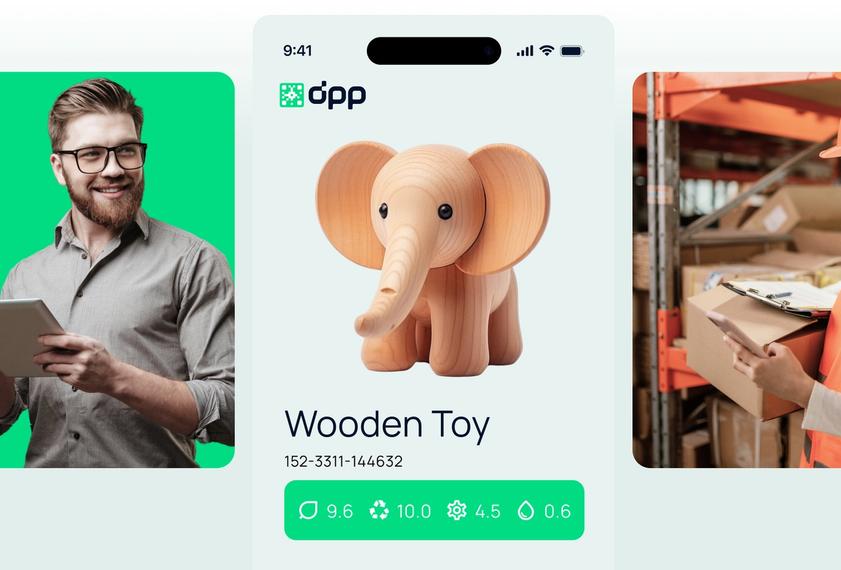
DPP for Importers
Importers ensure a valid DPP for every product and provide EU market access without risk of sanctions and delays.
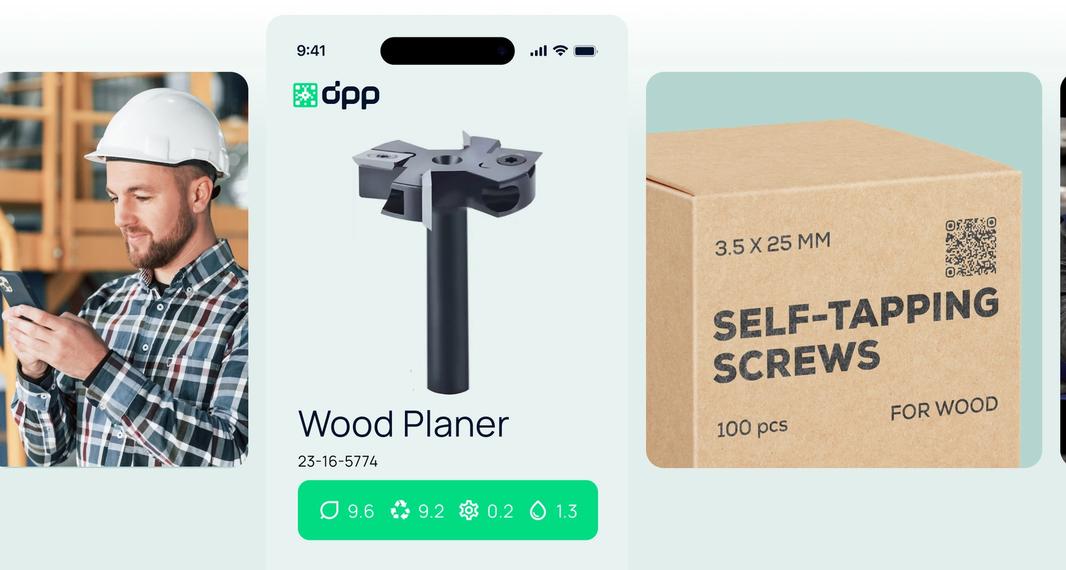
DPP for Manufacturers
Manufacturers create and maintain DPP, prove compliance and sustainability, earn trust and improve their processes.
You ask us:
Frequently asked questions

Automated sorting machines will be able to "read" the digital passport of each package and route it into the correct processing stream with high precision. This will significantly increase the supply of high-quality recycled material and close the production loop more efficiently.
DPP will give a boost to refill stations with hygiene-cycle tracking, automated deposit systems with more precise fee calculation, and personalised marketing programmes with rewards for proven correct recycling via a scan.
Production lines require upgrading printing and marking systems to generate billions of unique records a year. Companies must also build entirely new IT infrastructure to store and protect enormous volumes of data, effectively becoming data companies.
Designers will be forced to think about the end of the life cycle right from the start. Complex multi-layer packaging that's hard to describe and recycle will gradually be phased out, as the passport will make visible the design mistakes that until now have stayed hidden.
WIARA with an end-to-end DPP solution
Our solutions

DPP for End Consumers
DPP provides transparency – composition, origin and recycling of products, so consumers can choose responsibly and make informed decisions.
DPP for Manufacturers
Manufacturers create and maintain DPP, prove compliance and sustainability, earn trust and improve their processes.
DPP for Textiles
DPP provides traceability from fibre to recycling, proves brands' sustainability, and inspires consumer confidence.

WIARA helping businesses
Roll out DPP in your production process quickly, easily and efficiently