Steel and Iron: The First Industry With a Digital Product Passport

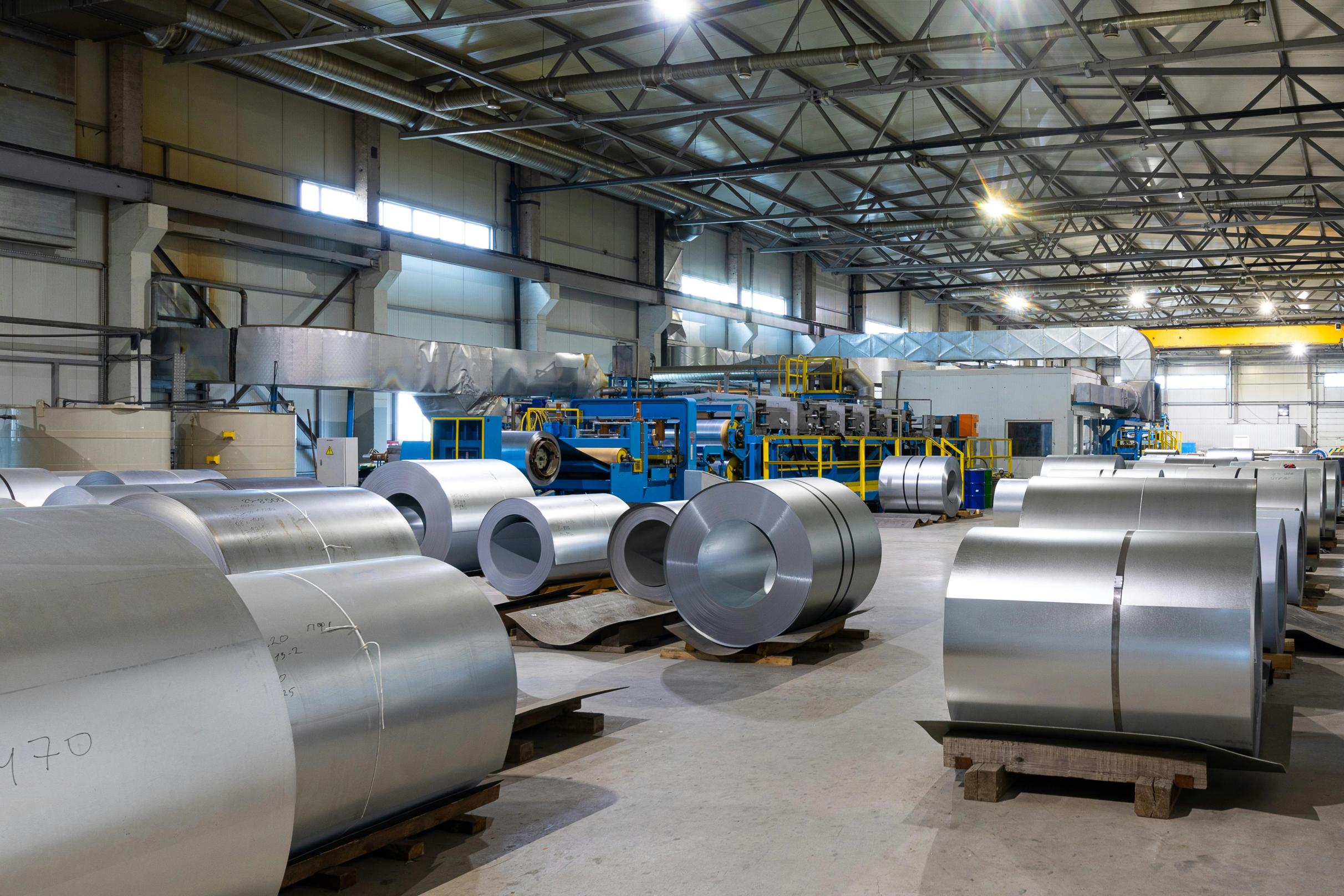
Iron and steel are the backbone of the modern economy — from the rebar in the foundations of every building to the structures of bridges, cars, machinery and wind turbines. But steel production is also one of the most carbon-intensive industrial processes in the world — it accounts for roughly 7–9% of global CO₂ emissions. This is precisely why the European Union placed steel at the front of its transparency plan.
In the first working plan under the Ecodesign for Sustainable Products Regulation (ESPR), adopted in April 2025, iron and steel were designated as the first product group for which a Digital Product Passport (DPP) will be developed. The delegated act is expected around 2026, and the obligation itself around 2027–2028. In other words, metallurgy won't be waiting: it is leading the column.
Why is steel priority #1?
The EU's choice is no accident. Steel is a so-called “intermediate product” — it enters as a raw material into almost every other value chain: construction, automotive, machinery, packaging, energy. By passporting the material at the base, the EU is building a reliable data foundation on which the passports of all end products can stand. In addition, steel is:
- Extremely carbon-intensive — up to 1.8–2.5 tonnes of CO₂ per tonne of steel with blast-furnace production
- Fully and infinitely recyclable — with no loss of quality, which makes it an ideal candidate for the circular economy
- Globally traded — vast quantities are imported into the EU, which calls for a common traceability standard
What will the DPP for steel contain?
Unlike the passport of an end product, the DPP for steel focuses on the properties of the material and its production footprint. It is expected to include:
- Origin and production route — blast furnace (BF-BOF) or electric arc furnace (EAF), which runs primarily on scrap
- Carbon footprint per tonne — verified cradle-to-gate emissions
- Recycled content percentage — the share of the product that comes from secondary raw material (scrap)
- Chemical composition and steel grade — carbon, alloying elements and compliance with the EN standards
- Mechanical properties — tensile strength, yield strength, reinforcement class (for example B500B)
- Presence of hazardous or restricted substances
- Recycling instructions and end-of-life information
DPP and CBAM: two sides of the carbon coin
The DPP for steel does not exist in a vacuum. It is closely linked to the Carbon Border Adjustment Mechanism (CBAM), which imposes a carbon charge on imports of steel, iron, aluminium, cement and more. Both instruments require the same thing: reliable data on the carbon footprint of every tonne. A company that has already built a DPP has ready, verified data for its CBAM declarations — and vice versa. Instead of two separate costs, transparency becomes a single shared competitive advantage.
Steel as a circular material
Steel has a unique advantage: it is 100% recyclable with no loss of properties. Today, however, much of the scrap is mixed and degraded because data on its exact composition is missing. The DPP solves this problem — when every beam, sheet or rebar carries its own passport with a precise chemical composition, scrap can be sorted accurately and remelted into new high-quality steel. This turns recycling from a crude process into an exact science and raises the value of secondary raw material.
What does this mean for European metallurgy?
Many European countries — Bulgaria among them — have a significant metallurgical and metalworking industry, from producers of long products and rebar to numerous traders and processors. The sector faces concrete challenges:
- Steel and rebar producers: must start measuring and documenting carbon footprint and recycled content now, to be ready for 2027–2028
- Metal traders and distributors: will need to pass DPP data up the chain — customers in construction and machinery will demand it
- Importers of steel from Turkey, China and Ukraine: bear responsibility for the availability of a passport and CBAM data for the imported quantities — without them, market access becomes difficult
- Processors and galvanizing plants: every added treatment must be reflected in an updated passport
Conclusion
Steel is the first industry on which the EU is turning the spotlight of transparency — and that is no accident. For steelmakers, traders and processors, it means the time to prepare is now, not when the delegated act enters into force. Companies that build their DPP system early won't merely meet the requirements — they will turn their carbon and material data into a strong selling point on an increasingly demanding European market.
Our solutions
DPP across industries

DPP for the Furniture Industry
DPP ensures transparency for the materials used, facilitates reuse and recycling. It proves the sustainability of production.

DPP for Textiles
DPP provides traceability from fibre to recycling, proves brands' sustainability, and inspires consumer confidence.

DPP for End Consumers
DPP provides transparency – composition, origin and recycling of products, so consumers can choose responsibly and make informed decisions.
DPP for business
Frequently asked questions

According to the first ESPR working plan from April 2025, iron and steel are the first product group. The delegated act that sets the exact requirements is expected around 2026, and the DPP obligation itself roughly 18 months later, around 2027–2028. That makes metallurgy the sector with the shortest lead time to prepare.
The DPP is expected to include the production route (blast furnace or electric arc furnace), the verified carbon footprint per tonne, the recycled content percentage (scrap), the chemical composition and steel grade, mechanical properties such as strength and reinforcement class, the presence of restricted substances, and recycling instructions.
Both instruments require reliable data on the carbon footprint of every tonne of steel. CBAM imposes a carbon charge on imports, while the DPP documents emissions in a transparent way. A company with a DPP in place already holds verified data that it can also use for its CBAM declarations — so transparency pays off twice, rather than being a double cost.
Start measuring and documenting the carbon footprint and recycled content of their products now. Producers must build a system for collecting data along the chain, traders must be able to pass passport data to their customers, and importers must provide DPP and CBAM data for the imported quantities. Early preparation turns a legal requirement into a competitive advantage.
WIARA with an end-to-end DPP solution
Our solutions
DPP for Textiles
DPP provides traceability from fibre to recycling, proves brands' sustainability, and inspires consumer confidence.

DPP for Steel and Iron
The first product group under ESPR — traceability of the composition, origin and carbon footprint of steel.

DPP for Construction Products
DPP ensures transparency for the composition and sustainability of construction materials, facilitating proof of origin and compliance with standards.
WIARA supporting business
Embed DPP into your production process quickly, easily and efficiently