Is there EU funding for implementing a Digital Product Passport?


Most manufacturers ask this question the wrong way round. No EU programme has a budget line called "digital product passport". What programmes do fund is the work a passport depends on: digitising production data, tracing materials through the supply chain and making products more circular. Framed that way, a DPP project has somewhere to go.
Support comes from two levels. A few instruments are run centrally and work much the same in every Member State. Most of the money, though, reaches companies through national and regional programmes, and those differ from country to country. This article covers the European instruments and tells you where to look for the national ones.
What the money actually pays for
Before looking for funding, be clear about the costs. A passport rollout usually involves:
- Data and systems: connecting ERP, PLM or PIM so that product data is captured once and kept current.
- Supplier data: collecting composition, origin and certificates from the companies upstream.
- Data carriers: QR labels or NFC tags on the product, and changes to the labelling line.
- Expertise and training: life-cycle assessment, carbon footprint calculation and people who can maintain the data.
The bill depends far more on the state of your data than on the passport software. A company that already keeps clean product records in one system spends a fraction of what a company working from spreadsheets does. We break the numbers down on our page on what a DPP costs.
European Digital Innovation Hubs: the place to start
European Digital Innovation Hubs (EDIHs) are funded under the Digital Europe Programme to help companies and public bodies adopt digital technology. The Commission lists what they provide: technical expertise and testing, including the chance to "test before invest", financing advice, training, and help with using digital technologies for sustainability and circularity. That last item comes close to describing a DPP project.
Two details matter. An EDIH is not a competitive grant with a call window: you approach the hub that covers your region. And each hub sets its own prices. According to the Commission's EDIH FAQ, it is up to the hub whether a service is free or offered at a subsidised price, and SME customers declare the value of the service they receive as state aid. Ask the hub how that will work for your company.
Half of each hub's funding comes from the Digital Europe Programme and the other half from Member States, regions or private sources, which is why no two hubs work quite the same way. The Commission publishes a catalogue of hubs by country.
Cohesion policy: national and regional programmes
The largest pool of money for company investment is the European Regional Development Fund. The fund supports investment through dedicated national or regional programmes, with support for SMEs, innovation and digitisation among its stated priorities, and it is the Member States' administrations that choose which projects to finance.
In practice, the call you apply to is published by a ministry or a regional managing authority in your country, in your language, with its own eligibility rules and deadlines. Calls open and close on their own schedule. Check the managing authority's current list before you plan around any call, including one you read about here.
Euroclusters: open calls aimed at SMEs
Euroclusters are cross-border partnerships of industry clusters funded through the Single Market Programme. For the Euroclusters selected under the 2024 call, the European Cluster Collaboration Platform states that more than €30 million will go directly to SMEs through open calls run by the consortia, for projects that take up advanced technologies and support the green and digital transition.
Each Eurocluster works in its own industrial ecosystem and runs its own calls, with its own amounts and application windows. Textile, furniture, metals and construction companies should check whether a Eurocluster covers their sector and whether a call is open right now.
Loans and guarantees through your bank
Not every project needs a grant, and most grants need co-financing. The InvestEU Fund is backed by an EU budget guarantee of €26.2 billion. Its implementing partners, including the European Investment Fund and a number of national promotional banks, provide financing directly or through intermediaries, which for a smaller company usually means a loan or guarantee from its own bank. Ask whether your bank offers InvestEU-backed products for digitalisation or green investment.
Research and consortium programmes
Horizon Europe funds research and innovation, and the LIFE programme has a sub-programme for the circular economy and quality of life. Both suit a manufacturer that already works with research partners. Neither is a practical way to pay for a passport rollout on its own, and the same is true of most Digital Europe calls outside the EDIH network, which are written for consortia.
What not to plan around
The Recovery and Resilience Facility paid for many national digitalisation schemes after the pandemic. It finances reforms and investments only until 31 December 2026, so a project starting now should not depend on it.
How to frame a DPP project so that it gets funded
- Lead with digitalisation. Describe the work as digitising product and production data. That is what most SME digitalisation measures are written for.
- Show the circularity effect. Evaluators fund results. Explain how the data will cut waste, raise recycled content or extend product life, and how you will measure it.
- Audit your data first. An EDIH digital maturity assessment or your own review shows what you already hold and what is missing. A proposal built on that is far more convincing than a plan to "implement DPP".
- Match the timing to your obligation. A funded project should finish before the rules for your product group apply, not after. Our DPP deadlines page lists the dates by product group.
An investment, not only an expense
Funding helps, but the data work has to be done whether or not a grant pays for it. Even without support, the cost comes back through:
- Resource efficiency: structured product data shows where raw materials and energy are being wasted.
- Lower EPR fees: extended producer responsibility fees are increasingly modulated by how recyclable and durable a product is, and the passport holds the evidence.
- Market position: buyers who ask for verified sustainability data will choose the suppliers who can provide it.
Where to begin
The practical sequence is short. Contact the EDIH for your region, check what your national and regional programmes have open, ask your bank about InvestEU-backed financing, and start with the product line whose obligation arrives first. The companies that finish the data work early will have it ready when their customers start asking.
Sources
- European Digital Innovation Hubs — digital-strategy.ec.europa.eu
- catalogue of hubs — european-digital-innovation-hubs.ec.europa.eu
- European Regional Development Fund — commission.europa.eu
- InvestEU Fund — investeu.europa.eu
- Euroclusters — clustercollaboration.eu
Our solutions
DPP for different industries

DPP for Construction Products
DPP ensures transparency for the composition and sustainability of construction materials, facilitating proof of origin and compliance with standards.
DPP for Manufacturers
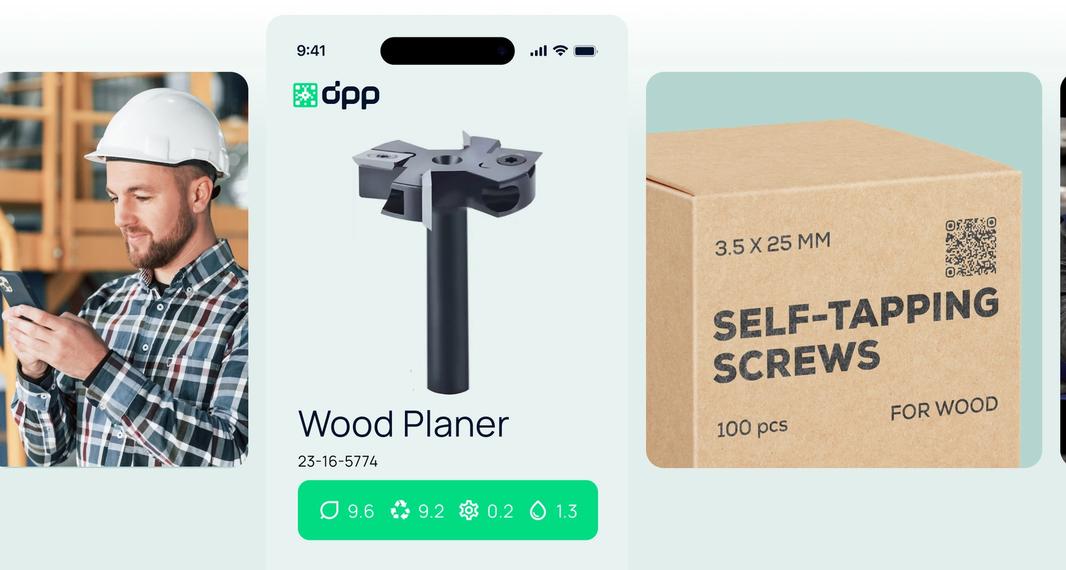
Manufacturers create and maintain DPP, prove compliance and sustainability, earn trust and improve their processes.
DPP for Construction Products
DPP ensures transparency for the composition and sustainability of construction materials, facilitating proof of origin and compliance with standards.
You ask us:
Frequently asked questions

Co-financing is the usual gap: grants rarely cover the whole project, so the company pays a share itself. Recurring costs such as software subscriptions may be eligible only for the project period, and work started before a grant is approved is often excluded. Every call lists its eligible costs, so read that list before you build the budget.
Weak preparation, more often than a weak idea. Applications fail when there is no prior data or environmental audit, no measurable effect such as less waste or lower emissions, and no realistic view of the implementation effort. Evaluators then see a theoretical project. Successful applicants start from a clear baseline and specific, measurable targets, not from a general plan to "implement DPP".
WIARA with a complete DPP solution
Our solutions

DPP for Textiles
DPP provides traceability from fibre to recycling, proves brands' sustainability, and inspires consumer confidence.
DPP for Importers
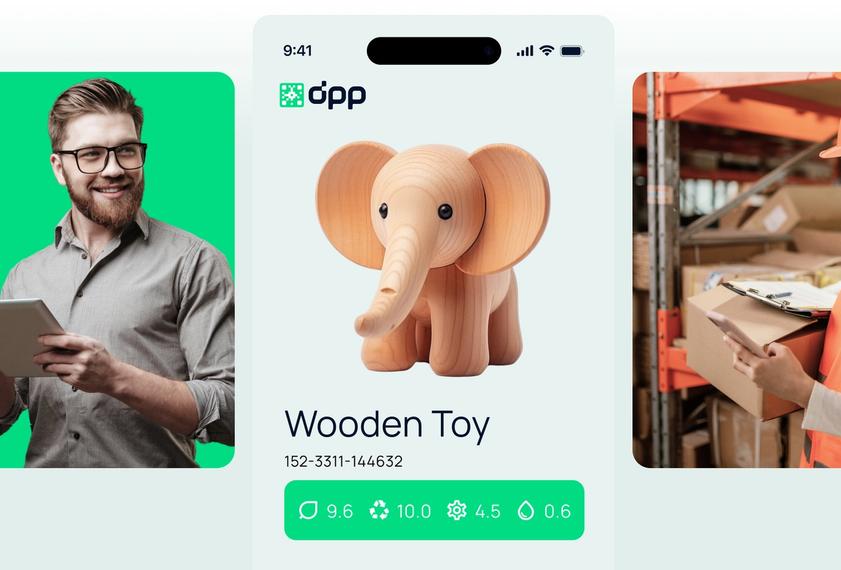
Importers ensure a valid DPP for every product and provide EU market access without risk of sanctions and delays.

DPP for the Furniture Industry
DPP ensures transparency for the materials used, facilitates reuse and recycling. It proves the sustainability of production.

WIARA to help businesses
Implement DPP in your production process quickly, easily and efficiently