How DPP Drives Innovation in the Textile Industry
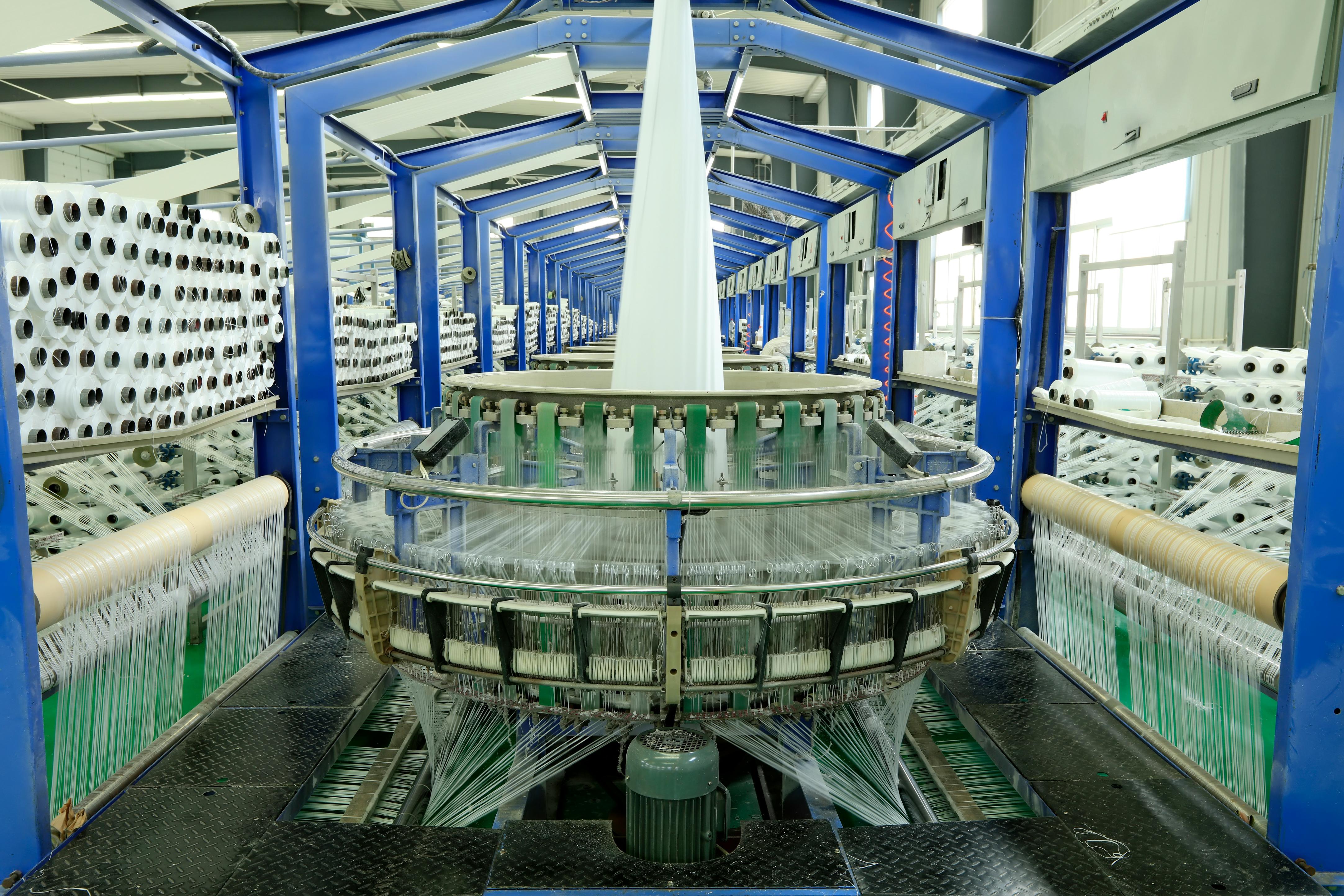
The textile industry is one of the largest in the world and at the same time one of the biggest polluters of the environment. Problems with the use of raw materials, pollution from manufacturing processes and the large amount of textile waste are still major challenges for the industry.
Nevertheless, technologies and new approaches to resource management provide new opportunities for innovation. One of these approaches is a digital product that collects information about the entire lifecycle of a product.
Although many companies perceive DPP as a means of compliance with sustainability legislation, it also creates conditions for significant innovation and improvements in sustainable textile production. Digital product passports not only provide transparency and traceability, but also offer new opportunities for innovation in materials, processes and even business models of textile companies.
In this article, we will explore how DPP drives innovation in the textile industry and look at companies whose work shows where this technology leads to achieve sustainable production and innovative solutions.
Increased Transparency and Sustainability
The digital product passport technology is a powerful tool for fostering innovation because it offers consumers, manufacturers and industry partners the ability to have full access to product information. From the origin of materials and the manufacturing process, to the carbon footprint and recyclability, every step in the production process can be documented and verified.
This new form of transparency leads to a number of innovations in resource management, creating new opportunities for companies that want to reduce their negative environmental impact. When products and their components are more easily traceable, companies can better identify ways to optimize, such as:
- Use of recycled and sustainable materials
- Reduction of carbon emissions during production
- Improving the product lifecycle through repair and reuse opportunities
The ability to trace a product from start to finish creates new opportunities to optimize the production process, reducing the resources used and minimizing waste.
Companies Already Working Towards What DPP Will Require
Patagonia
Patagonia is a world-renowned brand that has applied the principles of sustainable production and innovation for years. Its work on material transparency shows the kind of data the passport will make standard for everyone.
In recent years, Patagonia has committed serious efforts to reducing the carbon footprint of its products and to showing customers where its materials come from. A digital product passport makes that kind of information readable through a QR code on every item.
The company actively works on creating clothes from recycled materials, using plastics and textile waste that are transformed into new products. With a passport, the same data can show consumers not only the eco-benefits of products, but also encourage recycling by providing instructions and resources for reuse.
Patagonia's work is not limited to materials alone – the company actively invests in technologies to reduce carbon emissions during the production process and in new ways to extend the lifecycle of its products.
H&M
H&M is another leading company in the textile industry that is working towards greater material transparency. A digital product passport will make that transparency structured: a QR code on the product can show consumers the composition, the manufacturing process and the ecological footprint of a given product.
The company also actively works on improving the sustainability of its products by researching new materials with a reduced carbon footprint and recycling possibilities. One of H&M's innovative approaches is the creation of collections from recycled textiles and active work on circular business models that allow customers to return their worn clothes for recycling.
Levi's
Levi's is worth looking at precisely because it started long before any passport requirement. The company runs its own resale channel, Levi's SecondHand, and Tailor Shops inside its stores where jeans get repaired instead of replaced. Both only work if you still know what a garment is made of years after it left the factory. Today that sits on a care label that fades. A passport keeps it readable.
That is where a digital product passport changes things for a repair programme. When the fibre composition, the dyeing process and the repair instructions travel with the garment itself, a tailor three countries away does not have to guess. Levi's built the repair capacity first. The data layer is what regulation is adding now.
MUD Jeans
This Dutch company is a pioneer in the circular economy, built around tracking the lifecycle of its jeans.
Customers can lease the pants, and when they wear out, they are returned for recycling. A passport that tells the recycling facility exactly what the fabric composition is makes the process far more efficient.
What Innovations Does DPP Introduce in the Textile Industry?
Sustainable Materials and Recycling
DPP allows companies to track the materials used and seek new opportunities for using recycled raw materials. For example, through digital passport technology, companies can easily track the amount of recycled materials used in their production and offer consumers opportunities to recycle their old products.
Better Product Traceability
With the help of DPP, companies can ensure full traceability of products throughout their lifecycle. This allows identification of problems that can be solved through innovation, such as optimization of production processes, reduction of carbon emissions and improvement of material use efficiency.
Intelligent Monitoring Technologies
Many textile companies are beginning to implement intelligent technologies for monitoring carbon emissions and environmental impact. DPP can collect and analyze data on production processes, allowing companies to introduce innovations that reduce their negative environmental impact.
WIARA: The Technological Backbone of Circular Textiles
In the complex ecosystem of the textile industry, where the supply chain often spans several continents, WIARA is establishing itself as a critical factor in the success of DPP. The platform helps manufacturers overcome the biggest challenge: collecting and structuring data from dozens of suppliers of raw materials, dyes and threads.
How WIARA transforms the sector:
- Precision in recycling: WIARA provides recycling facilities with the exact chemical composition of fabrics, which is essential for efficient processing of mixed materials.
- Compliance automation: The platform automatically monitors whether materials meet EU environmental standards, saving brands hundreds of hours of administrative work.
- Direct customer connection: WIARA turns the industrial data behind a garment into something a customer reads on their phone: where the fibre came from, what it is, and what to do with it at the end. The same record serves the auditor and the buyer.
With the help of WIARA, a “smart garment” stops meaning embedded electronics and starts meaning a garment whose history is legible and whose end of life is already settled.
Conclusion
The digital product passport is not just a tool for complying with new sustainability regulations, but also an important driver of innovation in the textile industry. The companies we listed in the article show the kind of work that DPP data can support, leading to significant improvements in production processes by using sustainable materials, new technologies and circular business models.
Investing in these innovations not only improves the environmental efficiency of products, but also creates new opportunities for businesses and consumers, thereby fostering the development of the textile industry towards a sustainable and innovative future.

DPP for Textiles
Frequently Asked Questions

DPP provides consumers with information about the origin and composition of products through easy-to-access channels such as QR codes. This allows customers to learn about the eco-benefits of products, for example whether they are made from recycled materials or have a smaller carbon footprint. This transparency helps consumers make more conscious and sustainable purchases by choosing products with less environmental impact.
Brands such as Patagonia, H&M and Levi's have invested for years in material transparency, recycling and repair. The Digital Product Passport makes this kind of data structured and, group by group, mandatory. It covers product composition and manufacturing, and supports recycling and a longer life for the goods.
Latest Articles on DPP
 Kiril Shivachev••9 min read
Does the system that told you about Article 13 also perform Article 13?
 Kiril Shivachev••4 min read
Digital Product Passport for Clothing: The Roadmap for Fashion Brands (2026–2030)
 Anita Kisimova-Dzakova••3 min read
The DPP and the right to repair: How the passport obliges manufacturers to design for durability
 Anita Kisimova-Dzakova••5 min read
Model, Batch or Item: Which DPP passport level do you actually need?
 Kiril Shivachev••5 min read
WIARA launches the DPP Partner Program — a new business model for consultants and agencies
 Anita Kisimova-Dzakova••3 min read
DPP for importers: Why responsibility for the passport is yours, even if you didn't make the product
 Anita Kisimova-Dzakova••5 min read
DPP and EPR: How Extended Producer Responsibility Is Changing for Manufacturers
 Anita Kisimova-Dzakova••9 min read
Cybersecurity and the DPP: How to protect Digital Product Passports from hackers and counterfeits
 Anita Kisimova-Dzakova••7 min read
DPP and ERP: How to Automate the Digital Product Passport Without Operational Chaos
 Anita Kisimova-Dzakova••6 min read
"Made in Europe" + DPP: A Premium Image on International Markets
 Anita Kisimova-Dzakova••6 min read
EU funding for Digital Product Passport projects
 Anita Kisimova-Dzakova••6 min read
"The Ostrich Strategy": How the Lack of DPP Can Bankrupt Your Business
 Anita Kisimova-Dzakova••8 min read
End of "Greenwashing": The Digital Passport Revolution
 Anita Kisimova-Dzakova••8 min read
Trade Secret vs. Transparency: Security in the DPP Era
 Anita Kisimova-Dzakova••5 min read
DPP and Ethics: The Future of Transparent Manufacturing
 Anita Kisimova-Dzakova••5 min read
The Future of DPP: What Innovations to Expect in the Next 5 Years?
 Anita Kisimova-Dzakova••5 min read
A Comparison of Regional Approaches to DPP in Europe and the USA
 Anita Kisimova-Dzakova••5 min read
DPP in Education: The Path to Sustainable Development
 Anita Kisimova-Dzakova••5 min read
Digitalization of Supply Chains with DPP
 Stefan Dyankov••6 min read
End of "Buy and Throw Away": The Digital Product Passport Revolution
 Kiril Shivachev••2 min read
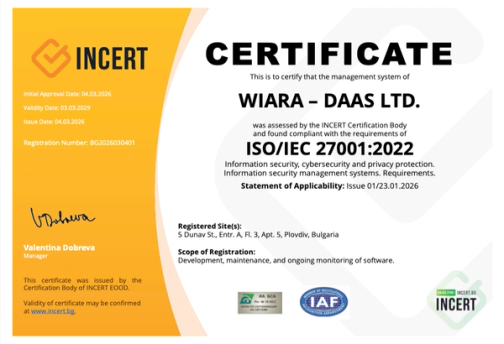
WIARA Is Now ISO 27001 Certified
 Stefan Dyankov••5 min read
DPP and Re-commerce: How the Passport Will Change Europe's Second-Hand Market
 Kiril Shivachev••6 min read
How can SMEs implement digital passports on a budget?
 Kiril Shivachev••3 min read
The EU has banned the destruction of unsold clothes: what it means for textile and apparel companies
 Stefan Dyankov••6 min read
From compliance to competitive advantage: How to use DPP for green marketing
 Kiril Shivachev••4 min read
DPP as a Tool for Competitive Advantage
 Kiril Shivachev••7 min read
The Digital Product Passport in the Textile Industry and the Future of RFID Threads
 Kiril Shivachev••8 min read
The Digital Product Passport (DPP) – the new digital identity card of products
Have a textile production and want to implement DPP?
WIARA is here to help, from the first to the last step of the process