DPP and Ethics: How Digitalization is Changing Ethical Standards in Manufacturing

With the growing importance of the digital product passport in global supply chains, the responsibility towards ethics is becoming an increasingly important part of the production and trade process. The digitalization of products and the implementation of DPP offer new opportunities for traceability, transparency, and sustainability, but at the same time raise new ethical questions that need to be carefully considered.
The question of ethics is not just a matter of legal regulations. It affects the way companies interact with consumers, how they manage their supply chains, and how they treat the environment. Although DPP offers solutions for many of these problems, it also raises new ethical dilemmas that need to be considered in the context of modern business.
What is DPP and how is it changing manufacturing?
DPP is a technology that allows companies to collect and share detailed information about their products throughout their entire lifecycle. This includes information about ingredients, the origin of materials, production conditions, and environmental impact. This enables consumers to make more informed choices and businesses to ensure greater transparency and accountability.
The digitalization of this data offers new opportunities for traceability and consumer feedback, which can significantly influence ethical standards in manufacturing. For example, consumers can learn where materials come from, how they were processed, and whether the production process meets ethical requirements for working conditions and environmental standards.
Transparency and Ethics of the Supply Chain
One of the main ethical issues related to DPP concerns the transparency of the supply chain. Many companies use unethical practices in their production processes, including unfair labor, worker exploitation, and unsustainable resource extraction methods.
DPP can change this by providing full access to information about all stages of the production process, from raw materials through manufacturing to distribution. This means that companies will need to comply with stricter ethical standards because consumers will be able to see what is behind the products they buy.
This transparency also puts manufacturers in difficult positions regarding the provision of information related to production conditions and whether to disclose data about possible violations of labor rights or environmental standards. The ethics of manufacturing is becoming increasingly important as the majority of global consumers prefer sustainable and ethically produced products that align with their values.
Sustainability and Ethics of Materials
DPP offers the ability for detailed analysis of the materials used in product manufacturing. This is an important aspect when it comes to environmental ethics. The question of the materials used is not only a matter of sustainability but also of social responsibility. For example, glass or plastic produced through unsustainable methods have severe consequences for the environment.
When implementing DPP, companies will be required to provide detailed information about the materials used, including how they were sourced, whether they are recycled, and what the impact on ecosystems is. This information can have a greater impact on consumer choices and encourage manufacturers to switch to more environmentally friendly and socially responsible alternatives.
Many companies are already beginning to focus on recycled materials and eco-friendly production technologies. This also includes the transition to circular economies, which will again be monitored through DPP and will be able to collect real data on the success of these initiatives.
Ethics and Personal Data Protection
With the increase in digitalization and the integration of IoT sensors in products, the issue of personal data protection is becoming increasingly relevant. The ability of products to provide dynamic real-time information about their condition raises new questions about the collection, storage, and use of this data.
Companies implementing DPP must ensure that consumers' personal data, as well as sensitive product information, will be protected in a way that meets ethical standards and legislative requirements for confidentiality and data protection.
This aspect of ethics is essential to ensure that consumers are not perceived as a product and that their data will be used only for specific, transparent, and agreed-upon purposes.
Business Responsibility and Ethics of Innovation
DPP sets new standards for business responsibility within innovation processes. Technologies that collect and process product data enable companies to invest in innovations that will make their products more sustainable and responsible. However, with the power of these technologies come new ethical obligations for businesses.
Companies will need to take seriously the issues of fairness, transparency, and accountability, applying innovations in accordance with ethical principles. They will face social pressure from consumers and regulators to focus not only on profits but also on the social and environmental responsibility of their production.
Digitalization and Ethics in the Future
DPP is not just a technological innovation; it is an important element in building ethical business practices. Through it, businesses can meet the requirements for sustainable manufacturing, transparency, and social responsibility, while also providing consumers with the opportunity to make more conscious decisions.
The digitalization of products will lead to a new era of ethical business, where innovations and technologies will be used not only to increase efficiency but also to ensure a better future for the planet and its inhabitants.
Our Solutions
DPP for Different Industries
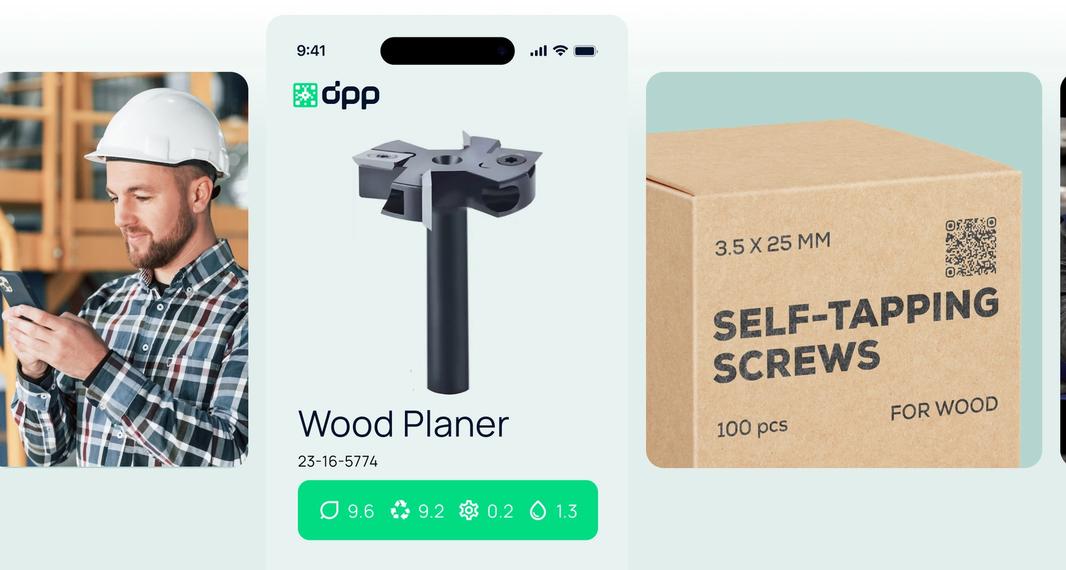
DPP for Manufacturers
Manufacturers create and maintain DPP, prove compliance and sustainability, earn trust and improve their processes.

DPP for Textiles
DPP provides traceability from fibre to recycling, proves brands' sustainability, and inspires consumer confidence.

DPP for the Furniture Industry
DPP ensures transparency for the materials used, facilitates reuse and recycling. It proves the sustainability of production.
You Ask Us:
Frequently Asked Questions

When DPP is widely implemented, consumers will have access to information about the working conditions under which a given product was manufactured. This will force companies to invest in better conditions for workers and reduce the risk of exploitation in production. They will need to meet ethical standards for labor rights and social responsibility to respond to the growing demand for ethically produced products.
DPP can play a central role in promoting recycling and the use of sustainable materials. The technology gives consumers full transparency about product ingredients, including how materials were sourced and whether they can be reused. This information will motivate companies to switch to more environmentally friendly and socially responsible alternatives, as consumers increasingly seek cleaner and more ethical products.
The issue of personal data protection is particularly important with the expansion of DPP, as more and more data is collected about products and consumers. Companies will need to implement strict measures to protect personal data to ensure the ethical integrity of the system and comply with laws such as GDPR in Europe. DPP must guarantee that consumers can share data about their products without worrying about misuse or breach of confidentiality.
One of the ethical conflicts that may arise is the difference in regulations between different industries and regions. For example, if one industry is required to adhere to stricter ethical standards in Europe but not in the US, this can lead to market inequalities and ethical issues. Furthermore, industries that are not fully ready to implement DPP may take advantage of weak regulations, which can undermine efforts to create ethical and sustainable manufacturing. These FAQs give readers a clear picture of the ethical questions related to DPP implementation and how they will evolve in the future.
Latest Articles about DPP

 Kiril Shivachev••7 min read
Day one of the green-claims ban: what changed, and where it did not
 Kiril Shivachev••7 min read
A tender that asks for your product passport
 Kiril Shivachev••9 min read
Does the system that told you about Article 13 also perform Article 13?
Kiril Shivachev••8 min read27 September 2026: six green claims become automatically unfair
 Kiril Shivachev••6 min read
You have an electronic signature. The EU registry wants an electronic seal.
 Kiril Shivachev••6 min read
The battery passport: 71 data points, and the e-bike carries the most mandatory ones
 Kiril Shivachev••7 min read
No regulation names you. Your customer is already asking for the data.
 Kiril Shivachev••5 min read
If someone copies the QR code from a real product onto a fake — will the passport lie to you?
 Kiril Shivachev••5 min read
If your DPP provider goes under tomorrow — what happens to your passports?
 Kiril Shivachev••5 min read
What a Digital Product Passport actually looks like — field by field
 Kiril Shivachev••4 min read
DPP for Tyres: The Priority Group Few Are Ready For
 Kiril Shivachev••4 min read
Digital Product Passport for Clothing: The Roadmap for Fashion Brands (2026–2030)
 Kiril Shivachev••4 min read
How much does a Digital Product Passport cost in 2026?
 Kiril Shivachev••6 min read
DPP for aluminium: the passport of the most recyclable metal
 Kiril Shivachev••11 min read
The EU's Digital Product Passport Registry is now live
 Kiril Shivachev••4 min read
DPP for Steel: Why Metallurgy Is the First Sector the EU Requires to Carry a Digital Passport

 Anita Kisimova-Dzakova••3 min read
DPP in construction: How the material passport turns a building into a bank of resources.
 Anita Kisimova-Dzakova••3 min read
The DPP and the right to repair: How the passport obliges manufacturers to design for durability
 Anita Kisimova-Dzakova••5 min read
Model, Batch or Item: Which DPP passport level do you actually need?
 Kiril Shivachev••5 min read
WIARA launches the DPP Partner Program — a new business model for consultants and agencies
 Anita Kisimova-Dzakova••3 min read
DPP for importers: Why responsibility for the passport is yours, even if you didn't make the product
 Anita Kisimova-Dzakova••4 min read
DPP for furniture: How to prove the sustainable origin of every board to the European buyer
 Anita Kisimova-Dzakova••5 min read
DPP and EPR: How Extended Producer Responsibility Is Changing for Manufacturers
Anita Kisimova-Dzakova••9 min readDPP Audit: Who Verifies Whether the Data in Your Passport Is Correct and What Are the Penalties?
 Anita Kisimova-Dzakova••6 min read
DPP in FMCG: How the digital passport ends silent packaging
 Anita Kisimova-Dzakova••8 min read
DPP in cosmetics: The end of greenwashing and the beginning of conscious beauty
 Anita Kisimova-Dzakova••9 min read
The EU Battery Passport: How the DPP Is Transforming the Energy Transition From the Mines to Recycling
 Anita Kisimova-Dzakova••9 min read
Cybersecurity and the DPP: How to protect Digital Product Passports from hackers and counterfeits
 Anita Kisimova-Dzakova••7 min read
DPP and ERP: How to Automate the Digital Product Passport Without Operational Chaos
 Anita Kisimova-Dzakova••9 min read
Blockchain, QR or RFID: The Technologies Behind the Digital Product Passport
 Anita Kisimova-Dzakova••6 min read
"Made in Europe" + DPP: A Premium Image on International Markets
 Anita Kisimova-Dzakova••6 min read
EU funding for Digital Product Passport projects
 Anita Kisimova-Dzakova••6 min read
"The Ostrich Strategy": How the Lack of DPP Can Bankrupt Your Business
 Anita Kisimova-Dzakova••8 min read
End of "Greenwashing": The Digital Passport Revolution
 Anita Kisimova-Dzakova••8 min read
Digital Product Passport: the future of European furniture
 Anita Kisimova-Dzakova••8 min read
Trade Secret vs. Transparency: Security in the DPP Era
 Anita Kisimova-Dzakova••8 min read
DPP in construction: The new rules
 Anita Kisimova-Dzakova••5 min read
The Future of DPP: What Innovations to Expect in the Next 5 Years?
 Anita Kisimova-Dzakova••6 min read
DPP: The new entry ticket for the European B2B market
 Anita Kisimova-Dzakova••5 min read
A Comparison of Regional Approaches to DPP in Europe and the USA
 Anita Kisimova-Dzakova••4 min read
Challenges in DPP Implementation: What Comes Next?
 Anita Kisimova-Dzakova••5 min read
DPP in Education: The Path to Sustainable Development
 Anita Kisimova-Dzakova••5 min read
Digitalization of Supply Chains with DPP
 Stefan Dyankov••6 min read
A Wardrobe Revolution: The Digital Passport as an Engine of Textile Innovation
 Stefan Dyankov••6 min read
End of "Buy and Throw Away": The Digital Product Passport Revolution
 Kiril Shivachev••2 min read
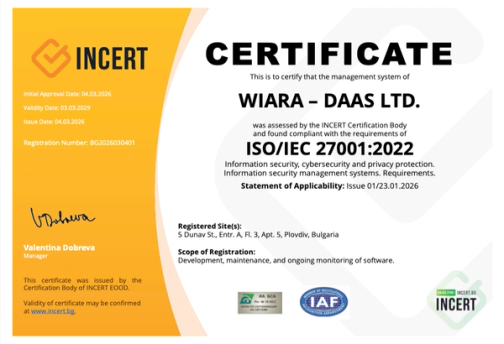
WIARA Is Now ISO 27001 Certified
 Kiril Shivachev••3 min read
Digital Product Passport Operator: The profession that is changing the industry
 Stefan Dyankov••5 min read
DPP and Re-commerce: How the Passport Will Change Europe's Second-Hand Market
 Kiril Shivachev••6 min read
How can SMEs implement digital passports on a budget?
 Kiril Shivachev••4 min read
How does the DPP change the rules for non-EU providers?
 Kiril Shivachev••3 min read
The EU has banned the destruction of unsold clothes: what it means for textile and apparel companies
 Stefan Dyankov••6 min read
From compliance to competitive advantage: How to use DPP for green marketing
 Kiril Shivachev••4 min read
DPP as a Tool for Competitive Advantage
 Stefan Dyankov••5 min read
DPP and Circular Economy: Secondary Markets, Repair and Reuse
 Stefan Dyankov••5 min read
DPP for Electronics: What Will the Passports Contain?
 Kiril Shivachev••5 min read
DPP for Business
 Kiril Shivachev••10 min read
How to Prepare Your Company for DPP in 2026: A Practical Guide for Manufacturers and Importers
 Kiril Shivachev••3 min read
Which products will not have a Digital Product Passport (DPP)?
 Kiril Shivachev••7 min read
DPP in Construction – The Key to Competitiveness and Transparency
 Kiril Shivachev••7 min read
The Digital Product Passport in the Textile Industry and the Future of RFID Threads
 Kiril Shivachev••8 min read
The Digital Product Passport (DPP) – the new digital identity card of products

WIARA Helping Business
Implement DPP in your production process quickly, easily, and efficiently