WIARA launches the DPP Partner Program — a new business model for consultants and agencies

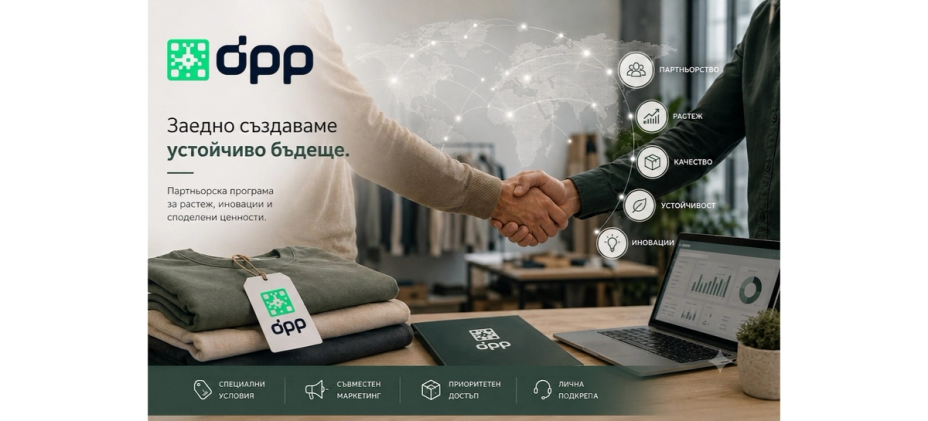
WIARA is announcing the launch of the DPP Partner Program — a new channel for independent consultants, agencies and industry experts who want to build a business on the DigitalProductPassport platform. Partners help manufacturers create, maintain and publish digital product passports in line with ESPR (Regulation 2024/1781) — and the partner model comes with no upfront investment, no monthly subscription and no ceiling on growth.
The regulatory moment: the market isn't ready, but you can be
ESPR is in force, and the central EU DPP registry has been live since 20 July 2026. Next, delegated acts will set the rules sector by sector — first iron and steel (act expected around late 2026 or early 2027), then textiles (act expected around 2027) and furniture — and each one applies roughly 18 months after adoption. At the same time, 66% of European companies don't know what DPP is. This is the classic early-mover market: the first consultants and agencies to build expertise and a client base will serve the wave when it hits.
The market size speaks for itself: ~50,000 companies in the steel sector alone, ~197,000 in textiles, plus the entire CEE furniture sector. On top of that come importers and distributors, who also carry regulatory responsibility. German buyers are already asking for DPP data — two years before it becomes mandatory.
What is a DPP Partner
A DPP Partner is an independent service provider — a consultant, agency or industry expert — who helps manufacturers create and manage digital passports on the platform. This isn't a WIARA employee (no salary; you earn from your own clients) and it isn't a reseller (you don't resell the platform, you sell your own consulting services to manufacturers).
Partners fall into three typical profiles:
- Compliance consultants — who already work with manufacturers on regulatory obligations and add DPP to their portfolio.
- Marketing and branding agencies — who integrate DPP as a channel for transparency and end-customer engagement.
- Industry experts — specialists in textiles, steel, furniture or construction materials, who translate technical documentation into DPP format.
The business model — a three-sided ecosystem
The program builds a triangle in which each side profits from its own source of value:
- The Partner — registers for free, brings in manufacturers and charges them directly for their services (data collection, filling in templates, publishing, lifecycle management).
- The Manufacturer — pays a subscription for the platform, gets expert help from the partner and publishes compliant DPP passports that open up access to the EU market.
- WIARA — provides the platform, maintains the regulatory templates and updates them regularly, and earns subscription revenue.
The result: zero upfront investment for the partner, recurring revenue from their own services, no prior certification or fee. The more clients a partner serves, the more they earn — and the more manufacturers publish through the platform, the stronger the whole ecosystem becomes.
What the platform gives the partner
The partner builds nothing technical. WIARA covers the entire compliance stack:
- Multi-manufacturer dashboard — manage all your connected manufacturers from a single partner account. One team structure (Administrator · Agent · Auditor), all clients in one place.
- Ready-made regulatory templates — industry-specific, updated with every change to ESPR or the delegated acts. You don't start from scratch for each client.
- 24 EU languages automatically — one passport, all official EU languages, no translators and no manual work.
- Three-tier access (ESPR) — Public · Professional · Authority built into the structure of every passport.
- REST API + access tokens — for partners who integrate their processes with their own systems or the client's ERP or PIM.
- Full change history and QR code + CDN — built into the platform from day one.
The outlook: shoulder to shoulder with the regulatory wave
DPP is not a short-term trend. ESPR covers product after product over the next five years, and after 2030 expansion is expected into electronics, FMCG and construction materials. Partners who start now are building a client base before demand goes mainstream.
An additional factor: public procurement leads the way. Army and police uniforms will require DPP before consumer goods do. This opens up B2G and B2B channels for partners with expertise in the relevant sectors — textiles, protective clothing, furniture for the public sector, construction materials.
The third perspective is geographic. WIARA is a Bulgarian company, ESPR is an EU regulation — and partners aren't limited geographically. A partner in Bucharest can serve a Romanian manufacturer that exports to Germany; a partner in Athens can take on a Greek textile brand that sells in Italy. The platform is one, the languages are 24, the regulation is shared.
Why WIARA in particular
WIARA is certified to ISO/IEC 27001 (information security), takes part in the CIRPASS-2 Stakeholder Community and the C4HOST Horizon Europe consortium, and has access to the beta of the central EU DPP registry. The DigitalProductPassport platform is built for ESPR from day one — not retrofitted compliance, but an ESPR-native architecture. These signals are available to any partner who needs to explain to a client why the platform deserves their trust.
How to become a DPP Partner
The program works in four steps, with no fee and no commitment:
- Apply — fill in the partner form. WIARA reviews and approves.
- Get access — free registration and access to the partner dashboard.
- Training — get to know the templates, the processes and the dashboard. Onboarding with WIARA's product team.
- Get started — bring in clients, create passports, charge directly. Self-service from day one — you control the pace.
Full details and the application form are on the partner program page. The regulatory wave is already visible on the horizon — now is the time to take your position.