The battery passport: 71 data points, and the e-bike carries the most mandatory ones

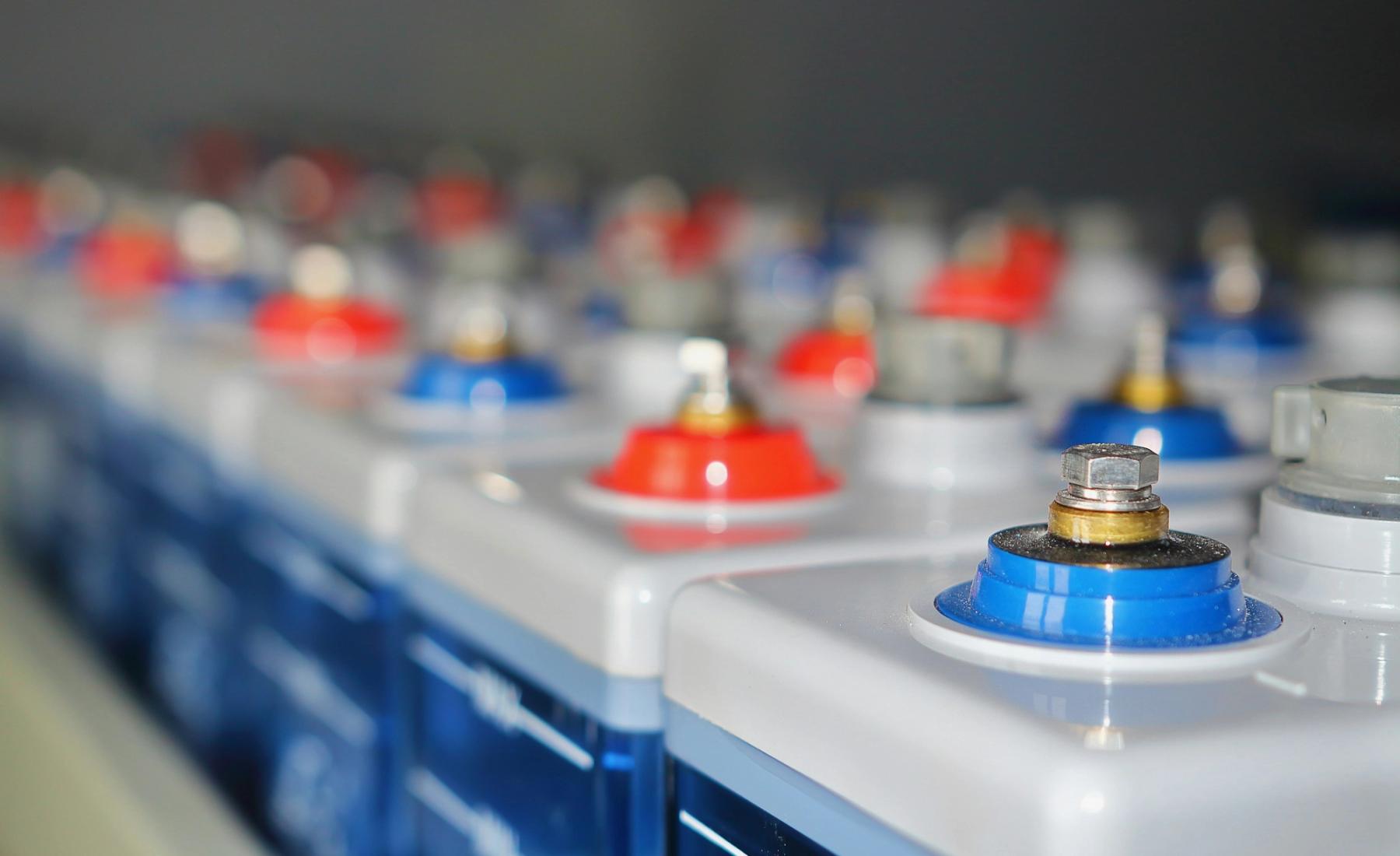
There are under six months left to 18 February 2027, and the first question every manufacturer asks is the same one: what exactly goes into the passport. Until now the answer was "read Annex XIII". Since mid-August there is a better one.
The European Commission has published the Guidance Document: Digital Batteries Passport – data points by category, version 2.0, dated 15 August 2026. It is a table in which every field is named, given its legal source in the Batteries Regulation, and marked separately for the three categories — electric vehicle (EV), light means of transport (LMT), and industrial batteries above 2 kWh.
We downloaded it and counted. There are 71 data points. Here is what falls out of them.
What the 71 fields contain
The first sixteen are the battery’s identity: unique identifier, who places it on the market, manufacturer and address, category, model and batch number, place and date of manufacture, weight, capacity, chemistry. They also include hazardous substances other than mercury, cadmium and lead, the usable extinguishing agents, and critical raw materials present above 0.1% by weight.
Points 17 to 24 are the sustainability block: the carbon footprint declaration and its performance class, responsible sourcing under the due diligence policy, and the recycled content shares — separately for cobalt, lithium, nickel and lead.
Points 25 to 39 are electrochemistry: rated capacity in Ah, minimum, nominal and maximum voltage with temperature ranges, power, expected lifetime in cycles and the reference test it was measured by, round trip energy efficiency at 50% of cycle life, C-rate.
Points 40 to 47 cover the markings, the EU declaration of conformity, waste-battery information, the detailed composition of cathode, anode and electrolyte, and — rarely mentioned — part numbers for replacement spares and the contact details of who supplies them.
The category with the most mandatory fields is not the EV battery
This is the number that surprises. Counted by column:
LMT — 50 mandatory fields. EV — 47. Industrial — 32.
An e-bike battery therefore carries more mandatory fields than an electric car battery, and eighteen more than an industrial battery of several megawatt-hours. The reason is not severity towards light transport but the opposite: for industrial batteries 26 fields are conditional rather than mandatory, against 8 for EV and 8 for LMT. The regulator left more "depends on the case" exactly where the configurations vary most.
The practical consequence for an LMT manufacturer is unpleasantly simple. If you assumed you were more lightly affected because your product is smaller, the document does not support that.
In 20 places the three categories disagree
This is not one list with three ticks. In 20 of the 71 points at least one category differs from the other two — and the disagreements are not random.
The durability and performance group — expected lifetime, reference test, energy efficiency, C-rate, power, power fade, internal resistance — is mandatory for EV and LMT but conditional for industrial.
Point 33, the capacity threshold for exhaustion, is required for EV only. For LMT and industrial it is explicitly not to be filled.
And state of health is split down the middle: one point is mandatory for EV and not required for the other two, while the following five are exactly the reverse — mandatory for LMT, conditional for industrial, and not required for EV.
The part that changes the project
If you read only one thing out of the document, make it this. Points 51 to 71 are not a product specification. They are values that change while the battery is working: power and power fade, internal resistance, state of health, number of charging cycles, state of charge, and — written literally — "negative events, such as accidents".
There is also a field for the battery’s status, defined as "original", "repurposed", "re-used", "remanufactured" or "waste".
Which means the passport is not a document you fill in and file. It is a record you maintain across the product’s life. The difference between those two is the difference between a one-off file and a working system, and it decides whether your project lasts three months or becomes a permanent process.
Why this matters to textiles too
Batteries are the first product group with a mandatory passport, not the last. The digital product passport under the ESPR arrives group by group, and the timeline to 2030 is already published.
That makes this document valuable to manufacturers with nothing to do with batteries: it is the closest available preview of the shape a delegated act for textiles or steel will take. Not the fields themselves, but the structure — a named list, a legal source for every field, a distinction between mandatory, conditional and not required, and a separate block of data that updates in service.
What not to assume about this document
Three qualifications the document places on itself, worth reading before you build a project on it.
It is not a specification. The text states explicitly that it does not represent the Commission’s official position and does not extend rights or obligations. The legal basis remains Regulation (EU) 2023/1542.
Several fields still carry "format still to be determined" — including around the carbon footprint. If you are designing a database today, leave those columns flexible.
And the version is 2.0. There will be later ones. The document itself promises further clarification on definitions, measuring units and formats.
What to do this week
Pull the table and diff it against what you already hold. Some of the fields — manufacturer, model, batch, weight, capacity, chemistry — almost certainly exist in your ERP or your specifications already. The question is which ones are missing, not whether you start from zero.
Separate the dynamic fields from the static ones. The first group requires a connection to the product after it is sold. The second does not. That is the decision with the heaviest consequences for your architecture.
Check which category you are actually in. Article 77(1) says each LMT battery, each industrial battery above 2 kWh, and each electric vehicle battery. The 2 kWh threshold applies to industrial batteries only — it is repeated wrongly almost everywhere, and as you have just seen, the category decides which forty-odd fields are mandatory for you.
More on the regime is on the Battery Regulation page, and if you want to see what this looks like as a working system — DPP for batteries.