The EU has launched the central Digital Product Passport Registry: what changes for everyone in the chain


On 20 July 2026 the European Commission launched something that had been years in the making and far more talked about than seen: the central registry of digital product passports. No ceremony, no press conference — just an address that now answers.
The deadline the EU had set itself in law for building the registry was 19 July. It fell on a Sunday. They opened on Monday.
One clarification straight away, because this is the misreading doing the rounds: 19 July was a deadline for the Commission, not for you. Nothing starts for companies on 20 July.
If you had been waiting to find out when “this passport thing” would become real — it just did. Not because you owe anything as of yesterday, but because the infrastructure that the next five years of European product rules will revolve around now exists and can be touched.
What this registry is, and what it is not
The most common misconception is that the Commission has built a giant database into which every company will upload its product information. It has not — and the difference matters.
The registry is an index, not a warehouse. Think of a phone book: it does not contain your conversations, only who is who and how to reach them. That is exactly what the registry does. Very little goes into it:
- the unique product identifier;
- where the product's Digital Product Passport can be found;
- the commodity code, when goods enter the EU;
- who made the registration, when, and with what digital fingerprint.
That list can grow for individual product categories — the law says “at least this”, not “only this”. But the principle does not change: what goes into the registry is signposting, not the product's file.
The product data itself stays with you. Composition, carbon footprint, repair instructions, the declaration of conformity — all of it lives in your systems. The Commission only knows that the passport exists and where to find it. That removes much of the anxiety around commercial confidentiality, and it means connecting to the registry is a far smaller technical project than most people imagine.
Five days earlier, something just as important happened
On 15 July — just before the registry — the European Commission formally recognised the first six European standards for digital product passports. Sounds dull. It is not.
Until that moment, if you asked “which technical rules do I follow to be sure my passport is right?”, the answer was “well… it depends”. There was no official answer. Everyone was building on intuition, on other people's examples, or on a software vendor's promises.
Now there is one. The six standards cover unique identifiers, data carriers (the QR code on the product), exchange protocols, data storage and persistence, application programming interfaces, and interoperability between systems.
And most importantly: if you follow them, the law presumes you have met the requirements of the Ecodesign Regulation (ESPR). The burden of proof shifts in your favour. That is the difference between “I hope this is enough” and “here is the standard I applied”.
What changes for manufacturers and brands
You are the ones who register. Nobody can do it for you without your explicit authorisation — and even then the responsibility stays yours.
You will need a digital identity, not just an account
This is where most companies will be caught out. To earn the right to register passports, an email-and-password profile is not enough. You must prove who you are with a qualified electronic seal — the same kind of trust service used to sign official electronic documents. For a company that means applying to a licensed provider, which takes weeks and costs money.
And there is more: that identity is valid for a maximum of three years. Then it is renewed. Forget, and you cannot register new products or correct existing records. This is not a subscription that renews itself.
You will have to decide at what level you describe the product
A passport can cover a model, a batch, or an individual item — depending on what the law requires for your category. At item level you must also attach the batch and model identifiers. If several regimes apply at once, the most detailed level wins. For handmade and genuinely unique products, batch and model are not required.
It sounds like a detail, but it determines how you structure your data — and changing it later is painful. We looked at the choice in depth in Model, batch or item: which DPP level do you actually need.
The system will say “no” before any human does
On submission the registry automatically checks whether the data is correctly structured, whether the level of detail is right, and whether the commodity code is valid. If something is off, the registration simply does not go through. Good news: mistakes surface immediately rather than during an inspection two years later. But it also means “we'll fix it later” does not work.
You get something you can show
After a successful registration the system returns a unique registration identifier. And at any time you can download official proof of registration — an electronic document sealed and time-stamped by the Commission, containing the product identifier, who registered it, when, and the digital fingerprint of that specific version of the passport.
This is the document your customers, retail chains and partners will ask for. One detail: it is valid for 90 days — not a bug, it is simply regenerated whenever needed. If you are only now preparing your processes, see what DPP for manufacturers looks like.
What changes for importers
For you the change is the most tangible, because it shows up at the border.
If you import a product that requires a passport, you will have to supply the registration identifier from the registry at customs clearance. Customs will check that this identifier and the commodity code match what is on record.
A missing or wrong passport stops the goods. It is not a fine that arrives later — it is a delay on the spot.
The check will become automatic once the registry is connected to the EU customs system. There is a transition period until then, but the direction is set and it will not reverse.
The practical takeaway: if you buy from a supplier outside the EU, the passport conversation belongs in the negotiation, not on the day the container reaches the port. More on this in DPP for importers: you carry the responsibility and in our DPP for importers solution.
What changes for distributors and retailers
You do not register, but you carry the risk of other people's omissions. A product without a valid passport, where one is required, is a product that cannot legally be sold. If it is on your shelf or in your online shop, the problem becomes yours.
That is why proof of registration will become a standard requirement when accepting goods — the way you ask for a declaration of conformity today. Expect to be asked for it, and expect to ask your own suppliers.
There is something else: if a customer cannot physically see the product — shopping online, for example — the manufacturer must give you a digital copy of the QR code or the identifier, free of charge and within five working days. That is your right, not a favour. See DPP for retailers and service centres.
What changes for market surveillance authorities
Until now, inspecting a product started with a search: who placed it on the market, where is the documentation, who is responsible. Now it starts with a scan.
Market surveillance authorities get direct access to the registry. They see who registered a product, when, and the full history of changes. Every action in the system is logged, and those logs are kept for the entire duration of the registration.
Member States must appoint a national administrator to manage access for their authorities by 18 February 2027 at the latest.
One important nuance the law states explicitly: the automatic check at registration is not proof of compliance. The fact that the system accepted your passport does not mean the product is compliant. Substantive verification remains the authorities' job — the subject we covered in DPP audit and validation.
What changes for repair and recycling
This is the long-term change the whole project exists for.
People who repair, refurbish or recycle products also get access to the system, once they pass the same identity check. Exactly what they can see and change is set for each product group separately.
The point is simple: the person opening a washing machine after eight years should be able to scan the code and see what it is made of, how it comes apart, and where to find the part. Today that information either does not exist or has been lost somewhere between manufacturer and importer. That is why the law insists the passport must stay available even if the company that created it no longer exists — the information has to outlive the firm.
If the topic interests you, see how the digital passport turns repairability into an obligation.
What changes for consumers
Nothing visible yet. That is the honest answer.
The registry is infrastructure — a consumer will never log into it. What will appear over time is far simpler: a QR code on the product leading to real information. What it is made of. How long it lasts. Whether it can be repaired. Where it goes when it is finished. The Commission will also launch a public portal for searching and comparing passport data, according to who is entitled to see what. More in DPP for end consumers.
When does it actually become mandatory
Launching the registry does not create an obligation by itself. Today nobody is required to register anything. The obligation comes from the law covering your product category.
The calendar, as far as it is clear today:
- 20 July 2026 — the registry works. Registration is voluntary. The test environment is open.
- 18 February 2027 — the first real obligation: batteries. Every electric-vehicle battery, light-means-of-transport battery and industrial battery above 2 kWh must have a registered passport. The same date is the deadline for Member States to appoint their national administrators.
- 2027–2028 — textiles, tyres, aluminium, iron and steel, depending on when the rules for each category land.
- 2028–2030 — furniture, mattresses, electronics and the rest.
The rules for each category come with at least 18 months of transition after they are adopted — you will not wake up to a requirement that applies tomorrow. The full picture is in our overview of the industries affected first.
But there is a catch: 18 months sounds like a lot until you realise that some of the data you will need is not yours. It sits with your supplier's supplier. And collecting it is not a software project — it is a negotiation.
What is worth doing now
Not because anyone is chasing you, but because preparation will never be cheaper than it is today.
- Get into the test environment. The Commission has opened a separate sandbox, isolated from the live one. It is free, you risk nothing, and you will learn more in half a day than from ten articles.
- Start the process for a qualified electronic seal. It has the longest lead time of anything on this list and it blocks everything else.
- Find out where your data is. Not what data you have, but where it lives — in the ERP, in Excel, in an email from 2019, or in one person's head on the production floor. ERP integration starts there.
- Check yourself against the new European standards. There is now an official answer to “am I doing this right”.
- Put the topic on the table with your suppliers at the next contract. Data is gathered upstream, and upstream nobody hurries voluntarily.
Finally
The registry is not a revolution. It is a phone book.
But a phone book is what turns a pile of separate telephones into a network. That is what happened on 20 July: the scattered initiatives, pilot projects and good intentions around product transparency now have a common point where they meet.
The obligations are coming. The first one is seven months away. The rest arrive over the next four years. The difference between companies that experience this as a formality and those that experience it as a crisis will be decided not in 2028, but over the next few months — while it is still voluntary, free, and without consequences for getting it wrong.
If you want to see how it works in practice, take a look at our product or book a call.
Our solutions
DPP by role in the chain
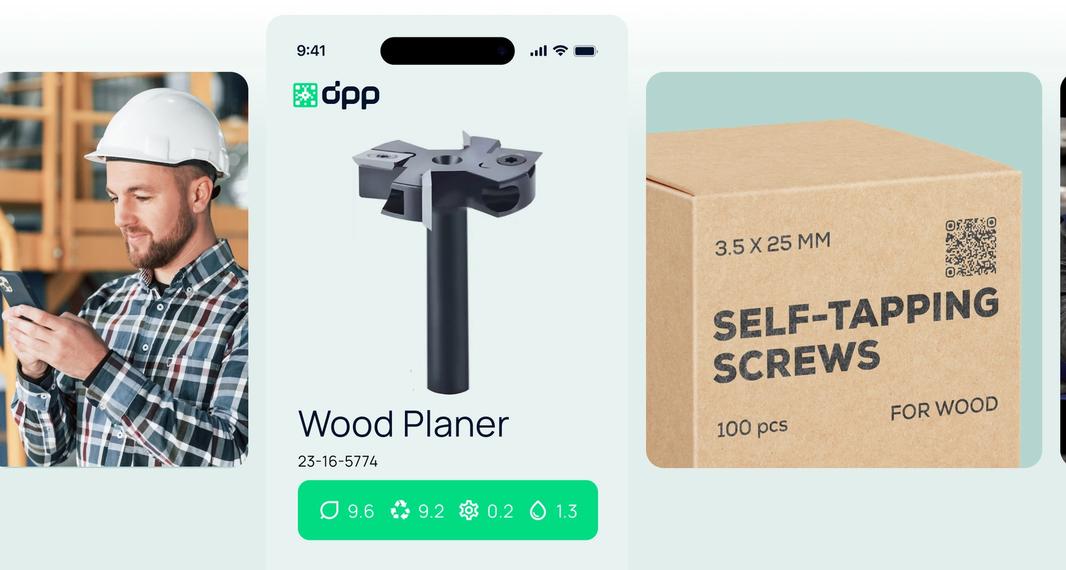
DPP for Manufacturers
Manufacturers create and maintain DPP, prove compliance and sustainability, earn trust and improve their processes.

DPP for Importers
Importers ensure a valid DPP for every product and provide EU market access without risk of sanctions and delays.

DPP for Retailers and Service Centres
DPP simplifies warranties, repairs and product tracking. Retailers and service centres receive accurate information for higher quality service.
The EU Registry
Frequently asked questions

No. The launch of the registry is an infrastructure milestone, not a deadline for companies. The obligation only arises when the law covering your product category requires it. The first real obligation applies from 18 February 2027 for electric-vehicle batteries, light-means-of-transport batteries and industrial batteries above 2 kWh.
The registry is an index, not a repository. It holds the unique product identifier, where the passport can be found, the commodity code on import, and who registered it, when and with what digital fingerprint. The passport content itself — composition, carbon footprint, repair instructions, conformity documents — stays with you.
No. Besides a login account, to earn the right to register passports you must prove your identity with a qualified electronic seal for legal entities, or a qualified electronic signature for sole traders. That status is valid for a maximum of three years and must then be renewed.
At release for free circulation, customs will require the registration identifier from the registry and check that it and the commodity code match the record. A missing or incorrect passport means goods may be held or refused release at customs, not a fine that arrives later.
No. The registry runs automatic checks on data structure, level of detail and commodity code validity, but the law explicitly states this is not proof of compliance. Substantive verification remains the job of market surveillance authorities.
WIARA's complete DPP solution
Ready for the first obligations
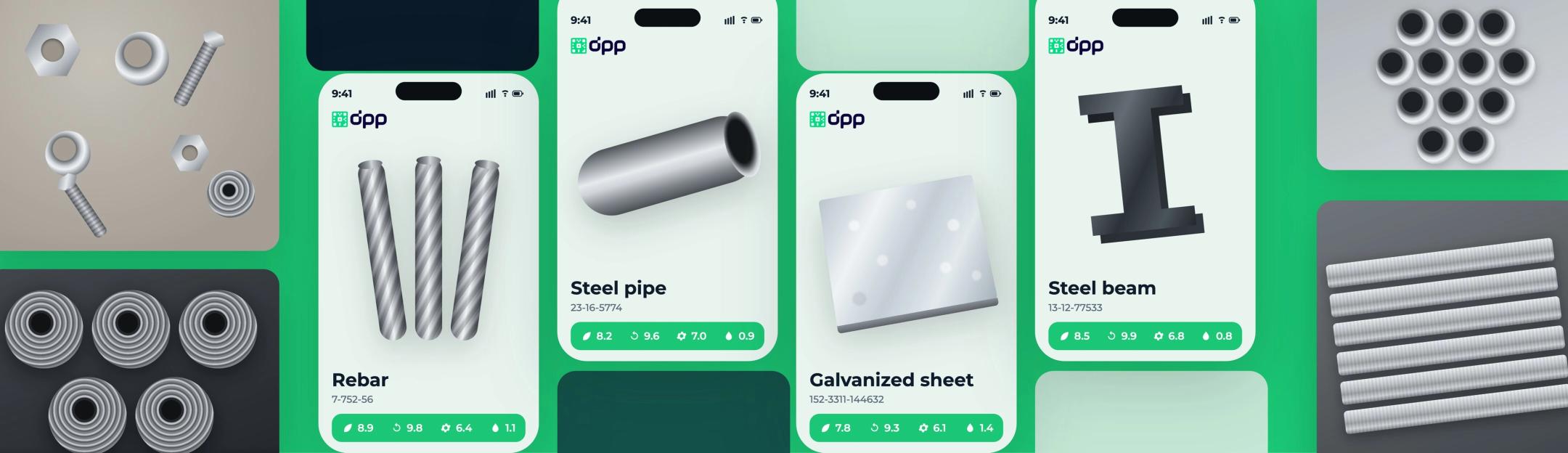
DPP for Steel and Iron
The first product group under ESPR — traceability of the composition, origin and carbon footprint of steel.

DPP for Textiles
DPP provides traceability from fibre to recycling, proves brands' sustainability, and inspires consumer confidence.

DPP for End Consumers
DPP provides transparency – composition, origin and recycling of products, so consumers can choose responsibly and make informed decisions.

The Registry is live. Are you ready?
Get your product data in order before the obligations become deadlines.