Industrial battery passport: how HAZE’s importer in Poland prepared the passport for the HZB 12-200

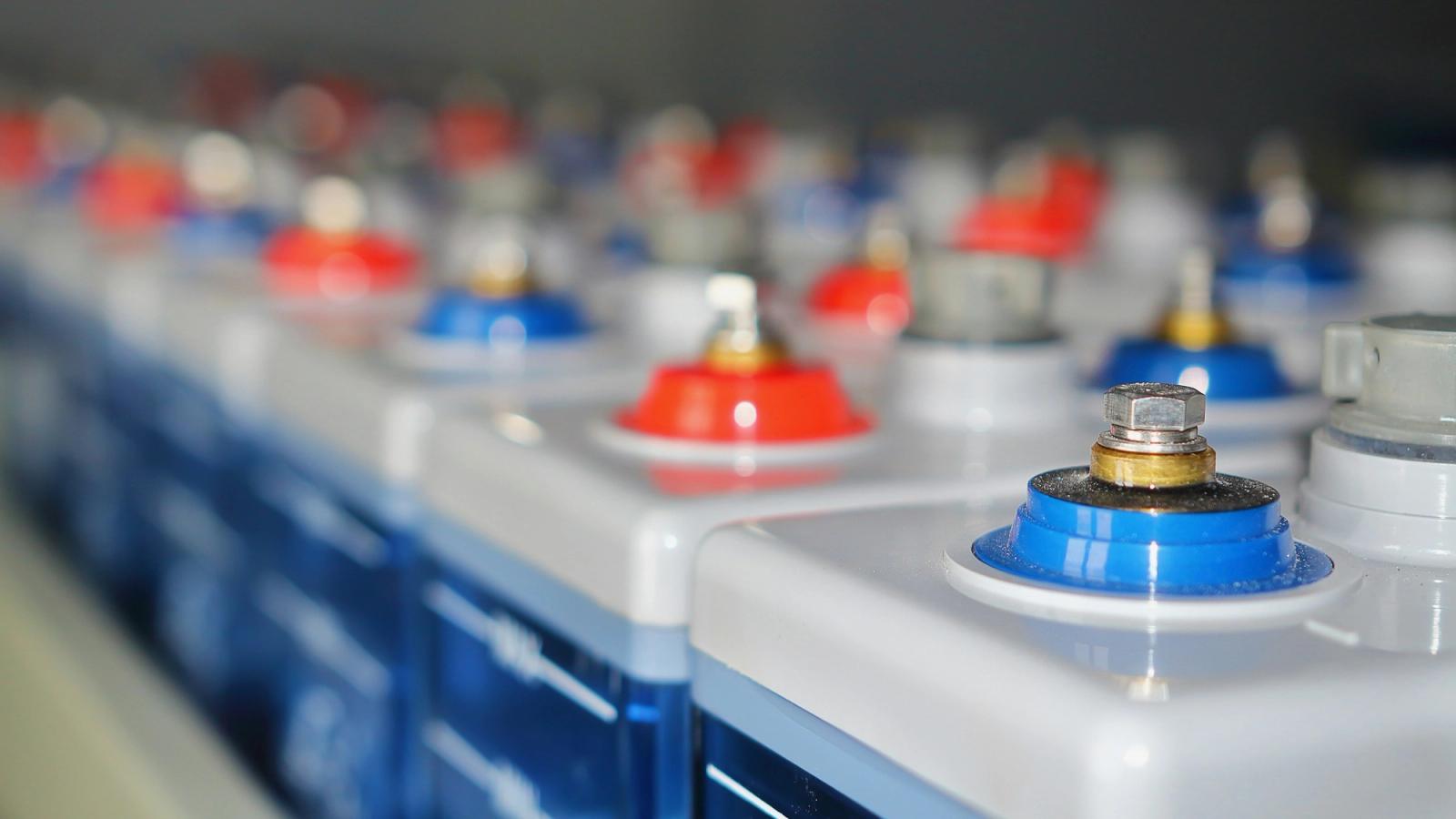
The HAZE HZB 12-200 lead-acid battery now has a published digital passport: dppitem.eu/01/05908391804014. It is a 12 V, 221 Ah AGM battery weighing 61.7 kg, built for standby power in float service.
The regulation requires a passport for batteries of this kind from 18 February 2027. The importer published it on 24 November 2026, almost three months early. This is how the work went, and any importer of industrial batteries will go through the same steps.
Who the importer is
The pilot is with the official importer and distributor of HAZE batteries in Poland, a company based in Szczecinek in north-western Poland. The brand has been sold in Poland since 2002. The company’s website is www.haze.com.pl.
Its range includes gel and AGM lead-acid batteries, chargers and inverters. Its customers include shipyards, mines, telecoms companies and hundreds of installers. The batteries it sells run in UPS systems, solar PV installations, boats, forklifts, cleaning machines and wheelchairs.
The company is registered as a battery producer in BDO, Poland’s waste register, and takes back used batteries free of charge. It has worked under extended producer responsibility for a long time, and the digital passport follows naturally from that work.
The batteries themselves are made in a factory in China.
Why the HZB 12-200 needs a passport
Regulation (EU) 2023/1542 on batteries requires a digital passport for three types of battery: electric vehicle batteries, LMT batteries (for light means of transport) and industrial batteries with a capacity above 2 kWh. The HZB 12-200 is an industrial battery, and the manufacturer gives its rated energy as 2.44 kWh, which puts it above the threshold.
Responsibility for the passport lies with the economic operator that places the battery on the EU market. For a battery made outside Europe, that is usually the importer. Article 77(4) requires the information in the passport to be “accurate, complete and up to date”. That is why the passport was built from the importer’s data, while the documents came from the factory.
How the work went
We started on 16 November with an online meeting. The importer filled in our battery import spreadsheet and sent the first set of documents from the factory. Over the following week the documents went back and forth between us, the importer and the factory. The passport was published on 24 November.
Almost all of the time went on the documents; the software took only a small part of it. The data for a single battery is spread across several sources: a data sheet, the label, the technical documentation for the series, the safety data sheet and test reports. Each was written for a different purpose, yet in the passport the values have to agree.
So we checked every value against at least one document. Power has to be given in W and energy in Wh. The minimum voltage has to match the end-of-discharge voltage. Hazardous substances are taken from the safety data sheet. Whenever something needed clarifying, the importer went to the factory and came back with a confirmed value. The power figure, for example, came straight from the factory: 6,000 W in continuous discharge for 5 minutes at 20 °C to 10.5 V.
The Annex IV document
Article 10 requires industrial batteries above 2 kWh to be accompanied by a document setting out their performance and durability. Annex IV, Part A lists the values: rated capacity and capacity fade, power and power fade, internal resistance, energy round-trip efficiency, and expected lifetime in cycles and in years. Part B requires a description of how they were measured.
The general certificates for the series are not made for this, so the HZB 12-200 needed a separate document of its own.
This is where the importer took the lead. It drew up a template itself, ordered by the articles and points of the regulation, and sent it to the factory. We added a few lines that the passport requires but Annex IV does not list separately: the internal resistance of a single cell and of the whole battery, the efficiency at half of the cycle life, the discharge rate used in testing, and the length of the commercial warranty.
The document went through two versions. In the second, the factory signed off the final values:
- power 6,000 W; 7,800 W at 80% state of charge, 6,200 W at 20% state of charge;
- internal resistance 2.5 mΩ for the battery and 0.42 mΩ per cell;
- round-trip efficiency 83% at the start and 78% at half of the cycle life;
- 450 cycles at 50% depth of discharge and a C3 rate;
- 10 years of calendar life at 20 °C;
- 2-year commercial warranty.
Temperature range: only what has been proven
The passport requires the temperature range the battery can withstand when not in use, together with the test that proves it.
The factory ran an idle test. A fully charged battery stood for 24 hours at 25 °C with no load and no charger. The temperature of the case and terminals stayed within 0.3 °C of ambient, and the voltage held between 13.09 and 13.07 V. The battery passed.
The importer decided the passport should state the range this test covers: 20 to 25 °C, in line with the conditions in the test report. That way every figure in the passport is backed by a document. If other temperatures are tested later, the range will be widened in a new revision of the passport.
Who sees what in the passport
A battery passport has three access levels, and the regulation sets which information goes on which level.
- Anyone who scans the QR code sees the model, the manufacturer, the chemistry, capacity, voltages, power, lifetime in cycles and in years, hazardous substances, the end-user information under Article 74 and the signed EU declaration of conformity.
- Professionals such as repairers and recyclers also see the drawing, the installation manual and the safety data sheet.
- Competent authorities additionally see the Annex IV document and the idle test report.
The regulation does not require documents to be uploaded as files. The information itself, or a link to it, is enough. The importer’s documents were PDFs, so we added optional PDF fields to every template on the platform. Anyone can now give a link or upload a file, whichever they have.
What comes next: a passport for every battery
The published passport covers the model. From 18 February 2027, every industrial battery above 2 kWh also needs a passport of its own.
The importer has already agreed the numbering with the factory. Every order has a number that is never reused. A battery’s serial number combines the model, the order number and a running number: the first HZB 12-200 in order 33874 gets the number HZB12-200-33874-001. Its passport sits at an address of the form dppitem.eu/01/05908391804014/21/HZB12-200-33874-001 and is linked to the model passport. The factory will print each battery’s QR code during production.
The first passport for an individual battery is already live: HZB12-200-33481-001, made in May 2026.
What to prepare if you import industrial batteries
- Check the energy of every model. If it is above 2 kWh, the passport is mandatory from 18 February 2027. For models close to the threshold, ask the manufacturer for the Wh figure rather than calculating it yourself.
- Ask for a signed EU declaration of conformity with the signatory’s name, position, place and date.
- Ask for an Annex IV document for the specific model, not for the whole series.
- Check that the values are both present and consistent with each other: power in W, energy in Wh.
- Take hazardous substances from the safety data sheet. Lead, mercury and cadmium are covered by their own rules and do not belong in this field.
- State only temperature ranges that are backed by a test.
- Prepare a drawing and a manual for the specific model.
- Settle the serial number scheme early, before the first delivery with QR codes.
Once these documents are in place, the passport itself takes days. If you import industrial batteries and want to see how a passport for your own model would look, write to us.
Sources
- www.haze.com.pl — haze.com.pl