Plovdiv fashion atelier MILLEY CODE: its first textile passport and the questions it raised

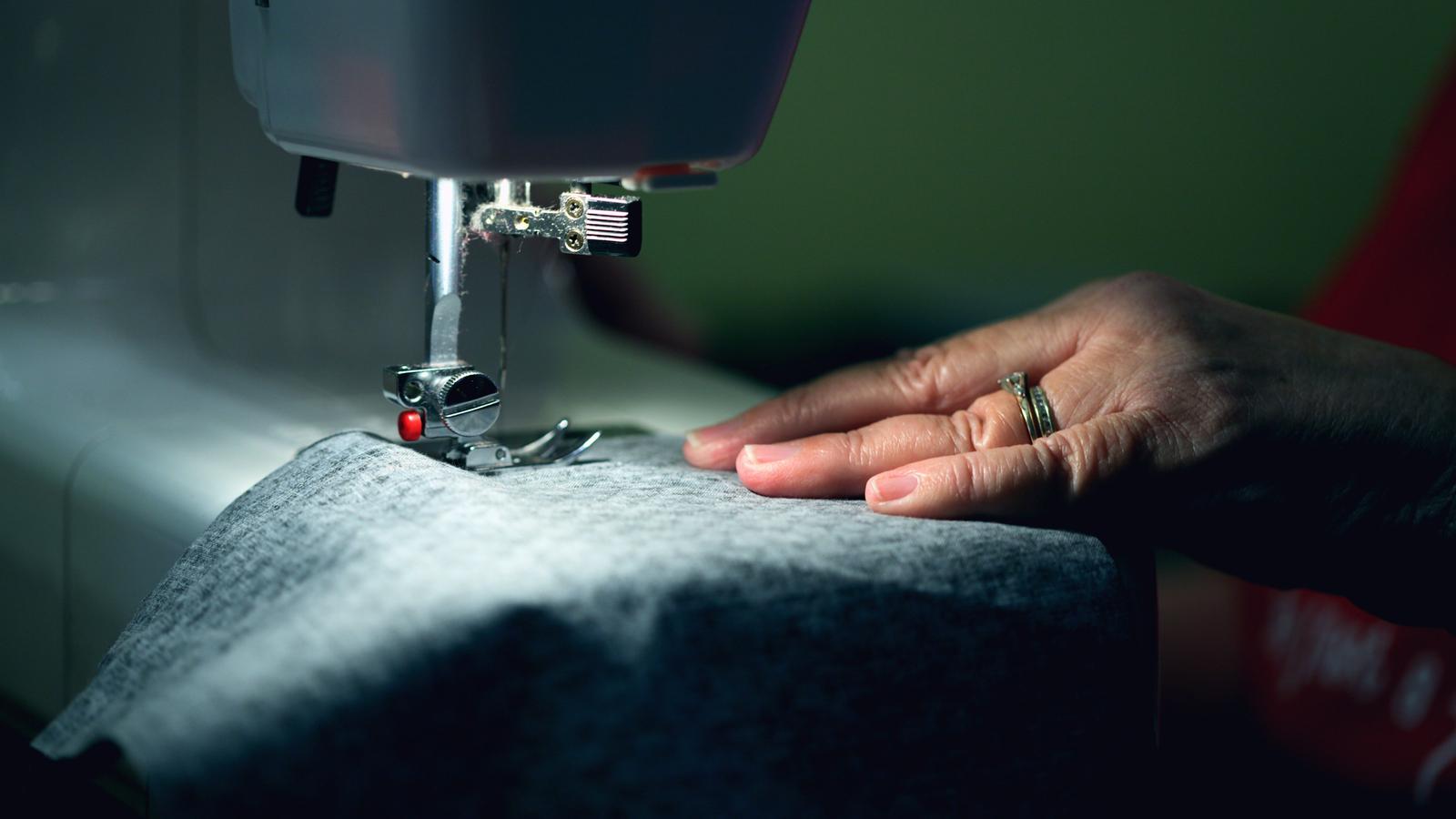
A set made up of a cardigan with a shawl collar and a 7/8-length skirt, in cinnamon, size XS, now has its own digital product passport. It was sewn by hand on a machine in an atelier in Plovdiv, and the fabric comes from a mill in Turkey by way of a warehouse in Ruse. The passport is public and anyone can open it.
Behind it is Smilyana Bazeva, who runs the fashion atelier MILLEY CODE. She went through the entire textile passport questionnaire field by field and sent back her answers along with a list of questions. Small producers will ask many of the same questions sooner or later, so we are publishing them here, together with what we know today and what nobody knows yet.
MILLEY CODE: premium womenswear, handmade in Plovdiv
MILLEY CODE is a fashion atelier in Plovdiv that designs and makes womenswear. It has been in business since 2022, with Smilyana Bazeva as its manager. The atelier does its own pattern-making, cutting and sewing: dresses, sets, suits, skirts, trousers, trench coats. Everything is cut and sewn by hand in small runs, and made to measure on request.
MILLEY CODE is a premium atelier. The designs are its own, every piece goes through a tailor's hands rather than down a production line, and nothing is made in large quantities that then sit in a warehouse. The MISHA set in this passport is a good example. The top is made of a soft, warm double-face fabric, the belt is detachable, and the skirt has a flared half-circle cut with an elastic waist.
The atelier also tries things that small labels rarely get to. Its clothes have a digital product passport years before it becomes mandatory, at the level of the individual piece, with the fabric's full route from the mill to the finished garment. Smilyana did more than fill in the fields. She challenged them, proposed a faster way to complete them and went looking for laboratory testing prices herself.
The collection is sold at milleycode.com. New designs also appear on Facebook and Instagram.
MILLEY CODE joined our textile pilot programme to find out in practice what a passport takes for a small atelier. The answer was more interesting than we expected, and it had little to do with the technology. The hard part was gathering the data.
What the MISHA set's passport contains
The MISHA set's passport is at item level: product code MISHA-KANELA, serial number 0001. The composition is 82% cotton and 14% polyester, a double-face interlock weighing 288 g/m². The cardigan and the skirt are made from the same fabric. The fabric contains no recycled fibres, and the garment has no parts of animal origin and no metal components.
The supply chain has four steps. The fabric is made at a mill in Turkey and supplied from the warehouse of the importer Hrismil Textile in Ruse, the cutting and sewing are done at the atelier in Plovdiv, and the garment is sold under the MILLEY CODE label. The Turkish fabric manufacturer has declared that the fabric contains no hazardous substances. The public view shows each stage and its country. The names of the companies along the chain are visible only to professional users.
The care instructions are recorded as the maker gave them: wash at up to 30 °C, do not wring, do not bleach, do not tumble dry, iron at a medium setting up to 150 °C. Repair is described simply: by a qualified tailor. Before recycling, the elastic has to be taken out of the skirt. A buyer who opens the page sees it in their own language, because the passport is translated automatically into the EU languages.
Four things the MISHA set's passport could not confirm
The MISHA set's passport shows something that holds for small ateliers in general: the garment maker knows how the piece was sewn but does not know everything about the fabric. There were four open questions.
The first is composition. The supplier's label says 82% cotton and 14% polyester. That leaves 4% unaccounted for, and nobody along the chain can say what it is. The passport shows this as a visible note instead of an invented number.
The second is dyes. The fabric manufacturer has declared that the fabric contains no hazardous substances, and the passport records the absence of substances on the REACH list (Regulation (EC) No 1907/2006) as that manufacturer's declaration. There is no detailed data yet on which dyes were used for the yarn, so the passport makes no “azo-free” claim.
The third is drying. The care symbol on the label allows tumble drying at a low temperature. Smilyana herself says the garment can shrink too much in a dryer. The passport follows her practice, and the label will be corrected.
The fourth is recycled content. Without a document from the fabric manufacturer the answer is “no”, even if there is reason to think otherwise.
Laboratory testing: reliable, but you pay for it
Smilyana also looked into the other route, laboratory testing. For the missing data she contacted a certified textile laboratory that carries out tests for a fee: composition, fabric weight, shrinkage, strength, and colourfastness to washing and to perspiration.
For an atelier that sews a handful of pieces of each design, that is a serious expense, because every test is paid for separately. So Smilyana's recommendation is clear: data on strength, colourfastness, shrinkage and dyes should come with the fabric, from the mill or the importer. She also points out that the certified fabrics on the market are mostly cotton, wool and water-repellent materials for workwear and furniture. For fashion, the choice is small.
This is the most useful finding of the pilot. A textile passport will only be as complete as the information that travels along the supply chain, and the tailor is at the very end of it.
A one-off, a second piece, a new fabric: how the passport handles each
Smilyana asked the most questions about what makes a garment unique. What happens if she sews another piece, starts serial production, or runs out of fabric and switches to a different one?
The delegated act for textiles has not yet decided whether the passport will be per model, per batch or per item. Preparatory work by the JRC proposes a mix of model and batch, with item level as an option. EURATEX and EuroCommerce want model level. The CIRPASS-2 expert group leans towards item level in the long run. What has been decided is how the levels link together. Implementing Regulation (EU) 2026/1778, in force since 6 August 2026, requires a more detailed passport to carry the identifiers of the more general ones.
In practice, the MISHA set is structured like this: model MISHA, colour cinnamon, batch 1, item 0001. A second piece from the same fabric gets a new serial number in the same batch. A different fabric means a new batch with new data, because the garment's characteristics have changed. When the data for an item changes, the passport keeps the earlier versions instead of deleting them.
CMT work, packaging, reuse: where the regulation is still silent
Smilyana asked who fills in the passport when production is subcontracted on a cut-make-trim (CMT) basis. Who sews, who embroiders, who does sublimation or screen printing, who does the industrial washing? The Ecodesign for Sustainable Products Regulation (EU) 2024/1781 puts the obligation on whoever places the product on the market under their own name. Subcontractors supply the data but are not responsible for the passport. Smilyana sees a benefit for the whole sector here: the passport shows the makers behind the brand, including the tailors who stay invisible today.
Packaging is a separate question. The box, the card, the tissue paper and the mailing bag fall under the Packaging and Packaging Waste Regulation (EU) 2025/40. Whether the textile passport will include data on them is for the delegated act to decide.
For a status such as “new, second use, third use, recycled”, the short answer is that the rules do not exist yet. The same goes for carbon footprint and water. Smilyana admits she does not know how they are measured, and she is not alone in that. The method (PEFCR) exists, but which fields will be mandatory for textiles has not been decided.
What happens after use is clearer. Extended producer responsibility for textiles under the revised Waste Framework Directive (EU) 2025/1892 becomes mandatory by April 2028. In Bulgaria, the environment ministry has said the fee will depend on recyclability, composition, durability and hazardous substances. That is data the passport already holds.
When the textile passport becomes mandatory
According to the European Commission's indicative timetable, the delegated act for textiles is expected in the third or fourth quarter of 2027. A transition period of at least 18 months follows, which puts the actual obligation at around 2029. The Commission has not yet opened a public consultation on the act, so the date is soft.
The deadline is not the main point here, though. The MILLEY CODE pilot showed that creating the passport takes less time than getting the data from the fabric supplier, and that takes months. Smilyana suggests that filling in a passport should take 5–10 minutes. The fixed information about the maker would be entered once, and for each item you would choose from ready-made values. That suggestion is already with the team that builds the platform.
What comes next for MILLEY CODE
The MISHA set's passport is already published. Its next version will come when the mill in Turkey provides data on the dyes and on the missing 4% of the composition. The passport will then be updated, and the earlier version will stay in its history.
If you make clothes under your own label and want to see what the passport for one of your products would look like, take a look at the digital product passport for textiles or write to us. And MILLEY CODE's designs are at milleycode.com.