If someone copies the QR code from a real product onto a fake — will the passport lie to you?

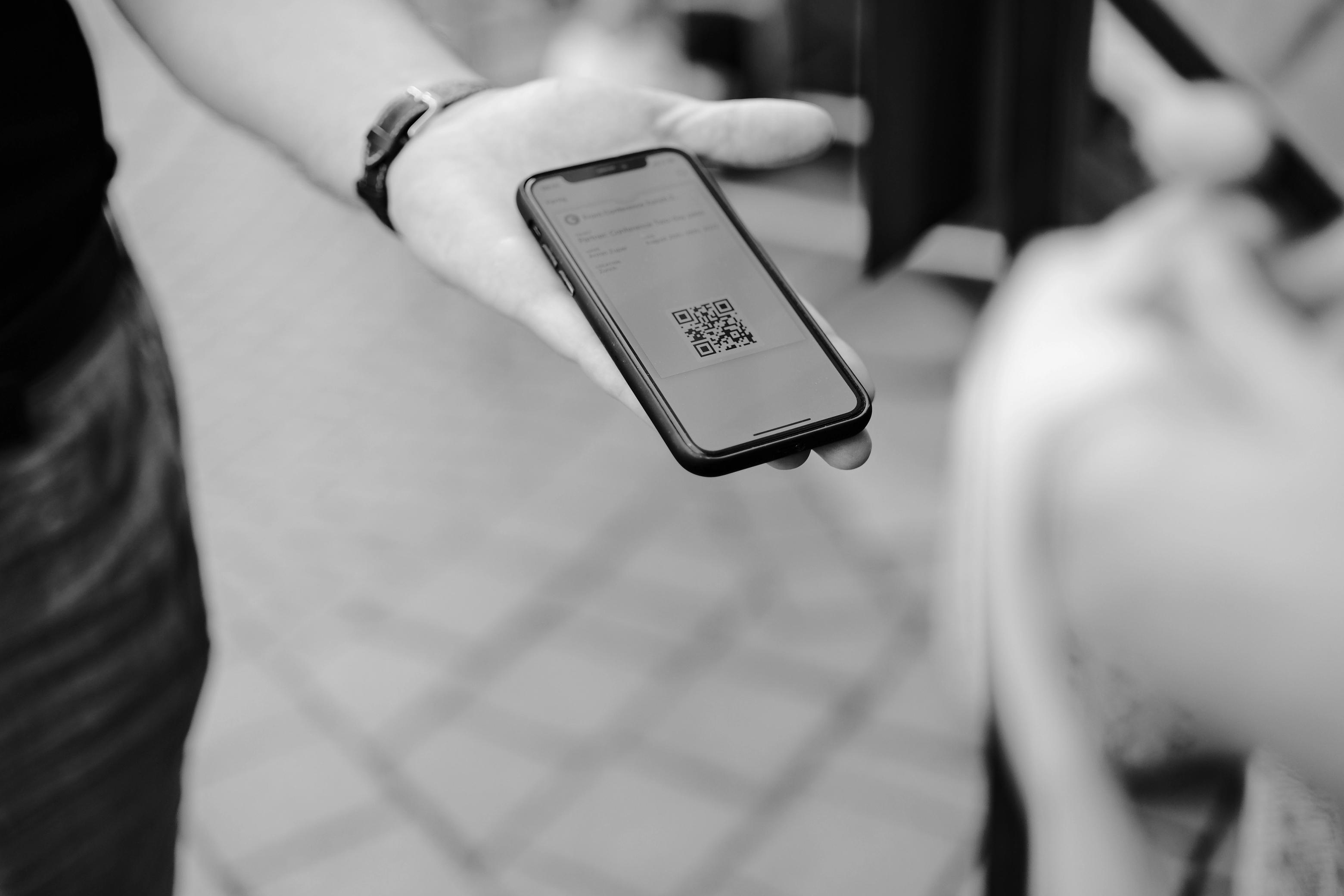
You are standing in a shop. There is a QR code on the label. You scan it with your phone and a page opens: composition, origin, care instructions, certificates. Everything looks right.
Does that prove the item is genuine?
The honest answer is: not quite. And the reason is simpler than it sounds.
The code is a picture. And pictures get copied.
A printed QR code is not a chip and it is not a lock. It is a drawing made of black squares that tells your phone one address on the internet. Nothing more.
Which means someone can photograph the code from a genuine product, print it on a counterfeit — and when you scan it, you land on the entirely genuine passport. It will describe the real product, because it belongs to it. Only you are holding something else.
The paradox is an uncomfortable one: the better the passport looks, the more convincing the fake carrying the copied code becomes.
What the regulation says — and what it does not say yet
The European regulation is not blind to this. Article 11 explicitly requires that the authenticity, reliability and integrity of the data in the passport be ensured.
But the requirement states what must be achieved, not how. The how is governed by the European standards — and this is exactly where the difference few people notice sits.
On 15 July 2026, six digital product passport standards were cited in the Official Journal of the EU. They cover identifiers, data carriers, storage, interfaces and interoperability. Two were not: access rights and data authentication. CEN-CENELEC published both on 16 September 2026, but until they are cited they give no presumption of conformity.
In other words: the rule exists, but the method that turns it into verifiable practice is not yet in force. Publication of the remaining two is expected in the autumn.
Why a chip is a different thing altogether
The data carrier standard designates QR codes and Data Matrix as primary, with NFC and RFID chips as secondary. That distinction matters a great deal for the question at hand.
A chip is not a picture. You cannot photograph it and print it — to copy one, you have to manufacture it. That makes it incomparably harder to fake than a square of ink.
But because the QR code is the primary carrier and the chip only secondary, most products will carry precisely the thing that is easiest to copy. Not because anyone got it wrong — but because a QR code is free, readable by any phone, and requires nothing extra. The trade-off is deliberate.
Four things you can check today
None of them is proof. Each of them, though, makes a fake more expensive to produce — and that is the real protection.
1. Look at the address the code takes you to. Does the domain match the brand? A copied code will lead to the right place, but a code the counterfeiter generated themselves often will not.
2. Check whether the passport describes this exact item. This size, this colour, this batch. A generic page about "our jackets" is a warning sign — a real passport is specific.
3. Cross-check the batch or serial number against the label on the product itself. If the passport claims a March batch and the label says otherwise, something does not add up.
4. See whether there is a last-verified date. An abandoned passport is as much of a signal as a missing one.
What this means if you are the one making the product
The passport on its own does not protect your brand from imitations. It was built for transparency, not for authentication — and that is not a defect, it is a different job.
If counterfeits are a real problem for you, the answer lies in the carrier, not in the passport: serialised codes where every single item has its own unique address, or an NFC chip where the value of the product justifies it. And with the data authentication standard published on 16 September 2026, there is now a commonly accepted way to prove that the contents of a passport have not been tampered with — though until it is cited in the Official Journal, it gives no presumption of conformity.
So — is it still worth scanning?
Yes. Just for something else.
The passport will not tell you whether you are holding an original. It will tell you what the product is made of, how long it is expected to last, whether it can be repaired, what to do with it at the end, and whether it contains substances you care about knowing about.
That is far more than a label has ever told you. If you want to see what it actually looks like, we walked through one passport field by field. Just do not credit it with a job it was never built to do.